
MARITIMEPOSTS.COM — East Java Provincial Government Reaffirms Commitment to Sustainable and Competitive Shrimp Aquaculture
The East Java Provincial Government has reaffirmed its commitment to strengthening shrimp aquaculture that is productive, environmentally responsible, competitive, and capable of improving the welfare of coastal communities.
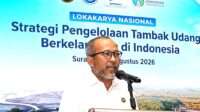
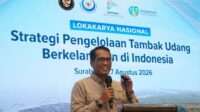
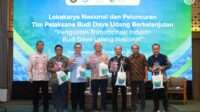
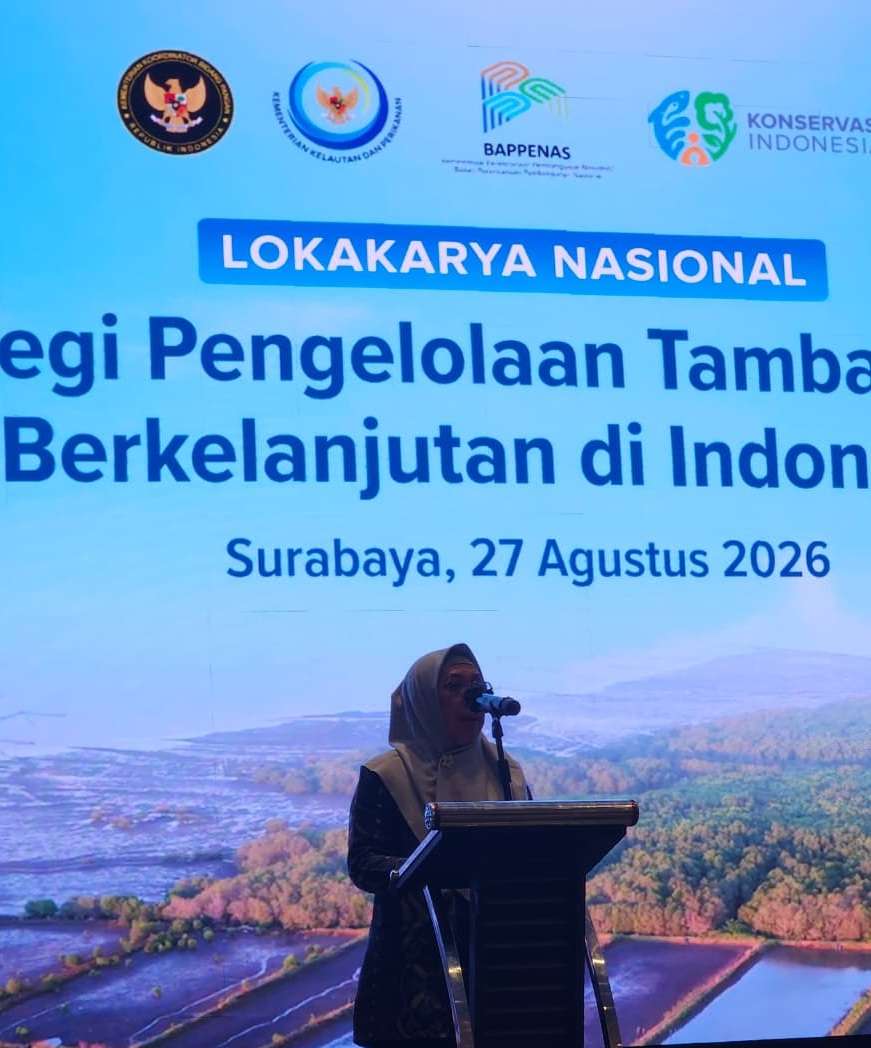
The message was delivered by the Head of the East Java Provincial Marine and Fisheries Agency, Dr. Muhammad Isa Ansori, ATDM, through remarks read by Atiek Setijani, S.Pi., Head of the Bangil Aquaculture Technical Implementation Unit (UPT), at the National Workshop on Sustainable Shrimp Farm Management Strategies in Indonesia and the learning forum on the jurisdictional approach in Banyuwangi and Situbondo.
The workshop was a collaborative initiative involving the Coordinating Ministry for Food Affairs, Ministry of Marine Affairs and Fisheries, Ministry of National Development Planning/Bappenas, Konservasi Indonesia, and other relevant stakeholders.
In his remarks, the East Java Provincial Government expressed its appreciation to all parties who initiated the strategic forum.
The forum was considered important for shaping the direction of national shrimp aquaculture development—not merely by pursuing higher production, but also by ensuring environmental sustainability and economic benefits for local communities.
“Shrimp aquaculture has a strategic position in the national maritime economy and food security,” the statement emphasized.
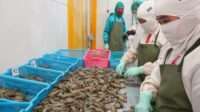
Nationally, shrimp production reportedly increased from 863,118 tonnes in 2019 to 941,646 tonnes in 2023, representing average annual growth of approximately 1.37 percent.
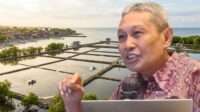
East Java itself has significant aquaculture potential. Its aquaculture areas cover approximately 49,028 hectares across 22 regencies and cities.
The province’s pond structure also has distinctive characteristics, with approximately 81.8 percent of the area still dominated by traditional shrimp ponds.
This potential represents both an opportunity and a responsibility for East Java to strengthen its position as one of Indonesia’s competitive national shrimp production centers. Such development is considered consistent with the direction of the province’s blue economy development.
However, the provincial government emphasized that increased productivity must not be separated from sustainability principles.
Several challenges remain, ranging from the carrying capacity of aquatic environments and degradation of coastal ecosystems to disease threats and the need for more integrated area-based governance.
Therefore, productivity and sustainability must advance simultaneously. Shrimp farming development cannot be addressed solely at the individual farm-unit level; it requires area-based management that takes environmental conditions and the interconnectedness of stakeholders into account.
Banyuwangi and Situbondo as Learning Grounds
The East Java Provincial Government specifically welcomed the initiative of Konservasi Indonesia, together with the governments of Banyuwangi and Situbondo, to develop sustainable shrimp aquaculture.
The establishment of the Sustainable Shrimp Aquaculture Working Group (Pokja) in Banyuwangi and the development of a governance model in Situbondo provide important lessons that protecting coastal environmental quality and expanding the aquaculture economy can be pursued in harmony.
A jurisdictional approach is important because shrimp farm management requires collaboration across stakeholders. Government, farmers, businesses, academics, communities, associations, and development partners need to operate within a common framework.
According to the Head of the Marine and Fisheries Agency, lessons from Banyuwangi and Situbondo have strategic value and can be developed on a wider scale.
Experiences ranging from water-quality research and value-chain analysis to cross-stakeholder governance can serve as references for formulating sustainable shrimp aquaculture policies at the national level.
“The jurisdictional approach is important because shrimp farm management requires collaboration among government, farmers, businesses, academics, communities, associations, and development partners,” the statement emphasized.
Promoting Concrete Cooperation
Through the Head of the Marine and Fisheries Agency’s statement, the East Java Provincial Government affirmed its commitment to continuing cross-sectoral collaboration to establish a shrimp aquaculture sector that is productive, environmentally responsible, and competitive.
At the same time, the development of the sector is expected to generate tangible improvements in the welfare of coastal communities.
The provincial government hopes that the national workshop will not end as merely a forum for exchanging ideas.
Instead, the meeting is expected to produce concrete cooperation initiatives, implementable policy recommendations, and a clear direction for national shrimp aquaculture development capable of responding to both productivity and sustainability demands.
According to the East Java Provincial Government, the experiences of Banyuwangi and Situbondo can serve as inspiration for other regions across Indonesia in developing more integrated shrimp aquaculture models.
Ultimately, the future of Indonesia’s shrimp industry will not be determined solely by how much production can be increased, but also by the ability of all stakeholders to protect environmental quality, establish effective area-based governance, strengthen value chains, and ensure that the economic benefits of aquaculture continue to reach coastal communities.
Editor: K. Azis