
- Fishing villages need the capacity to generate income, but that capacity must remain within the limits of the marine resources on which communities depend. Otherwise, short-term increases in production could come at the expense of long-term economic security.
- For Indonesia, a maritime nation whose coastal communities depend heavily on marine resources, this is not simply an environmental concern. It is also a question of food security, economic resilience, and national sovereignty.
MARITIMEPOSTS.COM – Indonesia’s Kampung Nelayan Merah Putih (KNMP) program offers an important lesson in coastal development: improving the welfare of fishing communities requires more than providing boats, building fishing ports, or distributing equipment.
It requires an integrated economic system that connects sustainable fishing practices, essential infrastructure, local processing industries, financial access, and community well-being.
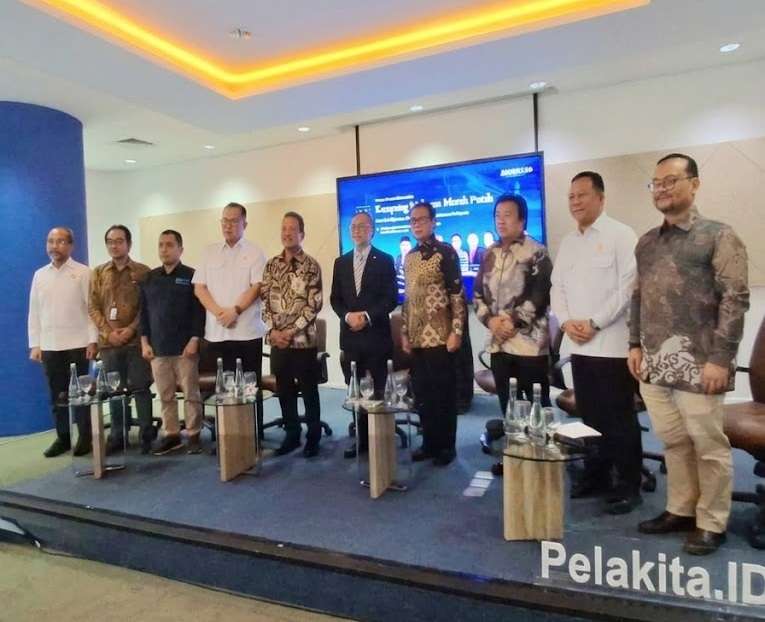
This was one of the key insights I took away from the Kompas Focus Group Discussion (FGD) on KNMP. The discussion highlighted a fundamental question about Indonesia’s approach to developing its fishing villages: Are we simply building infrastructure for fishermen, or are we building an ecosystem that enables fishing communities to prosper sustainably?
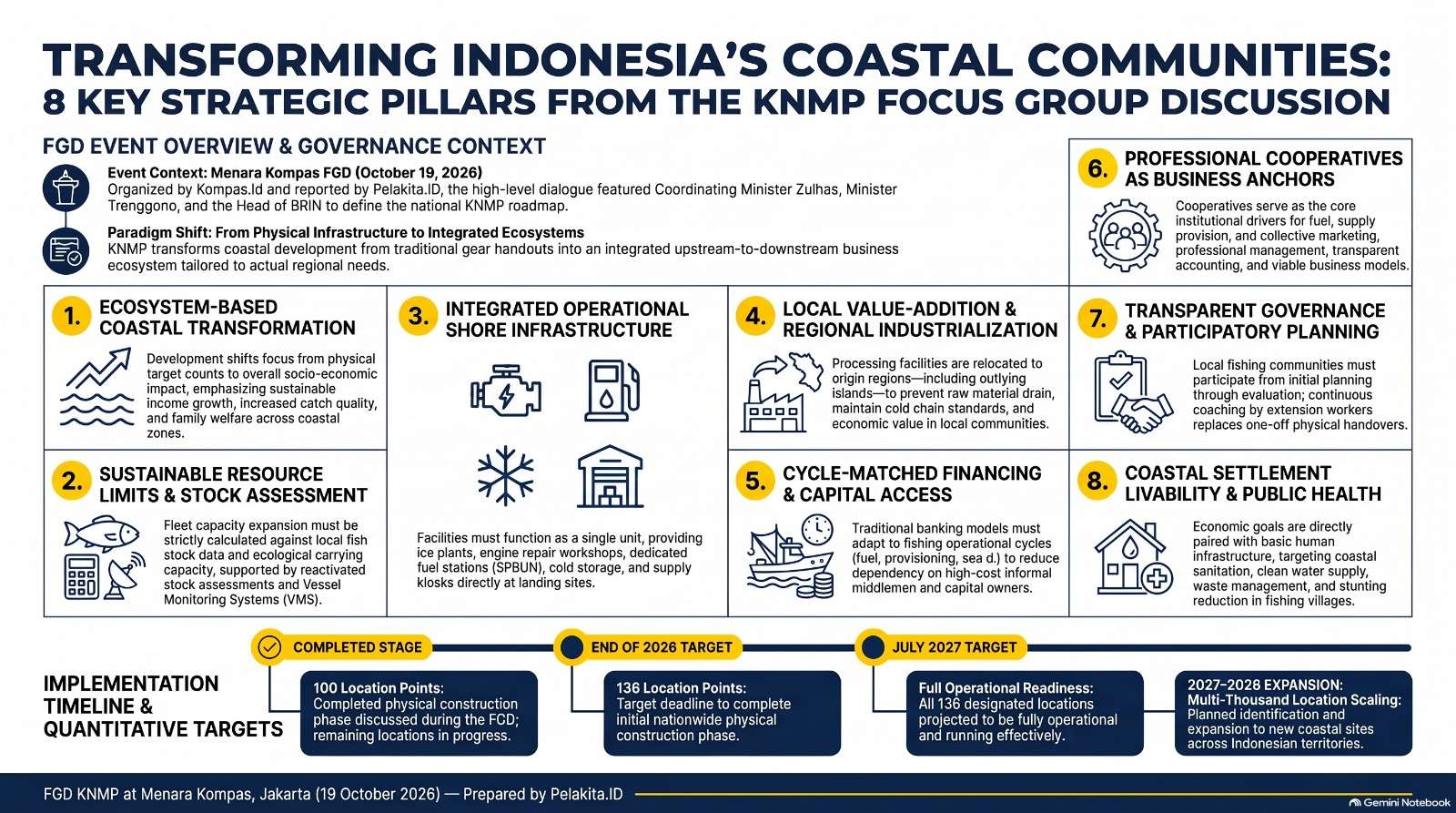
For me, the distinction is crucial. Infrastructure may create opportunities, but without the right management, institutions, and economic connections, it may not translate into better livelihoods.
1. Moving Beyond Infrastructure-Centered Development
One of the most important lessons from the discussion was the need to move beyond a conventional approach to coastal development.
For years, government interventions in fishing communities have often focused on providing physical assistance, including boats, fishing gear, landing facilities, and other infrastructure. While these investments are necessary, they do not automatically resolve the structural problems faced by small-scale fishermen.
A fisherman may have a better boat but still struggle to afford fuel. He may catch more fish but lose income because there is no ice factory or cold storage facility nearby. Even when the catch reaches the market, limited bargaining power and dependence on middlemen can prevent him from receiving a fair price.
These challenges demonstrate that fishing livelihoods depend on a chain of interconnected activities, from preparing vessels and going to sea to landing, preserving, processing, distributing, and selling fish.
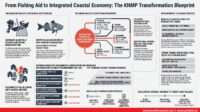
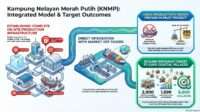
The KNMP concept offers a different perspective by positioning the fishing village as an integrated business ecosystem. Instead of treating each facility as an isolated government project, development should connect essential services and economic activities from upstream to downstream.
The lesson is clear: the success of a fishing village should not be measured solely by the number of facilities constructed, but by how effectively those facilities improve fishermen’s incomes and strengthen the local economy.
2. Sustainable Fisheries Must Come Before Increasing Production
Another important lesson concerns the ecological foundation of fishing village development.
Improving fishermen’s access to boats, equipment, fuel, and other facilities can increase their capacity to catch fish. However, increasing fishing capacity without understanding the condition of fish stocks can create new problems.
If too many vessels compete for limited resources, individual catches may decline, fishing costs may rise, and pressure on marine ecosystems may intensify. In the long run, these outcomes can undermine the very livelihoods that development programs are intended to improve.
This is why scientific stock assessments and effective fisheries monitoring must be part of the KNMP development framework.
Understanding the availability and distribution of fish stocks is essential before expanding fishing capacity. Monitoring systems, including Vessel Monitoring Systems (VMS), can also help improve transparency and support compliance with fisheries management rules.
The broader lesson is that economic development and ecological sustainability cannot be separated.
Fishing villages need the capacity to generate income, but that capacity must remain within the limits of the marine resources on which communities depend. Otherwise, short-term increases in production could come at the expense of long-term economic security.
For Indonesia, a maritime nation whose coastal communities depend heavily on marine resources, this is not simply an environmental concern. It is also a question of food security, economic resilience, and national sovereignty.
3. The Importance of Post-Harvest Infrastructure and Local Value Creation
The discussion also reinforced the importance of strengthening the economic activities that take place after fish are caught.
In many fishing communities, the challenges do not end when fishermen return from the sea. Limited access to ice, cold storage, fuel, repair facilities, and reliable distribution networks can increase operating costs and reduce the value of their catch.
The KNMP framework identifies several essential facilities that can help address these constraints, including ice factories, fishermen’s fuel stations (SPBUN), ship repair workshops, cold storage facilities, maritime supply outlets, economic support hubs, and spaces for training and technical assistance.
These facilities should function as a connected system rather than as separate infrastructure projects.
For example, access to ice and cold storage can help preserve fish quality. Reliable fuel supplies can reduce the burden of obtaining operational necessities. Local repair workshops can minimize the time vessels remain out of service. Together, these facilities can help improve operational efficiency and strengthen fishermen’s position in the market.
However, the most important opportunity may lie beyond simply improving the handling of fresh fish.
Fishing communities also need opportunities to develop local processing industries. Instead of selling their catch exclusively as raw commodities, coastal communities could retain more economic value through processing, improved product quality, packaging, and better access to markets.
This is particularly important for island and outer-island communities, where transportation costs can be high and economic benefits may otherwise flow to processing centers elsewhere.
The lesson I draw from this is that coastal development should not stop at increasing fish production. It should also create opportunities for fishermen and their communities to participate in the wider seafood value chain.
4. Cooperatives Must Become Real Economic Institutions
Physical infrastructure alone cannot guarantee economic independence. Fishing communities also need institutions capable of managing resources, organizing business activities, and improving access to markets and finance.
This is where cooperatives become important.
Within the KNMP framework, cooperatives should function as active economic institutions rather than merely administrative organizations. They can potentially manage the collective procurement of fuel and ice, coordinate supplies, organize the marketing of catches, and strengthen fishermen’s bargaining power.
Collective action can help small-scale fishermen overcome some of the disadvantages they face when dealing individually with suppliers, buyers, and financial institutions.
Access to appropriate financing is equally important. Fishing is a business characterized by uncertain weather, fluctuating catches, variable trip durations, fuel expenses, and changing market prices. Financial products designed around conventional monthly repayment schedules may not always reflect these realities.
Financing arrangements should therefore consider the actual operating cycles of fishing activities, including the time required to complete a trip and receive payment for the catch.
Without such adjustments, fishermen may remain dependent on informal lending arrangements and buyers who provide advance financing in exchange for control over the sale of their fish.
The lesson is that economic empowerment requires more than access to credit. It requires institutions and financial arrangements that recognize how fishing businesses actually operate.
For KNMP to deliver lasting benefits, cooperatives must have the capacity to operate professionally, maintain transparent management, and ensure that economic gains reach their members.
5. Fishing Village Development Must Include Quality of Life
Another important insight is that the welfare of fishing communities cannot be assessed solely through production and income.
Fishing families live within broader social and environmental systems. Their economic opportunities are closely connected to access to clean water, sanitation, healthcare, adequate nutrition, and a healthy residential environment.
A fishing village may have modern facilities, but its development remains incomplete if households continue to experience inadequate sanitation, poor waste management, or nutritional vulnerabilities.
The KNMP approach therefore needs to connect economic development with improvements in settlement conditions and community well-being.
Clean water, appropriate sanitation, efforts to reduce childhood stunting, and effective solid waste management are not secondary concerns. They are part of the foundation for building healthier and more resilient coastal communities.
This perspective broadens the meaning of development. The objective is not merely to make fishermen more productive, but also to improve the quality of life of their families and create settlements where future generations can thrive.
In this sense, a successful fishing village is not simply a place where economic activity increases. It is a place where people can live healthier, safer, and more dignified lives.
6. Implementation Matters More Than Construction Targets
The discussion also raised an important question about implementation.
Large-scale development programs require coordination across government institutions, research organizations, local authorities, cooperatives, and fishing communities. They also require careful planning, appropriate site selection, and ongoing evaluation.
The KNMP implementation roadmap described in the discussion includes an initial target of 100 locations, a subsequent expansion to 136 locations, an operational milestone in July 2027, and further identification of potential locations during 2027–2028.
These targets indicate the scale of the government’s ambition. However, the number of locations developed is only one measure of progress.
The more important question is whether the facilities become operational and deliver measurable benefits.
Are fishermen spending less on essential supplies? Is the quality of landed fish improving? Are local processing businesses emerging? Are cooperatives operating effectively? Are household incomes increasing? Are fish stocks being managed responsibly?
These are the kinds of questions that should guide program evaluation.
Implementation must also account for differences between coastal communities. An island village with a fleet operating in deep waters may have different requirements from a densely populated fishing settlement on Java’s northern coast. Infrastructure, business models, and management arrangements should reflect local geography, fishing practices, species, and market conditions.
A standardized national program can provide a common framework, but its implementation must remain responsive to local needs.
The lesson is that successful development depends not only on the quality of the initial plan but also on the ability to adapt, coordinate, monitor, and improve its implementation.
7. Measuring Success Through Outcomes, Not Outputs
Perhaps the most fundamental lesson from the Kompas FGD is the need to distinguish between development outputs and development outcomes.
Outputs are the facilities constructed, equipment provided, and locations covered by a program. Outcomes are the actual changes experienced by fishing communities.
A newly constructed ice factory is an output. Better fish quality, reduced post-harvest losses, and improved selling opportunities are potential outcomes.
A cooperative established by the government is an output. A cooperative that successfully reduces supply costs, improves market access, and increases members’ bargaining power represents a more meaningful development outcome.
Similarly, a newly developed fishing village is not necessarily a prosperous one. Its success depends on whether its economic activities are viable, its marine resources remain productive, and its residents experience improvements in their daily lives.
This distinction matters because public investment should ultimately be judged by the benefits it creates for people.
KNMP therefore needs an evaluation framework that examines not only construction progress and budget absorption but also household income, operating costs, post-harvest losses, cooperative performance, local employment, environmental sustainability, and the quality of basic services.
Such an approach would help ensure that the program remains focused on its underlying purpose: creating stronger, more productive, and more resilient fishing communities.
Conclusion: Building an Ecosystem for Coastal Prosperity
My main takeaway from the Kompas FGD on KNMP is that transforming Indonesia’s fishing villages requires a fundamental shift in how coastal development is understood.
The challenge is not simply to provide fishermen with more boats, build more facilities, or increase production. It is to create an integrated system in which infrastructure, marine resource management, finance, cooperatives, processing industries, and basic social services reinforce one another.
This requires a balance between economic opportunity and ecological responsibility, between physical investment and institutional capacity, and between national development targets and the everyday realities of fishing families.
KNMP has the potential to provide a framework for this transformation. But its long-term success will depend on how effectively the program connects infrastructure with functioning businesses, scientific fisheries management, capable local institutions, and meaningful community participation.
Ultimately, the most important measure of success is not how many fishing villages are built or renovated. It is whether fishermen can earn better and more stable incomes, coastal economies can retain greater value, marine resources remain sustainable, and fishing families enjoy healthier and more dignified lives.
For me, this is the central lesson of KNMP: developing a fishing village means building an ecosystem for prosperity, not merely constructing infrastructure.
____
Author: Kamaruddin Azis, founder Pelakita.ID
Jakarta, 19 October 2026