
- Trenggono compared Indonesia’s fisheries sector with those of several countries, particularly Vietnam and China, to illustrate the considerable room for productivity improvements.
- During his presentation, he cited Vietnam’s fisheries production at approximately 25 million tonnes, with the majority coming from aquaculture. China’s fisheries production, meanwhile, was cited at approximately 83 million tonnes, also supported by large-scale aquaculture development.
MARITIMEPOSTS.COM– JAKARTA, October 19, 2026 — Indonesia’s Minister of Marine Affairs and Fisheries, Sakti Wahyu Trenggono, emphasized that the development of Red-and-White Fishing Villages (Kampung Nelayan Merah Putih, or KNMP) must be positioned as part of a broader national strategy to strengthen food security, increase fishermen’s productivity, and build a competitive domestic fisheries industry.
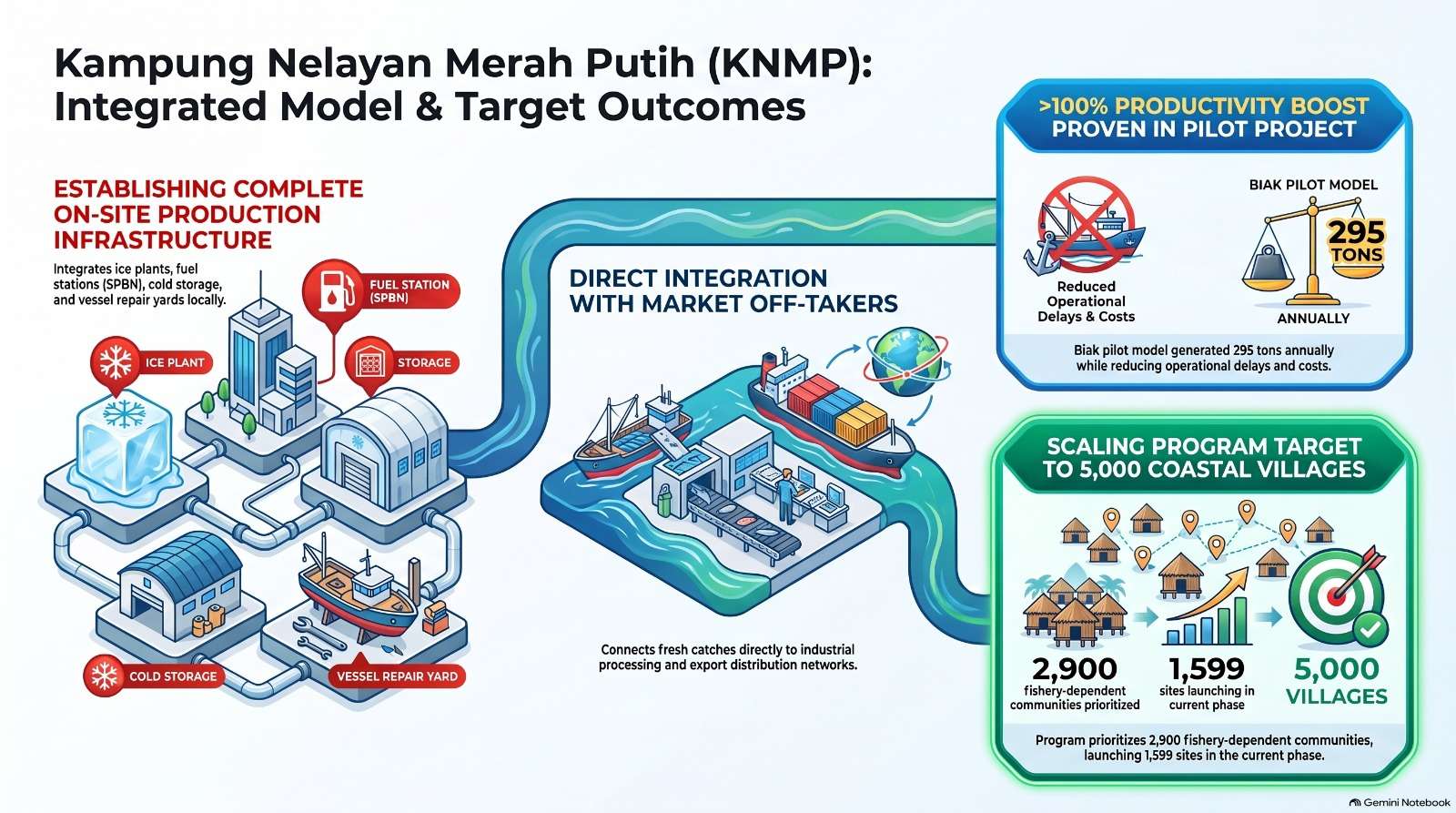
According to Trenggono, developing fishing villages cannot be limited to distributing fishing equipment or providing infrastructure in isolation. The government must establish an integrated fisheries business ecosystem, encompassing production facilities, fish storage infrastructure, access to fuel and supplies, boat repair services, and reliable market access.
He delivered these remarks at a focus group discussion (FGD) titled Red-and-White Fishing Villages: From Policy to Fishermen’s Welfare, organized by Kompas.id at Menara Kompas in Jakarta on Monday, October 19, 2026.
During the discussion, Trenggono outlined several fundamental challenges facing Indonesia’s marine and fisheries sector and explained how the KNMP program is designed to address issues of productivity, welfare, and the sustainability of fish resources.
Food Security and the Future of the Fisheries Sector
Trenggono began by placing the marine and fisheries sector within the broader context of national food security. He argued that global population growth, mounting pressure on natural resources, and geopolitical uncertainty require every country to strengthen its capacity to meet its own food needs.
He referred to projections that the world’s population will approach 10 billion by 2050. Under these circumstances, disruptions to global supply chains, international conflicts, and surging commodity prices could directly affect food availability.
According to Trenggono, the experience of the COVID-19 pandemic demonstrated the vulnerabilities that arise when countries depend heavily on foreign supplies, particularly when global distribution networks are disrupted.
Food security, therefore, cannot be viewed solely as a matter of agricultural production. Indonesia must also strengthen its animal-protein sources, particularly fish, which has considerable potential to meet the population’s protein requirements.
Trenggono explained that food needs encompass carbohydrates, fats, and proteins. In his assessment, Indonesia possesses substantial natural resources to support all three components. In fisheries, the country’s marine wealth and aquaculture potential should serve as strategic assets for the national economy.
However, these abundant resources have not yet been matched by sufficient industrial capacity, technological expertise, and effective production management.
Consequently, fisheries development is not simply about increasing catches. It is also about managing resources sustainably and transforming them into greater economic value.
Fisheries Productivity and the Industry Gap
Trenggono compared Indonesia’s fisheries sector with those of several countries, particularly Vietnam and China, to illustrate the considerable room for productivity improvements.
During his presentation, he cited Vietnam’s fisheries production at approximately 25 million tonnes, with the majority coming from aquaculture.
China’s fisheries production, meanwhile, was cited at approximately 83 million tonnes, also supported by large-scale aquaculture development.
According to Trenggono, these figures demonstrate that competitiveness in fisheries is determined not merely by the size of a country’s maritime territory or the number of its fishing vessels. Technological mastery, sustained research, investment, and the capacity to develop aquaculture are equally important in building a competitive fisheries industry.
He cited grouper aquaculture as an example of a commodity that had previously been one of Indonesia’s fisheries strengths.
In his view, when aquaculture development lacks consistent policy support and technological advancement, other countries can capture the market opportunities that Indonesia once possessed.
This experience illustrates that abundant natural resources do not automatically translate into national competitive advantages. Such advantages must be built through long-term research, innovation, and a clear commitment to industrial development priorities.
Trenggono stressed the importance of developing core competence—the distinctive capabilities that give a country a competitive advantage in a particular field.
He cited Norway’s salmon industry as an example of what can be achieved through consistent research and development. Indonesia, he argued, must also identify commodities and production systems capable of becoming national strengths, including tropical fish and mud crab.
Developing these core competencies requires active participation from industry and the banking sector. As long as fisheries remain insufficiently organized as an industry, financing will be difficult to mobilize effectively.
Indonesia’s challenge, therefore, is not simply to increase production volumes, but also to establish a business ecosystem connecting fishermen, technology, financing, processing, and markets.
Managing Fishing Activities and Safeguarding Marine Sustainability
Beyond productivity, Trenggono highlighted persistent challenges in fisheries management.
He questioned whether reported catch volumes accurately reflected the size of the fishing fleet and the actual conditions of fishing activities on the water.
According to him, effective fisheries management requires accurate data on the quantity of fish caught, fishing locations, and the condition of fish stocks in each region.
One important instrument is the Vessel Monitoring System (VMS), which enables authorities to monitor fishing vessels’ positions and activities.
Trenggono argued that vessel monitoring is essential for strengthening oversight, improving fishermen’s safety, and curbing illegal fishing and other activities that violate regulations. However, efforts to implement the system have encountered resistance and debate.
He also expressed concern about the concentration of fishing activity in certain areas. Increasing the number of vessels without considering the carrying capacity of fish stocks could intensify pressure on marine resources and increase competition among fishermen.
Fishing policies, he argued, must therefore reflect the condition of fish resources, fleet capacity, and the needs of fishing communities in each region.
Trenggono also emphasized the importance of marine conservation areas. In his view, the sea is not merely a space for economic production; it also sustains human life through ecological systems that support water quality, the air people breathe, and the long-term availability of natural resources.
Economic interests, he said, must not continually undermine the environment’s capacity to sustain life. If ecological degradation continues unchecked, its consequences will ultimately threaten human welfare and the sustainability of fisheries themselves.
For this reason, fisheries development must proceed alongside conservation, effective monitoring, and data-driven resource management.
Measured Fishing and Strengthening Regional Economies
Trenggono also linked the development of Red-and-White Fishing Villages to Indonesia’s measured fishing policy.
He explained that the policy is intended, in principle, to ensure that fishing activities generate greater economic benefits for the regions where fishermen are based and where fisheries businesses operate.
Fishermen and business operators should not simply extract resources from a particular region. They should also contribute to building economic activity within that region.
The expected benefits include local employment, the growth of supporting businesses, and greater circulation of income within coastal communities.
This approach requires stronger connections between fishing grounds, home ports, fish processing facilities, and markets. Such integration would allow fishing activities to generate broader economic benefits beyond the immediate sale of fish.
Trenggono acknowledged, however, that implementing the policy requires consistent regulations, adequate infrastructure, and a shared understanding among stakeholders.
Effective fisheries management, he argued, must ensure that fish resources are harvested in a measured and sustainable manner while strengthening the position of local communities as key participants in the fisheries economy.
Red-and-White Fishing Villages: Starting with Real Needs
Trenggono explained that the KNMP initiative emerged from the practical challenges fishermen face in their daily activities.
One of the initial models was developed in Biak, Papua. The area was home to approximately 89 fishermen and around 445 family members whose livelihoods depended on fishing.
Field assessments identified several fundamental obstacles. Fishermen struggled to obtain ice to preserve fish quality, had to travel to town to purchase fuel, and lacked adequate facilities to repair their boats when engines broke down.
Their catches were also not supported by sufficient storage facilities. Access to supplies and other business-support services remained limited.
These conditions increased operating costs and made fishing less efficient. Fish that could otherwise command better prices were also at risk of losing quality because of inadequate post-harvest handling.
The government subsequently designed facilities around the needs identified in the field.
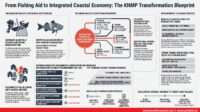
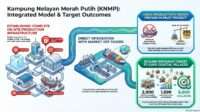
These facilities included an ice-making plant, a boat repair workshop, a supply center, a dedicated fuel station for fishermen, cold storage facilities, and community activity spaces. Food businesses and culinary facilities were also planned to stimulate economic activity in the area.
According to Trenggono, this approach differs from assistance programs that focus solely on distributing fishing equipment or providing isolated forms of support.
Development must address the facilities that directly influence fishermen’s ability to work, maintain the quality of their catches, and earn a livelihood.
With these facilities available locally, fishermen can reduce the time and costs associated with their operations. They also gain better opportunities to sell fresh fish at more favorable prices.
Under this framework, fishing village development is not merely about constructing physical settlements. It is about establishing an integrated fisheries business ecosystem.
The Biak Model and Improvements in Fishermen’s Productivity
Trenggono said the development model in Biak demonstrated improvements in productivity following the construction of fisheries support facilities.
During his presentation, he stated that an evaluation conducted over approximately two years showed a productivity increase of more than 100 percent. He also cited annual fish production of around 295 tonnes at the site.
These figures provided one of the foundations for the government’s efforts to replicate the approach in other fishing villages.
According to Trenggono, higher productivity should not be measured solely by increases in the volume of fish produced. It should also be assessed in terms of operational efficiency, catch quality, sales certainty, and improvements in fishermen’s household incomes.
He explained that the catches from the pilot location had been absorbed by buyers, or off-takers. The fish were purchased and transported to broader markets, including Java, for industrial use and export.
This demonstrates the importance of connecting village-level production facilities with marketing networks beyond the immediate region.
Fishermen cannot simply be expected to produce fish. They need a system that ensures their catches are handled properly, stored when necessary, and purchased by markets with clear quality standards.
Based on this experience, Trenggono believes fishing village development can serve as a gateway to increasing productivity while strengthening the relationship between fishermen and the fisheries industry.
Reaching Thousands of Fishing Villages
Building on the experience in Biak, the government subsequently developed plans to expand the KNMP program on a much larger scale.
Trenggono cited approximately 12,000 coastal villages across Indonesia, including roughly 2,900 villages whose economic activities are heavily dependent on fishing.
According to his account, President Prabowo Subianto subsequently encouraged the program’s expansion, setting a target of developing 5,000 fishing villages.
Trenggono also outlined plans to develop 1,599 locations during the current year. This represents a phase of implementation intended to expand fishermen’s access to production facilities and essential business infrastructure.
Large-scale development, he argued, must follow a thematic approach that takes regional characteristics into account. The needs of fishermen in one village may differ substantially from those in another.
The government must therefore map the number of fishermen, types of fishing vessels, characteristics of local catches, infrastructure conditions, and market opportunities before deciding which facilities to build.
Trenggono sees KNMP as an instrument for strengthening the economic foundations of coastal communities. As productivity and fishermen’s incomes improve, the benefits are expected to extend to trade, services, fish processing, and other local economic activities.
This approach is also aligned with efforts to stimulate economic growth through sectors that directly affect people’s livelihoods.
From Infrastructure to a Competitive Fisheries Industry
For Trenggono, constructing fishing village facilities is only the first stage of a broader transformation. Once basic infrastructure is in place, the government must continue developing production capacity, technology, institutions, and market access.
He highlighted the substantial cost of fuel used in fishing operations. During his presentation, he cited fuel subsidies for fishing vessels at approximately Rp15.5 trillion.
The government is therefore exploring technologies that could reduce fuel consumption, including hybrid propulsion systems. However, their adoption must take into account reliability, durability, investment costs, and suitability for different types of fishing fleets.
Technological development, he emphasized, must not stop at equipment procurement. Fishermen need assistance and training to ensure they can operate and maintain new technologies according to their operational needs.
Trenggono stressed that the fisheries industry must be developed in stages. Basic infrastructure should come first, followed by improvements in fishermen’s capabilities, stronger business systems, and broader market access.
In the long term, he wants traditional fishermen to occupy a stronger position in the fisheries value chain rather than remain merely workers dependent on vessel and capital owners.
He cited Peru as an example of a country that, according to his presentation, restricts fishing activities by certain companies while creating substantial opportunities for fishermen to operate as producers.
The example was intended to underscore the importance of structuring the industry so that coastal communities receive a greater share of the benefits generated by fisheries resources.
Putting Fishermen at the Center of Development
A central principle of the KNMP initiative is that fishermen’s needs must serve as the starting point for development.
Assistance that does not address the main problems encountered in the field risks producing little meaningful change. Fishing equipment, for example, will have limited impact if fishermen continue to struggle to obtain fuel and ice, repair their boats, or find buyers for their catches.
Conversely, when these needs are addressed through an integrated approach, fishermen have greater opportunities to improve efficiency and productivity.
Trenggono also emphasized the importance of extension services and ongoing support. Community spaces within fishing villages can provide opportunities for fishermen, extension officers, government representatives, and business operators to communicate and develop solutions to shared problems.
In this way, development provides more than physical facilities. It also strengthens communities’ capacity to manage their businesses and adapt to change.
Red-and-White Fishing Villages are expected to become a foundation for developing a fisheries industry rooted in the strengths of coastal communities.
Their success should not be measured simply by the number of completed buildings, but by tangible improvements in productivity, catch quality, income, and the sustainability of fishermen’s businesses.
Bringing Welfare and Sustainability Together
Ultimately, Trenggono views the transformation of Indonesia’s marine and fisheries sector as an effort to unite three key objectives: fishermen’s welfare, a stronger fisheries industry, and sustainable marine resources.
Welfare requires higher productivity and reliable market access. Industry requires technology, financing, research, and consistent governance. Sustainability, meanwhile, depends on accurate data, effective monitoring, and the protection of marine ecosystems.
These three objectives must advance together so that higher production does not undermine the capacity of fish stocks to regenerate or marginalize communities whose livelihoods depend on the sea.
Through Red-and-White Fishing Villages, the government aims to establish a foundation connecting fishermen’s basic needs with Indonesia’s broader national economic development agenda.
The next challenge is to ensure that the infrastructure functions as intended, facilities are managed sustainably, markets offer fair value, and fishermen directly benefit from every investment.
Ultimately, Red-and-White Fishing Villages must evolve beyond a coastal infrastructure program into a model of fisheries economic transformation—one that places fishermen at the center, recognizes marine resources as a strategic national asset, and makes community welfare its ultimate objective.
___
Editorial note: This article is based on the presentation delivered by the Minister at the discussion forum. Figures concerning fisheries production, productivity improvements in Biak, development targets, and fuel subsidies should be verified against the original recording or official Ministry of Marine Affairs and Fisheries data before publication. The figures are attributed to the Minister’s presentation and have not been independently verified.