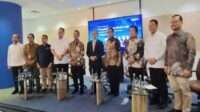

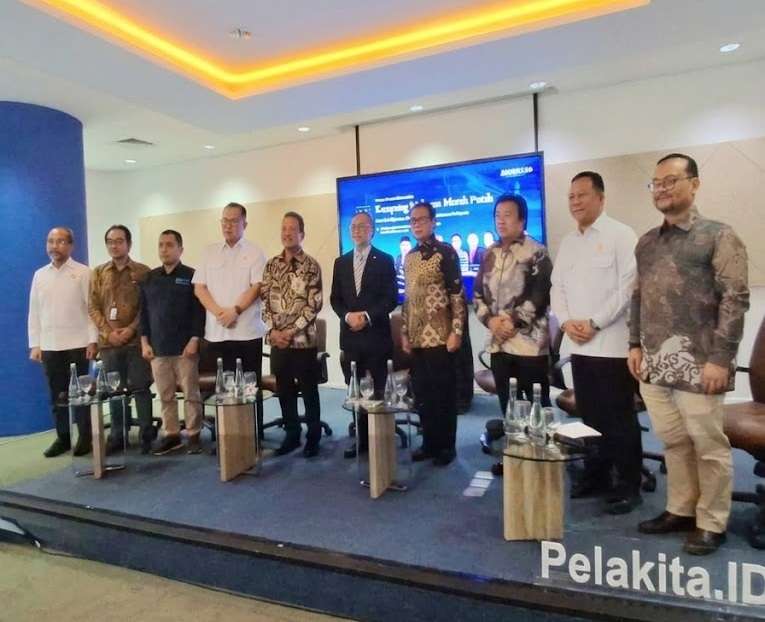
MARITIMEPOSTS.COM – On Monday, October 19, 2026, Kompas.id convened key policymakers, marine scientists, civil society leaders, and parliamentarians at Menara Kompas in Jakarta for a Focus Group Discussion (FGD) titled “Kampung Nelayan Merah Putih: Dari Kebijakan menuju Kesejahteraan Rakyat.”
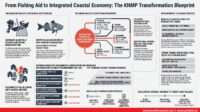
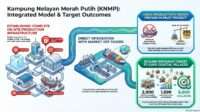
The central premise of this high-level forum was definitive: Indonesia’s flagship national program, Kampung Nelayan Merah Putih (KNMP), must transcend traditional brick-and-mortar development and basic gear distribution. To deliver lasting economic resilience for coastal communities, KNMP must be designed and executed as an integrated, data-driven, and ecologically sustainable perikanan ecosystem.
This executive synthesis compiles critical insights from the forum into Asa Pakar (Experts’ Hopes and Perspectives). Published by Pelakita.ID, this analysis aggregates strategic directives from government ministers, scientific authorities, ecological experts, legislative leaders, and task force directors.
The primary objective of this synthesis is to bridge top-level policy directives with genuine fisher welfare and long-term marine conservation. Physical infrastructure alone cannot dismantle structural coastal poverty. Sustainable prosperity requires aligning ecological baselines, real-world supply chain dynamics, tailored financing models, and localized institutional governance into a unified execution strategy.
High-Level Policy Directive: Elevating Fisher Welfare & Bargaining Power
Coordinating Minister for Food (Menko Pangan), Zulkifli Hasan, emphasized that the driving motivation behind KNMP is rectifying severe economic disparities that keep traditional fishers in poverty despite Indonesia’s vast ocean wealth.
The NTN vs. NTP Disparity
Minister Zulkifli Hasan highlighted a stark contrast between agricultural and maritime producer welfare metrics across the country:
- Farmer Exchange Rate (Nilai Tukar Petani / NTP): Reached 131, up from 116 in 2024, reflecting positive economic returns from structural agricultural interventions.
- Fisher Exchange Rate (Nilai Tukar Nelayan / NTN): Lags critically at 103, underscoring systemic market vulnerabilities in coastal communities.
“Fishers have an exchange rate of 103, whereas rice farmers have reached 131. Fishers are hardworking and catch large volumes of fish. But when sold, the price is low because they lack bargaining power. If they do not sell immediately, the fish rots.” — Zulkifli Hasan, Coordinating Minister for Food
Food Sovereignty & Price Vulnerability
Linking fisher welfare directly to national food sovereignty, Zulkifli argued that excessive reliance on food imports impoverishes domestic primary producers—whether rice farmers, livestock breeders, or fishers. In the marine sector, fisher price vulnerability stems directly from a lack of post-harvest preservation infrastructure.
To illustrate, Zulkifli cited field observations in Kupang, where kembung (mackerel) sold for approximately Rp25,000 per kilogram due to immediate spoilage risks and zero cold storage availability. Without local preservation capacity, fishers are forced to operate as price-takers, dumping catches at distress prices before spoilage occurs.
Required Infrastructure & Operational Support
To build fisher bargaining power, Zulkifli itemized mandatory operational facilities that every functional KNMP site must integrate:
- Cold Storage & Ice Plants: Essential post-harvest units to maintain catch quality, eliminate distress selling, and extend market windows.
- Fish Auction Sites (Tempat Pelelangan Ikan / TPI): Transparent price discovery venues to protect fishers from predatory buying practices.
- Docking Infrastructure & Repair Shops: Secure boat mooring piers and technical service centers to preserve vessel assets.
- Fisher Fuel Stations (SPBN): Direct coastal fuel stations to guarantee affordable, subsidized fuel access and reduce melaut operational overhead.
Target Roadmap & Management Challenges
The government has established an explicit welfare milestone: elevate the national NTN to 120 by 2027 or 2028. To achieve this, physical implementation is phased sequentially:
- Phase 1: 100 Initial Baseline Sites
- Phase 2: 1,300 Operational Sites (by June)
- Phase 3: 2,000 Integrated Sites (by 2027)
- Phase 4: Up to 5,000 Total Target Sites Nationwide
Recognizing geographic and demographic variations, full-scale KNMP developments costing approximately Rp22 billion per site will be adapted for remote outer islands and small island communities through scaled-down “sub-kampung” support models to preserve economic efficiency.
Managerial Capacity & Entrepreneurship
Zulkifli noted that constructing physical assets is insufficient without building human capital. Traditional fishers require hands-on training to transition from pure catch operations to managing commercial assets. Agrinas Jaladri has been tasked with managing KNMP operational facilities while providing step-by-step mentorship to foster fisher entrepreneurship (“mesti diajarin sedikit-sedikit“).
Scientific Governance & Ecosystem Design: Data-Driven Sustainable Fisheries
Head of the National Research and Innovation Agency (BRIN) and Chairman of ICMI, Dr. Arif Satria, stressed that physical construction counts are fundamentally incomplete indicators of program success.
“The true measure of KNMP success is not how many villages are built, how many vessels are distributed, or how complete the facilities appear. The fundamental baseline is the area’s capacity to manage fish resources responsibly, improve catch quality, strengthen fisher bargaining power, and generate long-term economic resilience.” — Dr. Arif Satria, Head of BRIN
Comparative Governance Model: Input Control vs. Output Control in Tropical Fisheries
- Input Control: Regulates harvest inputs—restricting vessel counts, fisher numbers, vessel tonnage (GT), and gear capacity.
- Output Control: Regulates harvest outputs—setting total allowable catches (TAC) and strict individual quota allocations.
The Tropical Multispecies Imperative: Foreign quota-based single-species output models cannot be blindly copied in Indonesia’s tropical waters. Indonesian marine ecosystems possess high biodiversity (multispecies), making stock calculations, quota assignments, and landed catch monitoring across dozens of overlapping species far more complex than in single-species temperate zones.
Phased Quotas & Stock Assessments
Dr. Arif Satria advocated for a phased implementation of quota controls, beginning with migratory, highly trackable species like tuna. Furthermore, he called for the immediate revival of national fish stock assessments (stock assessments) as the non-negotiable scientific foundation for establishing local catching limits, fleet sizing, and community economic carrying capacities before erecting hardware.
Institutional Lessons & Asset Preservation
Drawing on lessons from historical fishing centers such as Pekalongan, Satria explained why once-thriving hubs experienced economic decline: a breakdown in local institutional governance, weak local leadership, and uncoordinated asset management led to facility decay and operational contraction. To prevent KNMP from suffering a similar fate, robust local governance frameworks must precede facility construction.
The 4 Core Agenda Pillars
Satria synthesized his ecosystem framework into four interconnected operational pillars:
- Science & Data: Establish localized fishery baselines (target species, active fleet capacity, market chains) before constructing physical assets.
- Tailored Technology: Deploy technical equipment matching specific fisheries—recognizing that tuna operators require fundamentally different technologies than small pelagic or demersal fishers.
- Market Integration: Connect post-harvest handling directly to markets that reward high quality (citing successful fisher group partnership models in Bali).
- Governance & Leadership: Cultivate strong local institutions (cooperatives, village leadership, business partners) to oversee shared assets and prevent facility decay.
Ecological Foundations & Local Cultural Dynamics
IPB University Marine Ecology Expert, Prof. Dietrich G. Bengen, emphasized that coastal development must strictly adhere to ecological limits and local socio-cultural dynamics.
Hulu-to-Hilir Ecological Integration
Prof. Bengen presented an ecological continuum connecting resource conservation (hulu) directly to processing and socio-economic benefits (hilir). Ecological health and fisher prosperity are mutually dependent: increasing net income requires stable, un-depleted stock foundations.
- Hulu (Resource Conservation): Stock assessment, habitat protection, and biological carrying capacity determination.
- Catch & Post-Harvest Operations: Freshness preservation, quality control, and gear adaptation tailored to target species.
- Hilir (Value Addition & Welfare): Processing, direct market access, and sustainable socio-economic yield distribution.
Cultural Tailoring & Regional Dynamics
Drawing on his background as a Papua native and extensive field research across the archipelago, Bengen cautioned that nationwide standardization will lead to policy failure. Regional social structures dictate community adoption velocity:
- Manggarai vs. Lampung: Field adoption patterns and the time required to build trust and community buy-in vary significantly due to differing local social dynamics.
- Papua (Biak): Interventions must adapt to existing indigenous decision-making structures, traditional resource governance, and community consensus mechanisms rather than imposing external templates.
Small-Scale Capacity & Vessel Scale
Highlighting his research on Southern Java bluefin tuna fisheries dating back to the early 1990s, Bengen noted that vessel scale does not strictly limit economic yield:
“Fishers operating relatively small vessels can generate high-value economic output if backed by appropriate knowledge, operational skills, and strategies adapted to resource characteristics.” — Prof. Dietrich G. Bengen, IPB University
Consequently, infrastructure must be customized to local commodity profiles: pelagic-focused zones require entirely different cold chain logistics, post-harvest handling, and market channels compared to high-value tuna hubs.
Grassroots Reality & Blue Economy Supply Chains
Chairman of the Indonesian Traditional Fishers Union (KNTI), Dani Setiawan, grounded the strategic discussion in operational realities, asserting that the blue economy is an immediate necessity rather than a distant concept.
“Ekonomi biru itu potensi itu bukan lagi masa depan, tapi di masa kini harusnya.” (“The blue economy is not merely a future potential, but a present reality.”) — Dani Setiawan, Chairman of KNTI
Real-World Supply Chain Dynamics
To illustrate actual market dynamics, Setiawan shared an anecdote from Krueng Raya, Aceh, where an economics graduate transitioned into a seafood trade buyer at the local harbor. Seafood commerce operates around vessel arrival schedules rather than standard administrative office hours:
- Late Afternoon / Evening: Fishing vessels land catches at the harbor.
- Overnight (Krueng Raya, Aceh): Intermediaries and buyers sort, trade, and transport fish to processing plants through the early morning hours.
- Pre-Dawn: Processed catches are dispatched to regional markets and distribution networks.
Strategic Takeaway: Public KNMP infrastructure investment must provide 24-hour utility support (uninterrupted electricity, water, ice, and security) and flexible operational frameworks rather than adhering to standard 9-to-5 civil service schedules.
Collaborative Investment Models & Media Oversight
Setiawan emphasized that capital requirements vary across locations (referencing operational scales ranging from Rp3 billion to Rp22 billion). Success requires a multi-stakeholder partnership:
- Government: Provides core public infrastructure and regulatory policy certainty.
- DPR RI: Ensures budgetary allocation and legislative oversight.
- Private Sector: Establishes processing capacity, cold chain logistics, and off-taker market access.
- Fishers & Cooperatives: Drive day-to-day economic operations and community asset management.
Setiawan also highlighted the constructive oversight role played by media entities like Kompas and KG Media in keeping public initiatives accountable, transparent, and aligned with ground realities.
Legislative Safeguards, Financing, and Ecological Limits
Member of Commission IV DPR RI and former Minister of Marine Affairs and Fisheries, Prof. Rokhmin Dahuri, delivered a strategic critique focused on biological limits, net income optimization, and structural credit bottlenecks.
Overfishing Safeguards & Net Income Focus
Prof. Rokhmin warned against expanding physical capacity without assessing biological limits. With approximately 48% of Fishery Management Areas (WPP) facing overfishing, adding vessels or facilities in depleted zones increases competition and operational costs (fuel, time) without increasing total catch volume, severely eroding net fisher margins.
Furthermore, he stressed that productivity must translate directly into net income. Boosting raw catch volume is economically meaningless if operational costs—such as fuel, ice, supplies, and maintenance—consume all revenue. Net profitability must serve as the primary Key Performance Indicator (KPI).
Strategic Pitfalls vs. Recommended Solutions
| Common Project Pitfalls | Recommended Strategic Solutions |
| Over-allocating fleet capacity in depleted WPPs (~48% overfished) | Conduct rigorous stock assessments; pivot overfished zones toward processing, value-addition, and alternative livelihoods. |
| Distress selling due to rapid spoilage | Deploy energy-reliable cold storage and ice plants with affordable service fees and skilled local operators. |
| Value extraction by off-site processors | Establish processing facilities near border regions and outer islands to retain local employment and economic value. |
| Invasive illegal fishing in unexploited zones | Combine modern national fleet expansion with digital Monitoring, Control, and Surveillance (MCS). |
| Severe capital starvation among smallholders | Restructure commercial credit models to provide low-interest, tailored loans for small-scale fishers. |
Financial Inclusion Bottlenecks
Prof. Rokhmin exposed a severe financial bottleneck: the marine and fisheries sector currently receives only about 0.5% of total national bank credit allocations. He urged the government and financial sector to establish specialized low-interest, flexible credit schemes tailored to seasonal production cycles, weather buffer periods, and smallholder collateral limits.
Implementation Roadmap: Operationalizing KNMP 2027
Providing an operational update from the KNMP 2027 Planning Task Force, Task Force Head Muhammad Abdi Suhufan reported implementation progress to Minister of Marine Affairs and Fisheries Sakti Wahyu Trenggono on October 21, 2026, at the Mina Bahari I Building, KKP.
Data Consolidation Pipeline
- 1,681 Initial Proposals submitted by regional governments across Indonesia.
- Data Cleaning & Screening: Eliminated 137 duplicate entries and 40 proposals in non-compliant regencies.
- 1,504 Validated Candidate Locations across 37 provinces and 263 regencies/cities.
- 75.6% originated directly from local government submissions.
- 24.4% derived from KKP national spatial priority mapping.
- 610 sites overlap with KKP reference villages; 894 sites represent non-overlapping local submissions.
- 4,000 Candidate Survey Pool established for nationwide field assessment and feasibility ranking.
Academic, NGO, and Digital Monitoring Network
To conduct rigorous, objective site evaluations across 7 regional zones, the Task Force mobilized a broad technical network:
- Academic Partners: 64 Universities (34 Public / PTN, 30 Private / PTS) contracted under Swakelola Tipe II agreements for technical analysis and quality assurance.
- Civil Society Partners: 43 NGOs/LSMs contracted under Swakelola Tipe III agreements to evaluate social dynamics, community readiness, and local acceptance.
- Field Personnel Training: 64 master trainers completed Training of Trainers (ToT) modules to standardize field evaluation methodologies.
- Digital Monitoring Framework: Field data collection uses KoboCollect, feeding directly into a digital monitoring dashboard evaluated across 4 dimensions and 15 analytical indicators.
Engineering Targets & Tailored Operational Models
The Task Force targets completing 600 location-specific Detailed Engineering Designs (DED) by December 2026, with remaining designs phased through March 2027. Moving away from uniform design templates, site implementation will follow six tailored intervention models:
- Capture Fisheries + Aquaculture Integration
- Capture Fisheries + Processing Focus
- Aquaculture + Processing Focus
- Capture Fisheries + Marine Tourism
- Marine Tourism + Eco-Conservation
- Integrated Multi-Activity Model
Strategic Synthesis: The “Asa Pakar” Action Matrix
| Expert / Speaker | Organization / Role | Strategic Pillar | Core Action Directive for KNMP |
| Zulkifli Hasan | Coordinating Minister for Food (Menko Pangan) | Policy Directive & Infrastructure | Raise NTN to 120 by 2027/2028; deploy cold storage, ice plants, and SPBN fuel stations; utilize Agrinas Jaladri for fisher manager training. |
| Arif Satria | Head of BRIN / Chairman of ICMI | Scientific Governance & Technology | Transition from physical metrics to sustainable ecosystem design; revive stock assessments; phase in quota controls (e.g., tuna); build local leadership. |
| Prof. Dietrich G. Bengen | IPB University / Marine Ecology Expert | Ecological & Cultural Integration | Maintain hulu-hilir ecological continuity; customize infrastructure to local cultural contexts (e.g., Papua/Manggarai); support small-scale high-value operations. |
| Dani Setiawan | Chairman of KNTI | Grassroots Supply Chains | Build integrated supply chains aligned with real-world trading hours; foster public-private-parliamentary synergies; leverage technology for market access. |
| Prof. Rokhmin Dahuri | Member of Commission IV DPR RI / Former KKP Minister | Legislative Safeguards & Credit Access | Enforce overfishing safeguards in depleted WPPs (~48%); optimize fisher net income; establish local processing plants; expand fisheries credit access beyond 0.5%. |
| Muhammad Abdi Suhufan | Head of KNMP 2027 Planning Task Force | Operationalization & Execution | Validate 1,504 target sites; partner with 64 universities and 43 NGOs; deploy KoboCollect dashboards; deliver 600 location-specific DEDs by late 2026. |
Summary Statement
The ultimate success of Indonesia’s Kampung Nelayan Merah Putih relies on maintaining a deliberate balance between fisher welfare, ecological carrying capacity, data-driven spatial planning, and strong local leadership. By uniting rigorous science, strategic investment, legislative oversight, and genuine grassroots participation, KNMP can transform coastal communities from targets of public assistance into thriving, self-sustaining centers of marine prosperity.
Editor: K. Azis