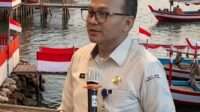


Presenting a paradigm shift in blue economy strategy, Prof. Arif Satria—Head of the National Research and Innovation Agency (BRIN), former Rector of IPB University, and Chairman of the Indonesian Association of Muslim Intellectuals (ICMI)—emphasized that national flagship programs such as Indonesia’s Kampung Nelayan Merah Putih (KNMP) must urgently transcend conventional physical construction models.
MARITIMEPOSTS.COM – For decades, marine development initiatives across emerging maritime nations have fallen into a pervasive infrastructure trap: the flawed assumption that distributing hardware, gifting vessels, and erecting concrete cold-storage facilities will automatically pull impoverished fishing communities into long-term prosperity.
Time and again, capital-intensive public interventions fail to generate self-sustaining economic growth when physical assets are deployed in an institutional and operational vacuum.
This policy paradox took center stage at a Focus Group Discussion hosted by Kompas.id at Menara Kompas in Jakarta, titled “Kampung Nelayan, dari Kebijakan menuju Kesejahteraan Rakyat.”
Presenting a paradigm shift in blue economy strategy, Prof. Arif Satria—Head of the National Research and Innovation Agency (BRIN), former Rector of IPB University, and Chairman of the Indonesian Association of Muslim Intellectuals (ICMI)—emphasized that national flagship programs such as Indonesia’s Kampung Nelayan Merah Putih (KNMP) must urgently transcend conventional physical construction models.
According to Satria, the true benchmark of success for coastal initiatives cannot be evaluated by vanity metrics—such as the count of fishing villages built, hulls distributed, or processing plants constructed.
Instead, public investments must be judged by their ability to establish an integrated, data-backed, and self-sustaining fishery ecosystem that safeguards bio-economic resource thresholds, elevates catch quality, strengthens local bargaining power, and fosters resilient coastal economies.
Why Copy-Pasting Western Fishing Quotas Fails in Tropical Waters
Fisheries management globally relies on two primary regulatory frameworks: input control and output control. Input controls limit harvesting capacity by regulating vessel numbers, engine horsepower, gear specifications, and spatial-temporal access. Output controls, conversely, dictate limits on biomass extraction through Total Allowable Catch (TAC) quotas.
While output-based quota systems are standard practice in developed Western nations, directly copy-pasting these regulatory frameworks into tropical archipelagic waters creates severe policy friction and ecological risk.
The core challenge is rooted in biological complexity. Developed Western fisheries typically operate in temperate, single-species conditions, where stock modeling, quota allocation, and dockside catch monitoring are relatively straightforward.
In contrast, tropical archipelagic waters are inherently multispecies environments characterized by complex food webs and high biodiversity. When rigid single-species output quotas are imposed on multispecies fleets using non-selective harvesting gear, fishermen face immediate regulatory bottlenecks, leading to high rates of unintended bycatch and unrecorded off-gear discards.
To prevent regulatory failure, Satria advocates for a scientific, phased implementation—beginning quota management with migratory, high-value species like tuna that exhibit clearer stock boundaries and established monitoring pathways.
“Indonesia’s tropical waters have high species diversity or are multispecies in nature. This condition makes stock calculation, quota setting, and catch monitoring more complex compared to fisheries dominated by a single species.”
Data Precedes Concrete—The Critical Need to Revive Stock Assessments
Building coastal landing infrastructure without baseline scientific data invites bio-economic collapse. Distributing advanced fishing gear or expanding landing facilities without empirical insight into Maximum Sustainable Yield (MSY) and current utilization rates risks driving already exploited fish stocks past critical ecological thresholds.
To safeguard marine capital, policy-makers must prioritize reviving rigorous, localized stock assessments (stock assessment) before committing capital to physical infrastructure.
Comprehensive scientific assessments provide the foundational baseline required to calibrate fleet capacity with bio-economic thresholds and preserve community livelihoods. Within the KNMP framework, site selection and facility design must be tailored to granular local fishery profiles—mapping target species compositions, fleet operational limits, supply chain bottlenecks, and the precise number of resource-dependent fishermen.
Technology Must Fit the Fish, Not Just the Fleet
Public sector technology deployment in small-scale fisheries is frequently misconstrued as generic hardware distribution—handing out standardized diesel engines, insulated ice boxes, or off-the-shelf processing units.
Deploying uniform hardware across heterogeneous coastal regions wastes public funds by disregarding the distinct operational realities of different target fisheries.
Technological solutions must be precisely matched to species-specific capture and handling dynamics. For instance, offshore tuna operations require extended trip durations, long-distance navigation, and specialized deep-freezing or advanced brine-chilling systems to preserve export-grade quality.
Conversely, coastal small pelagic or demersal fisheries operate on brief, daily harvesting cycles where the primary technical bottleneck is rapid landing site turnover, immediate localized ice production, and short-haul cold-chain continuity. Ultimately, technology must function as an integrated operational system designed to minimize post-harvest losses, preserve thermal integrity, and maximize landed value per unit of catch effort.
Market Partnerships Change Fishermen Behavior Faster Than Rules
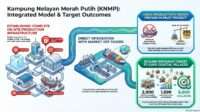
A critical pillar of sustainable blue economy design lies in direct value-chain integration—linking small-scale fishermen to market structures that enforce quality-differentiated pricing mechanisms. Top-down regulatory mandates and conservation lectures rarely alter daily handling practices on the water; direct economic incentives, however, generate rapid and permanent behavioral adaptation.
This economic dynamic is demonstrated by field observations in Bali. Fishermen who established direct commercial buy-back partnerships with cold-storage operators and export processors immediately transformed their onboard handling, icing, and bleed-out protocols.
Because partner buyers provided clear price premiums for grade-A quality and offered guaranteed off-take contracts, fishermen adapted their behavior to meet commercial standards far more effectively than unpartnered fleets. Daily financial returns drive compliance more reliably than state enforcement.
The Pekalongan Warning—Why Local Leadership Determines Long-Term Survival
Physical infrastructure does not ensure perpetual economic vitality. The historical trajectory of Pekalongan—once a booming national center for industrial and artisanal fishing that subsequently experienced a severe downturn—serves as a cautionary case study showing that coastal development is non-linear and vulnerable to systemic disruption.
While Satria stresses that comprehensive empirical study is still required to fully isolate the multi-variable causes behind Pekalongan’s decline, he identifies institutional governance and local leadership as critical vectors under investigation.
When central government subsidies recede, high-capital assets quickly deteriorate, suffer operational underutilization, or undergo elite capture if robust local management structures are missing.
Long-term sustainability requires institutional governance with clear, legal operational roles mapped across local cooperatives, business groups, facility managers, village authorities, and private enterprise partners. Capable local leadership builds community trust, resolves resource conflicts, and ensures public assets generate equitable returns.
“Without good governance, facilities built with large investments risk being neglected, not utilized optimally, or only benefiting a small portion of business actors.”
Synthesis and the Path Ahead for the Blue Economy
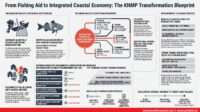
Creating resilient, self-sustaining coastal communities requires moving past disconnected infrastructure projects. Synthesizing insights from marine policy and tech-economic analysis yields a clear strategic formula: Science + Targeted Tech + Market Incentives + Local Leadership = Sustainable Coastal Ecosystem.
Isolated inputs yield compounded failures: hardware distribution without stock assessment accelerates bio-economic depletion; technology without market linkages increases operational costs without raising net incomes; and physical infrastructure without local institutional leadership leads to capital decay.
Programs like the Kampung Nelayan Merah Putih must be executed as interconnected socio-ecological systems rather than static engineering deliverables.
As blue economy frameworks expand globally, development institutions and government leaders face a fundamental strategic choice: Will coastal development continue to be judged by vanity metrics of concrete poured and hardware distributed, or will success finally be defined by the data-backed, long-term economic and ecological resilience of coastal communities?
___
Editor Kamaruddin Azis