
Between 2019 and 2025, NFC Indonesia recorded 188 formal complaints involving 571 victims. Crucially, 68% of these complaints came from domestic fishers operating within Indonesian territorial waters, while 32% involved overseas vessels. This reframes a common misconception—labor exploitation is not merely an international migration issue; it is deeply embedded in domestic fisheries management.
MARITIMEPOSTS.COM – When you buy fresh fish at a local market or restaurant, do you ever wonder about the invisible journey it took to reach your plate?
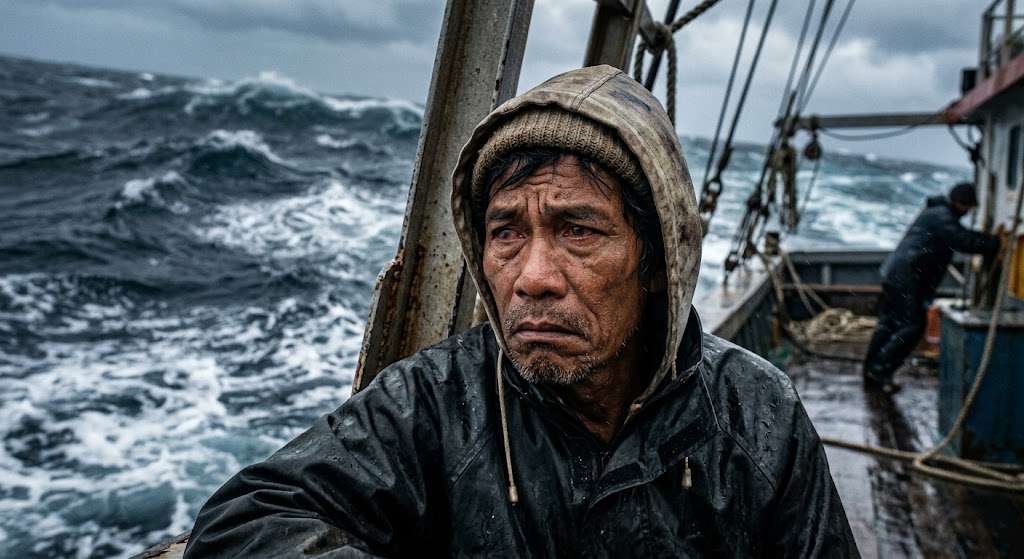
Behind the rising national export numbers and glowing economic reports of the “Blue Economy” lies a harsh reality: hundreds of fishers spending months at sea, working under extreme physical hazard, trapped by debt, and stripped of basic legal protections.
The Blue Economy Paradox and the Tip of the Iceberg
In economic discourse, Indonesia’s marine resources are frequently celebrated through statistics. According to Central Bureau of Statistics (BPS) figures cited by the National Fishers Center Indonesia (NFC-I), the fisheries sector’s contribution to national Gross Domestic Product (GDP) steadily grew from roughly 2.1% in 2010 to 2.54% in 2025.
Under the umbrella of the “Blue Economy,” ocean expansion is framed as a driver of national prosperity, job creation, and export revenue.
However, macro-economic expansion does not automatically translate into safe or fair working conditions on the water. Data compiled in the NFC Report 2025 reveals a persistent paradox: record seafood production often relies on unpaid wages, 14-plus-hour workdays, document confiscation, and severe lack of social security.
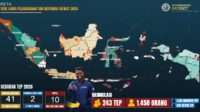
Between 2019 and 2025, NFC Indonesia recorded 188 formal complaints involving 571 victims. Crucially, 68% of these complaints came from domestic fishers operating within Indonesian territorial waters, while 32% involved overseas vessels. This reframes a common misconception—labor exploitation is not merely an international migration issue; it is deeply embedded in domestic fisheries management.
Why are these numbers described as the “tip of the iceberg”? Because NFC’s data relies on voluntary self-reporting. To file a complaint, a worker must overcome monumental structural barriers:
- Deeply entrenched patron-client relationships aboard vessels.
- Debt bondage that makes workers fear retaliation.
- Minimal awareness of legal rights or accessible complaint channels.
- A culture where severe mistreatment is normalized as “just part of working at sea.”
Who is responsible? In the 2019–2025 dataset, corporate vessel owners accounted for 38.98% of reported violations, recruitment agencies represented 33.51% (split between licensed agencies and informal brokers), and individual vessel owners accounted for 23.40%. Trapped between market demands for high yield and weak operational oversight, fishers pay the human price for cheap seafood.
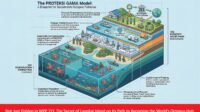
Fisher Vulnerability & Complaint Breakdown
An infographic visualizing the 2019-2025 complaint data, comparing domestic vs. international cases and mapping the primary entities responsible for violations.
To understand how healthy young workers become trapped in forced labor, we must look at the specific operational mechanisms used by predatory recruiters (calo) and vessel operators.
In the period from December 2024 to November 2025 alone, NFC Indonesia received 37 complaints representing 113 victims. Over 91.9% of these 2025 cases were domestic. Most victims were young adults—the 25–30 age bracket was the largest group (13 victims), followed by 31–40 (10 victims) and 17–24 (9 victims). Disturbingly, student interns undergoing mandatory practical field work (Praktik Kerja Lapangan or PKL) were also lured into full-time crew roles without safety training or parental knowledge, putting minors at severe risk of forced labor.
The three most frequent violations reported in 2025 highlight how financial and legal control is maintained:
- Unpaid or Deducted Wages (43.2%): Salaries are routinely withheld until contracts end, reduced without explanation, or eaten away by non-transparent cost-sharing.
- Document Retention (13.5%): Recruiter or captain confiscation of identity cards (KTP), Seaman’s Books (Buku Pelaut), and Basic Safety Training for Fisheries (BST-F) certificates.
- Absence of Social Security & Medical Care (8.1%): Injured workers pay medical costs out-of-pocket, while families of fishers lost at sea are pressured into informal “peace settlements” that forfeit further legal claims.
A particularly oppressive financial trap highlighted in the report is tendoan. Imagine starting a new job, but before your first day, your boss transfers the financial loss from their previous business venture onto your paycheck. That is tendoan: shipowners or captains calculate vessel maintenance, previous trip losses, or fuel costs and arbitrarily convert them into personal debt owed by the crew. Fishers begin their voyage owing millions of rupiah for expenses they never incurred.
How do workers fall into these traps? Increasingly, through social media. Unregulated recruiters (calo) heavily utilize platforms like Facebook job groups and OLX. Pen-testing by investigators in late 2025 found hundreds of postings using emotionally manipulative hooks aimed at desperate job seekers: “Laid off? Need high pay? No KTP required—we can help! No experience needed.” These listings rarely disclose company names, vessel conditions, or legal contract terms, ensnaring workers before they ever set foot on a dock.
Human trafficking in the maritime sector is not a single isolated event; it is an integrated chain of exploitation that spans land and sea. The NFC report models suspected Human Trafficking (Tindak Pidana Perdagangan Orang or TPPO) in domestic fisheries across four sequential stages:
- The Pre-Work Stage (Pra-kerja) Exploitation begins with deceptive recruitment. Job seekers are promised attractive monthly salaries (e.g., Rp 3,000,000 to Rp 6,000,000), generous cash advances (kasbon), clear contract terms, and free onboard amenities like food and cigarettes. In reality, these promises are deceptive lures designed to secure commitment.
- The Placement Stage (Penempatan) Once recruited, candidates are transported to holding houses or crew shelters (mess). During this waiting period—which can stretch from days to months—workers are isolated. Recruiters seize their personal identification cards (KTP), restrict communication with families, and alter the original terms of employment (e.g., lowering base wages or extending contract lengths from 3 months to 10 months). If a worker tries to leave, they are threatened with exorbitant billings for their lodging and food.
- The Working Stage (Masa kerja) Workers are placed onto vessels without signing a formal Sea Work Agreement (Perjanjian Kerja Laut or PKL), without safety training, and without safety gear. At sea, they face grueling 14- to 20-hour workdays, spoiled food, untreated seawater for drinking, and physical or verbal abuse from captains. Document confiscation prevents them from fleeing when vessels dock at intermediate ports.
- The Post-Work Stage (Pasca-kerja) When the fishing season ends, the exploitation continues. Operators withhold final wage payouts claiming the fisher must pay back fabricated tendoan debts or recruitment fees. In severe cases, workers are simply abandoned at distant ports hundreds of kilometers from home without transportation funds.
Recognizing this continuum reveals a vital principle: maritime exploitation does not start when the ship sets sail. It begins on digital job boards, matures in land-based transit shelters, intensifies on the open water, and persists long after the catch is landed.
To see how these abstract mechanisms play out in human terms, consider three strategic cases documented by NFC Indonesia between 2024 and 2025:
KM Sumber Rizqi-A: Jumping into the Ocean Four young men from Serang, Banten, were recruited via Facebook with promises of Rp 3–6 million monthly wages and a Rp 4 million cash advance.
After being moved to Jakarta and then Brebes, their KTPs were confiscated at a shelter. The offered wage was unilaterally cut to Rp 1.2 million per month, and their contract extended to 10 months. Sent to sea without basic safety certification (BST-F) and with forged contract signatures, they were forced to fish for squid from midnight to dawn under extreme verbal abuse. Desperate to survive, the four crew members leaped into the open ocean to escape. While reported to law enforcement agencies (Bareskrim Polri and Komnas HAM), the case faced severe evidentiary delays and attempts by owners to settle out of court through low-value cash offers in exchange for signed liability waivers.
KM Mitra Usaha Semesta & Run Zheng 03: Tragedy in the Arafura Sea Around 60 workers were recruited via Facebook and deployed to the remote Arafura Sea without BPJS social security, safety gear, or valid sea contracts. Aboard the Run Zheng 03, crew members faced non-stop shift work, spoiled food, and refusal of holiday bonuses. When workers demanded their unpaid wages and requested to return home, they were met with threats. Multiple fishers jumped overboard to save themselves; one worker drowned. Law enforcement stalled across jurisdictional transfers, prompting rights advocates to file formal reports with police oversight bodies (Kompolnas and Itwasum).
KM Awindo 2A: A Historic Legal Breakthrough Recruited via Facebook under the pretense of shore-based factory or collection vessel work, recruits were instead forced onto a squid vessel out of Benoa, Bali.
Upon arrival at the port, workers were denied shore leave, their phones and KTPs were seized, and they were charged an arbitrary Rp 2,500,000 “rope release fee” (biaya lepas tali). Onboard, they inhaled chemical fumes while painting and bailing solar fuel without protective equipment, and were forced to drink seawater mixed with freshwater.
However, this case marked a critical legal milestone: Reported to the Bali Regional Police, five defendants were prosecuted under human trafficking laws.
On June 25, 2026, the Denpasar District Court sentenced the perpetrators to 3 years in prison and a Rp 200 million fine, a verdict upheld and increased to 3.6 years on appeal on August 10, 2026. This stands as a pivotal legal precedent in prosecuting domestic maritime human trafficking.
Roadmap for Structural Reform
To dismantle this systemic crisis, NFC Indonesia and DFW Indonesia outline eight strategic recommendations aimed at reforming maritime labor governance:
- Enforce Direct Sanctions on Vessel Owners: Legal prosecution must not end with minor wage back-payments. Operators must face severe penalties for operating without Sea Work Agreements (PKL), forging signatures, or lacking safety documentation.
- Enforce Wage Transparency: Operating expenses, fuel, vessel depreciation, and trip losses must be legally separated from crew compensation. Workers must never act as financial buffers for vessel operational risks.
- Establish a Sectoral Minimum Wage: Regional minimum wages (UMK) are designed for 8-hour land-based jobs. A dedicated sectoral minimum wage must be created for fishers to reflect high occupational hazards, isolated environments, and extended shift hours.
- Mandate At-Sea Inspection Protocols: Port-side dock checks are easily faked. Authorities must conduct active labor inspections while vessels are operational at sea to monitor actual working hours, food quality, and communication access.
- Regulate Digital & Informal Recruitment: Tighten oversight of social media job portals (Facebook, OLX) and mandate strict registration and joint-liability rules for recruitment agencies and brokers.
- Align Domestic Law with ILO Convention 188: Implement international standards governing written contracts, mandatory medical checks, rest periods, decent living accommodations, and guaranteed repatriation rights.
- Target Beneficial Owners: Law enforcement must look beyond low-level field recruiters (calo) to prosecute the true financial beneficiaries and corporate entities profiting from forced labor.
- Empower Fisher Unions: Support independent unionization and collective bargaining among crew members to break patron-client isolation and give workers a unified voice at sea.
Summary
Behind the economic figures of Indonesia’s growing Blue Economy lies a severe human rights crisis in domestic waters. Ending labor exploitation at sea requires moving beyond isolated wage disputes to systematically dismantle debt bondage, unregulated digital recruitment, and corporate impunity.
Key Takeaways:
- Domestic Predominance: Over two-thirds of reported fisher labor violations occur on domestic vessels within Indonesian waters, challenging the belief that forced labor is primarily an overseas migration issue.
- Predatory Financial Mechanisms: Tools like tendoan (transferring vessel operational losses to crew as personal debt) and document retention serve as core drivers of forced labor and human trafficking.
- The Digital Recruitment Trap: Informal brokers increasingly use platforms like Facebook and OLX to lure vulnerable job seekers with deceptive wage claims and zero-barriers entry.
- Legal Precedents & Reform: Breakthrough court cases like KM Awindo 2A demonstrate that TPPO laws can be successfully enforced against domestic operators, but long-term change requires aligning national policy with ILO Convention 188 standards.