
From Data and Local Potential to Readiness for Building a Fisherfolk Economic Ecosystem
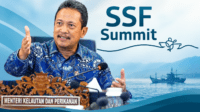
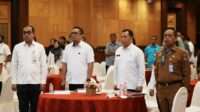
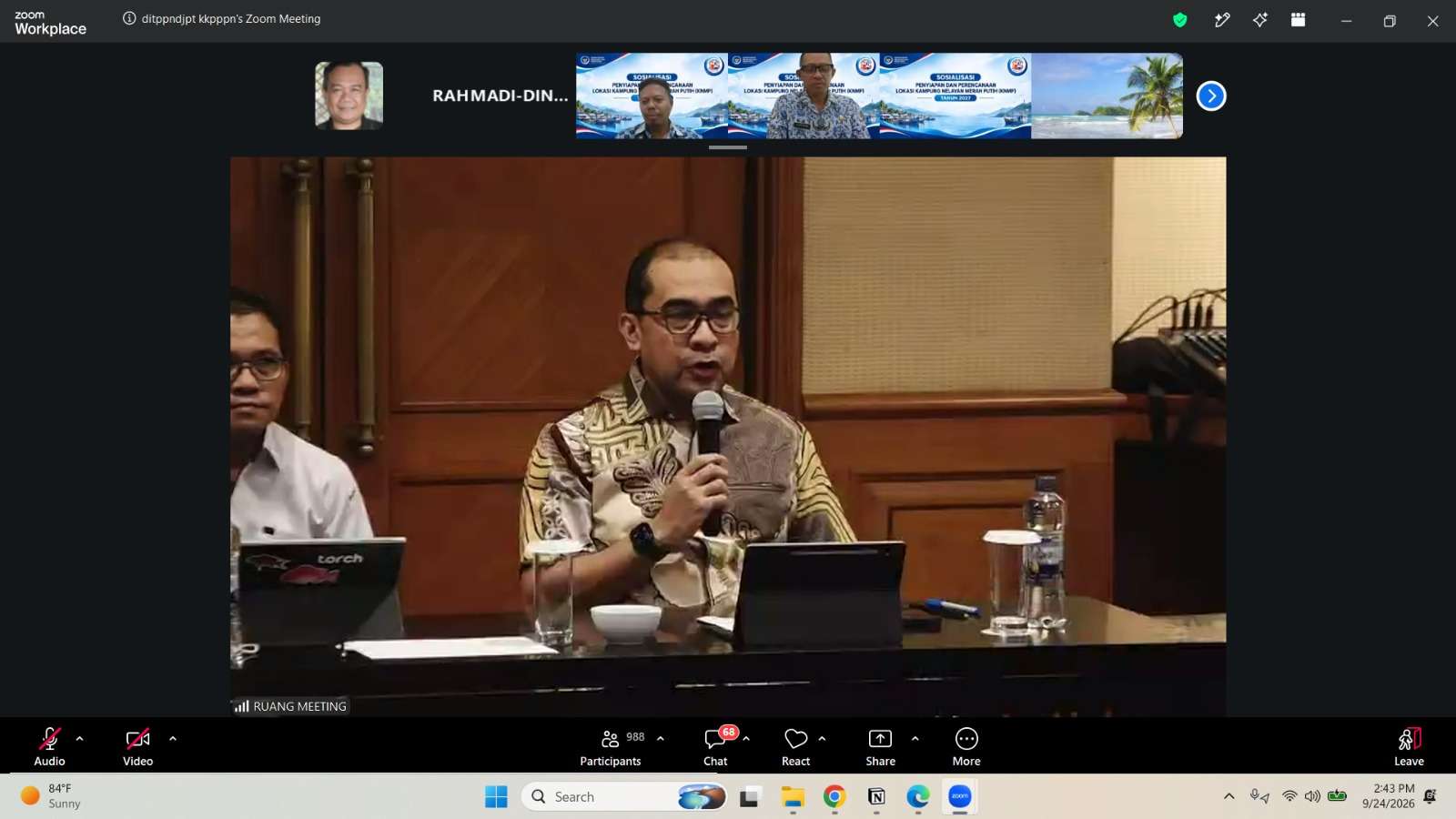
At the 2027 KNMP Socialization and Planning Forum, attended by more than a thousand representatives from provincial and district/city governments, Mohammad Abdi, an expert on the protection of fishers and fishing-vessel crews, explained that the scale of KNMP is substantial. The government has completed the first phase in 65 locations and the second phase in 35 locations, while the third phase, covering approximately 1,200 locations, is currently underway.
MARITIMEPOSTS.COM — The Red-and-White Fisherfolk Village, or Kampung Nelayan Merah Putih (KNMP), has entered an important phase. Following several stages of implementation, the government is now preparing the 2027 KNMP plan through an earlier, data-driven approach that takes local characteristics into account and places site readiness as a fundamental prerequisite before physical construction begins.
Through the Ministry of Marine Affairs and Fisheries (KKP), the government has positioned KNMP as part of a broader agenda to transform Indonesia’s coastal areas.
The initiative goes beyond constructing houses, jetties, fish auction facilities, processing centers, or fisheries production infrastructure. Its broader objective is to establish an economic ecosystem in which fishing communities can become more productive, resilient, and sustainable.
Behind this commitment lies a major task that is not always visible: ensuring that thousands of potential sites are not merely administratively eligible for development, but genuinely possess a fishing-community base, fisheries potential, community support, land readiness, institutional capacity, adequate access, and economic opportunities capable of sustaining the facilities once construction is completed.
This is where KNMP 2027 planning becomes particularly significant. The government is essentially addressing a fundamental question in place-based development: how can public investment move beyond infrastructure and become a living economic activity that generates tangible benefits for communities?
Learning from Previous Phases
At the KNMP 2027 Socialization and Planning Forum, Mohammad Abdi, an expert on the protection of fishers and fishing-vessel crews, explained that the scale of the KNMP program is substantial. The government has completed the first phase in 65 locations and the second phase in 35 locations, while the third phase covers approximately 1,200 locations currently under implementation.
Under the national target, the government aims to develop up to 5,000 Fisherfolk Village sites across Indonesia.
This means that the next challenge is not simply to increase the number of locations, but to ensure that every selected site has an adequate level of readiness and development relevance.
Experience from previous phases indicates that development challenges do not always lie in construction itself. Site preparation, land certainty, environmental documentation, surveys, technical design, local government support, and community acceptance can all require considerable time.
“When planning processes take place too close to the construction schedule, these challenges can emerge simultaneously with implementation. As a result, construction schedules may be disrupted, while the interventions themselves may not fully respond to community needs,” he said.
KNMP 2027 seeks to reverse this pattern. Planning is being brought forward into 2026 so that, when the construction budget becomes available, selected locations are already in a substantially higher state of readiness.
In other words, 2027 is expected to be a year for construction—not a year for starting to figure out what needs to be built.
From Data to Decisions
The KNMP 2027 approach is built around a relatively simple but decisive chain of logic: data, field verification, readiness, economic model, and then physical design.
National datasets and proposals from local governments provide the starting point for identifying potential locations. Yet data is not treated as the final truth. Every proposed site must still be verified against actual conditions on the ground.
This is important because administrative data does not always capture the dynamics of a fishing village. The number of fishers, types of economic activities, existing facilities, market access, land status, potential conflicts, social conditions, and local institutions all need to be examined directly.
Locations are then assessed according to need, marine and fisheries potential, readiness, connectivity, and access. The assessment framework consists of four dimensions, 13 variables, and 15 indicators.
The dimensions of need and marine and fisheries potential each carry a 30 percent weighting, while readiness accounts for 25 percent and connectivity and access for 15 percent.
This structure indicates that development is not directed solely toward locations with high levels of need, but also toward places that possess meaningful development potential and sufficient readiness to receive public intervention.
Six Gates Before Construction
Before entering the scoring stage, however, proposed locations must first meet several mandatory requirements.
- First is a fishing-community base: the presence of communities whose primary livelihood and economic activities are connected to fisheries.
- Second is institutional capacity: including the existence of a Red-and-White Village/Subdistrict Cooperative or another local institution capable of managing the facilities and activities.
- Third is land and access: particularly certainty over land status and adequate access to the water for operational activities.
- Fourth is electricity and water: two basic utilities that often determine whether economic facilities can operate effectively.
- Fifth is fishery potential: the availability of fishery resources capable of supporting sustainable economic activities.
- Sixth is community acceptance: including support from local governments and village or subdistrict administrations.
These requirements carry an important message: not every location should be forced into the KNMP program. Sites that are not yet ready need to be assisted and prepared first, while locations that fail to meet mandatory requirements should not be pushed into the construction stage.
Avoiding Idle Infrastructure
One of the central issues that any area-based development program must address is the risk that facilities may eventually become underutilized or idle. Infrastructure can be physically completed without generating meaningful economic activity if its design is disconnected from the actual needs of local enterprises.
KNMP 2027 seeks to address this problem by reversing the conventional logic of infrastructure development.
The question is no longer “What facilities are available, and how can communities be encouraged to use them?” Instead, it begins with “What economic activities already exist, what functions are needed, and what facilities are required to support them?”
Under this logic, the economic unit becomes the starting point for determining functional requirements. These are then translated into infrastructure and facility needs before being incorporated into the Detailed Engineering Design (DED) and Bill of Quantities or Budget Plan (RAB).
This approach matters because no two fishing villages necessarily share the same economic profile.
No Single Model Fits All
KNMP 2027 promotes development models based on local characteristics. A capture-fisheries area, for example, requires different facilities from a community whose economy is primarily based on aquaculture or fish processing.
At least five development typologies have been identified: capture fisheries and processing; capture fisheries and aquaculture; capture fisheries and marine tourism; aquaculture and processing; and integrated or multi-product development.
In capture-and-processing areas, for instance, interventions can focus on increasing the added value of landed fish. In capture-and-aquaculture areas, income diversification can be pursued through the development of marine or coastal aquaculture.
Areas with tourism potential can integrate fisheries activities with marine tourism and ecosystem-based services. In aquaculture-based areas, attention can focus on the downstream development of locally important commodities, while multi-product models can be applied in areas with diverse economic foundations.
This means that physical design is no longer the starting point of development. The local economic profile becomes the basis for determining the appropriate intervention.
Local Governments Are More Than Just Proposers
Mohammad Abdi emphasized that under the KNMP 2027 framework, local governments have a more strategic role than simply submitting a list of proposed locations to the central government.
KKP provides initial location references based on national datasets. However, local governments retain the opportunity to propose alternative locations if those sites are considered more appropriate based on actual local conditions.
Importantly, a location reference provided by the central government does not automatically become a survey site. Local governments must verify the proposal, coordinate with village or subdistrict authorities, and ensure that the proposed site has the necessary support and readiness.
The “one form, one candidate location” principle is also intended to ensure that submitted information is specific, traceable, and accountable.
This gives local governments an important opportunity to ensure that KNMP does not become merely a program delivered from the center, but one that is genuinely integrated into regional development priorities.
Universities and NGOs as Knowledge Partners
The scale of the program and the diversity of Indonesia’s regions mean that the government cannot work alone. KNMP 2027 therefore creates space for universities and non-governmental organizations (NGOs) to serve as implementation partners in surveys, verification, and assessment.
The involvement of third parties can add value by providing a more independent reading of conditions on the ground. Universities can strengthen data-driven and methodological approaches, while civil society organizations can contribute their experience of working directly with local communities.
Such collaboration will be more meaningful if it goes beyond data collection and succeeds in translating local knowledge into recommendations for physical design, institutional arrangements, and enterprise development.
Four Decisive Stages
From an analytical perspective, if KNMP 2027 is to be robust and relevant to local needs, its planning process needs to follow four major stages.
- The first stage is the identification and preparation of candidate locations, beginning with socialization and the submission of location references to local governments.
- The second stage is survey, verification, and assessment, using the framework of four dimensions, 13 variables, and 15 indicators. This process is expected to produce a list of priority candidate locations through a layered quality-control mechanism.
- The third stage is readiness facilitation, in which priority locations receive assistance to address identified gaps, particularly regarding land, institutions, and community support.
- The fourth stage is KNMP planning, covering the development of the area concept, master plan, technical surveys, DED, RAB, and recommendations for formal location designation.
If these four stages are implemented consistently, physical construction in 2027 will have a stronger foundation because investment decisions will have been preceded by systematic identification, verification, and assessment.
Time Is Part of the Solution
The KNMP 2027 timeline also demonstrates how limited the window is for local governments to ensure that their proposals are properly prepared.
- Socialization and the submission of location references begin on September 24, 2026, while the deadline for local governments to submit candidate locations is October 9, 2026.
- Technical screening and clarification take place from October 10–15, 2026, followed by the official designation of locations for field surveys, verification, and assessment on October 16, 2026.
This timetable requires local governments to move quickly, but speed must not come at the expense of data quality. This is precisely where the single-entry data system becomes important, allowing information collected at the initial stage to be used consistently throughout the planning process.
Digitalization in this context is not simply about transferring paper forms into an electronic system. More importantly, it should ensure that every decision has a traceable evidence base and an auditable data trail.
Recommendations: Do Not Stop at the DED
Several issues deserve attention as KNMP 2027 moves forward.
- First, data should be treated as the foundation of decision-making, not merely as an administrative requirement. Social, economic, ecological, infrastructure, land, and institutional data need to be read together to produce a comprehensive picture of each location.
- Second, community readiness should carry meaningful weight in development decisions. Good infrastructure without capable managers, viable business models, and prepared beneficiaries risks losing its function once the project is completed.
- Third, area design should be connected to the local fisheries value chain. Production, landing, storage, processing, distribution, marketing, and access to finance should be understood as components of one economic ecosystem.
- Fourth, KNMP success indicators should not stop at the number of completed locations and buildings. Further measures should include facility utilization, enterprise growth, increased value addition, community income, institutional performance, and ecosystem sustainability.
- Fifth, post-construction assistance should be designed before construction begins. Cooperatives or local management institutions need to understand business models, asset governance, facility maintenance, and benefit-sharing mechanisms before infrastructure is handed over.
- Sixth, ecological potential must be considered part of economic viability. Fishing villages that depend on the sea cannot be separated from coastal ecosystem health, water quality, sustainable fishery resources, and environmental carrying capacity.
From Projects to Ecosystems
KNMP 2027 faces a challenge far greater than simply selecting thousands of locations and preparing thousands of planning documents.
The real challenge is to ensure that every public investment finds its appropriate context, every facility has users, every user has an economic opportunity, every enterprise has access to markets, and every economic activity remains within the limits of environmental carrying capacity.
If this logic is consistently applied, KNMP can move from a project-based development paradigm toward an ecosystem-based approach.
This is where the government’s commitment will be tested—not simply by how many villages can be built, but by how far those villages can develop into productive and resilient places, connected to markets, supported by strong institutions, and capable of maintaining the sea as a source of life.
KNMP 2027, therefore, is more than another development agenda within the next budget cycle. It is an opportunity to improve how the state understands and approaches coastal communities: starting with data, tested in the field, filtered through readiness, designed around local potential, and ultimately measured by the benefits that remain after the project is completed.
Building a fishing village is not simply about constructing homes and production facilities.
What matters far more is building a coastal livelihood ecosystem that enables fishers to work, families to sustain themselves, businesses to grow, and the sea to remain a source of life for generations to come.
Kamaruddin Azis
Maritime Journalist