
Associate Professor, Faculty of Marine Science and Fisheries, Hasanuddin University | Visiting Research Scholar, Center for Southeast Asian Studies, Kyoto University, Japan (2026–2027)
MARITIMEPOSTS.COM – Dr. Andi Amri is an Indonesian academic and marine and coastal development scholar whose work connects fisheries science, coastal resource governance, mangrove conservation, and community-based development.
Based at the Faculty of Marine Science and Fisheries (FIKP), Hasanuddin University (Unhas), in Makassar, Indonesia, he has developed an academic and professional career that bridges scientific research, university leadership, international cooperation, and practical engagement with coastal communities.
With a Ph.D. in Asian and African Area Studies from Kyoto University, Japan, his academic interests extend beyond conventional fisheries science to encompass the complex relationships between coastal ecosystems, local livelihoods, institutional arrangements, and environmental governance.
His work reflects a multidisciplinary perspective in which sustainable marine resource management requires not only scientific knowledge and technological innovation, but also meaningful community participation, effective institutions, and collaboration across national and disciplinary boundaries.
Academic Formation and Research Foundations
Dr. Amri completed his doctoral studies at the Graduate School of Asian and African Area Studies (ASAFAS), Kyoto University, in 2005.
His doctoral research examined silvofishery systems, coastal resource management, and community development in South Sulawesi, Indonesia. This research established an enduring foundation for his interest in the relationship between ecological conservation and the socioeconomic wellbeing of coastal communities.
His academic formation in Japan exposed him to interdisciplinary approaches to understanding human-environment relationships, particularly the importance of integrating local knowledge, institutional governance, and ecological sustainability into natural resource management. These perspectives have continued to shape his research interests and professional engagement in Indonesia and Southeast Asia.
Following his doctoral studies, he continued his academic career at Hasanuddin University, contributing to teaching, research, and institutional development within the Faculty of Marine Science and Fisheries.
His scholarly interests have progressively expanded to include mangrove restoration, political ecology, maritime anthropology, the blue economy, seaweed development, and human-nature coexistence.
University Leadership and International Engagement
Beyond his academic responsibilities, Dr. Amri has held several strategic positions within Hasanuddin University, contributing to institutional governance and internationalization.
From June 2010 to September 2013, he served as Executive Secretary to the Rector of Hasanuddin University. This appointment provided him with extensive experience in university administration, institutional coordination, and strategic engagement at the highest level of university management.
He subsequently served as Head of the International Office of Hasanuddin University from 2014 to 2018. In this capacity, he was involved in strengthening the university’s international academic relationships, facilitating institutional partnerships, and supporting international engagement involving students, researchers, and academic institutions.
These leadership experiences complemented his academic career by providing an understanding of how universities can function as platforms for international knowledge exchange, collaborative research, and sustainable development initiatives.
His international academic engagements have also included research and academic activities at institutions in Southeast Asia, including Chulalongkorn University in Thailand and Ateneo de Manila University in the Philippines. In 2006–2007, he was awarded the Asian Public Intellectuals (API) Fellowship, supported by the Nippon Foundation. Through this fellowship, he undertook comparative research on mangrove restoration and coastal community engagement in Thailand and the Philippines.
The experience broadened his understanding of regional environmental challenges and the importance of connecting academic knowledge with community-based initiatives across Southeast Asia.
A Continuing Academic Relationship with Japan
Japan has remained an important part of Dr. Amri’s academic and professional journey. His relationship with Japanese institutions extends from doctoral education and research fellowships to collaborative programmes involving coastal communities in Indonesia.
In August 2026, he commenced an appointment as a Visiting Research Scholar at the Center for Southeast Asian Studies (CSEAS), Kyoto University, for the period 16 August 2026 to 15 February 2027.
His current research at CSEAS focuses on the strategic importance of mangrove conservation as a foundation for advancing a sustainable blue economy in Southeast Asia. The project examines mangrove governance and conservation approaches in Indonesia, Thailand, and the Philippines, with particular attention to the relationships between environmental protection, community livelihoods, institutional arrangements, and sustainable economic opportunities.
His research interests at Kyoto University include Southeast Asian area studies, mangrove restoration and governance, human-nature coexistence, political ecology, the blue economy, maritime anthropology, and the seaweed industry.
This visiting appointment represents a continuation of his longstanding academic relationship with Kyoto University and provides an opportunity to strengthen comparative research and international academic dialogue on coastal sustainability.
Translating International Collaboration into Community Development
An important dimension of Dr. Amri’s professional work is his engagement in initiatives that connect international cooperation with practical challenges faced by coastal communities.
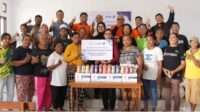
One notable example is the collaboration involving Hasanuddin University’s Faculty of Marine Science and Fisheries, Asia Livelihood Network, a Japan-based nongovernmental organization, and Nishinippon Nichimo Co., with support from the Japan International Cooperation Agency (JICA).
The initiative, entitled Project for Reducing Marine Plastic and Promoting Recovery of Fishery Resources by Improving Rigging Techniques for Seaweed Farming in Sembilan Islands, Indonesia, was launched through an international symposium at FIKP Unhas on 15 January 2024.
The project addressed two interconnected challenges in coastal Indonesia: marine plastic pollution and the sustainability of seaweed farming. It sought to improve seaweed cultivation techniques while promoting better management of marine waste and supporting the recovery of fisheries resources.
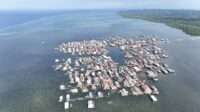
Dr. Amri contributed to the academic discussions and field activities associated with the initiative, including engagement with coastal communities in Pulau Harapan and Pulau Kambuno, Sembilan Islands, Sinjai Regency, South Sulawesi.
The initiative illustrates his interest in ensuring that international partnerships generate practical outcomes for coastal communities. Rather than treating environmental conservation and economic development as separate objectives, the approach seeks to connect improved production systems, environmental responsibility, and local livelihood opportunities.
His earlier engagement with Japanese academic institutions is also reflected in a 2016 programme involving students from Kobe University. As Head of the International Office at Hasanuddin University, he facilitated the university’s engagement with nine Japanese students participating in a Global Challenge Program that included a homestay and community-based learning activities in Tongke-Tongke, Sinjai.
The programme focused on mangrove ecosystems, local communities, and coastal environmental management. It provided an opportunity for international students to understand environmental challenges through direct interaction with local communities and field-based learning.
Research Interests: Mangroves, Political Ecology, and the Blue Economy
Dr. Amri’s current research agenda reflects an increasingly integrated understanding of coastal sustainability. His work examines how ecological systems, institutional arrangements, land governance, and community livelihoods interact in shaping the future of coastal regions.
At Kyoto University, he has been developing several research manuscripts addressing different dimensions of coastal governance.
Mangroves on the Edge explores collaborative governance and coastal resilience in Makassar, examining how institutions and communities can work together to address environmental pressures and strengthen coastal sustainability.
Who Owns the Coast? investigates political ecology, land tenure, and mangrove restoration in Sinjai, highlighting the importance of understanding rights, power relations, and institutional responsibilities in coastal resource management.
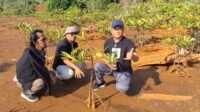
Bridging Conservation and Socio-Economic Prosperity examines sustainable silvofishery models in Sinjai, focusing on the potential to reconcile mangrove conservation with productive economic activities and community welfare.
He is also preparing a book entitled Mangrove Frontier: Visualizing Power, Policy, and People in Coastal Governance. The proposed work reflects his interest in documenting the interaction between environmental policy, institutional power, and the everyday experiences of people living in coastal landscapes.
Another initiative he is developing is the establishment of a Center for Education and Restoration of Mangroves in Makassar, envisioned as a platform for research, public education, community engagement, and the promotion of mangrove restoration initiatives across Indonesia.
A Regional Perspective on Coastal Sustainability
A defining characteristic of Dr. Amri’s academic trajectory is his commitment to connecting local realities with regional and international perspectives. His experiences in Indonesia, Japan, Thailand, and the Philippines have informed an understanding of coastal sustainability as a shared regional concern that requires interdisciplinary research and cross-border collaboration.
For him, mangrove conservation, fisheries development, seaweed production, marine pollution, and coastal livelihoods cannot be adequately addressed through isolated technical interventions.
These issues require integrated approaches that consider ecological processes, social institutions, economic opportunities, and the participation of local communities.
His academic and professional journey demonstrates how universities can contribute to sustainable development not only through the production of scientific knowledge, but also by facilitating partnerships, supporting community-based innovation, and connecting local development priorities with international expertise.
Through his work at Hasanuddin University and his continuing academic engagement with Kyoto University, Dr. Andi Amri represents a generation of Indonesian scholars whose research and institutional experience contribute to broader conversations on sustainable fisheries, coastal governance, mangrove conservation, and the future of the blue economy in Southeast Asia.
Academic Affiliation: Faculty of Marine Science and Fisheries, Hasanuddin University, Makassar, Indonesia.
International Research Appointment: Visiting Research Scholar, Center for Southeast Asian Studies (CSEAS), Kyoto University, Japan (16 August 2026 – 15 February 2027).
Doctoral Degree: Ph.D. in Asian and African Area Studies, Kyoto University, Japan (2005).
Research Areas: Coastal Resource Governance; Mangrove Restoration; Political Ecology; Silvofishery; Blue Economy; Maritime Anthropology; Seaweed Development; Community-Based Coastal Development; and Human-Nature Coexistence.