
MARITIMEPOSTS.COM — The Nusantara Nature Conservation Foundation (Yayasan Konservasi Alam Nusantara/YKAN) introduced FishFace, an artificial intelligence (AI)-powered fisheries data collection application, to an international audience at the Seafood and Fisheries Emerging Technologies (SAFET) Conference 2026 in Cebu, the Philippines, held on September 7–10, 2026.
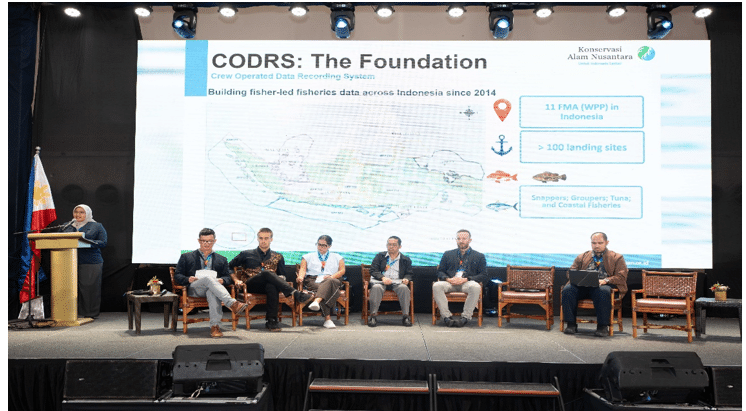
YKAN shared its experience in developing FishFace during a panel discussion titled “Technologies and Lessons from Small-Scale Fisheries.”
The panel provided a platform to discuss the application of technology and lessons learned from small-scale fisheries, including adoption challenges and the need to tailor innovations to local contexts. During the session, YKAN also demonstrated the FishFace workflow using a smartphone, a measuring board, and miniature fish models.
Developed through more than a decade of experience supporting fisheries data collection in collaboration with fishers, FishFace is designed to improve the quality of catch information and strengthen data-driven fisheries management.
FishFace is part of YKAN’s efforts to address fisheries data collection challenges in Indonesia, particularly in small-scale fisheries, where activities are dispersed across numerous locations, involve diverse fish species and fishing gear, and are not always supported by adequate recording facilities or reliable connectivity.
In this context, technology is expected to simplify data collection without overlooking the needs and circumstances of users in the field.
“Good fisheries data are needed not only to determine how much fish is caught, but also to understand the species caught, fishing locations, and changes in fishery resources over time. This information is essential for determining appropriate management measures,” said Harxylen Kinanti Purnomo, YKAN’s Sustainable Fisheries Program Manager.
The development of FishFace builds on YKAN’s experience implementing the Crew-Operated Data Recording System (CODRS), an approach to catch data collection that directly involves fishers. Over more than 10 years, CODRS has documented more than 8.1 million fish specimens from 44,000 landings, involving over 1,000 fishers as collaborators.
This experience has provided field-based knowledge and a data repository that serve as the foundation for FishFace. The application uses AI to help identify fish species from images, record fishing locations, and support the documentation of catch information.
FishFace is also being developed for integration with the Ministry of Marine Affairs and Fisheries (KKP)’s e-Logbook system. This integration is intended to help reduce data gaps in reporting while connecting field-level data collection with the government’s fisheries information system.
Under the current integration phase, FishFace is targeting the identification of 25 tuna and snapper species, covering more than 60 percent of the relevant catches in Indonesia.
This scope represents an initial step toward progressively expanding the application’s capabilities in line with data collection requirements and the availability of training data.
For Indonesia, strengthening fisheries data collection is particularly important given the country’s vast marine territory and the diversity of its fisheries. Information on catch composition, fishing locations, and fishing activities is essential for policy development, management evaluation, and monitoring the sustainability of fishery resources.
These needs are also relevant globally. Small-scale fisheries contribute significantly to food security and the livelihoods of coastal communities in many countries. However, information about their activities and catches is not always documented consistently.
Such data gaps can limit fisheries managers’ ability to understand resource conditions and design policies that reflect realities on the ground.
Field Testing and Lessons Learned
The feasibility testing of FishFace demonstrated that application development must consider more than the performance of the AI model alone.
From the users’ perspective, repeated hands-on training and clear communication about data use, including information on fishing locations and catches, are essential for building trust and ensuring that the technology is used appropriately.
“Testing has shown that AI accuracy is only one part of success. The technology needs to function within a workflow that connects with existing systems and is understandable to fishers. That is why the development process must take place alongside users, rather than focusing solely on the technology itself,” said Siska Agustina, a fisheries scientist at YKAN.
Moving forward, YKAN will continue refining FishFace by expanding the diversity of its datasets, improving model accuracy, strengthening application reliability, and enhancing data synchronization and backup capabilities.
These efforts will continue to place fishers at the center of the development process. Training, user-friendly design, and transparent communication about how data are used are essential to ensuring that the technology goes beyond innovation and supports sustainable data collection practices.
For Indonesia and the global fisheries community, FishFace demonstrates how field experience, data, and technology can be brought together to address fisheries data collection challenges. With better information systems, fisheries management has greater potential to respond effectively to resource conditions and fishers’ needs, helping support long-term sustainability.