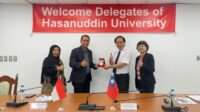

MARITIMEPOSTS.COM — Hasanuddin University (Unhas) has introduced an integrated, circular economy-based organic waste management model to H.E. Dominic Jermey CVO OBE, the British Ambassador to Indonesia and Timor-Leste.
The innovation combines organic waste processing with maggot cultivation, earthworm-based decomposition, organic fertilizer production, and livestock farming.
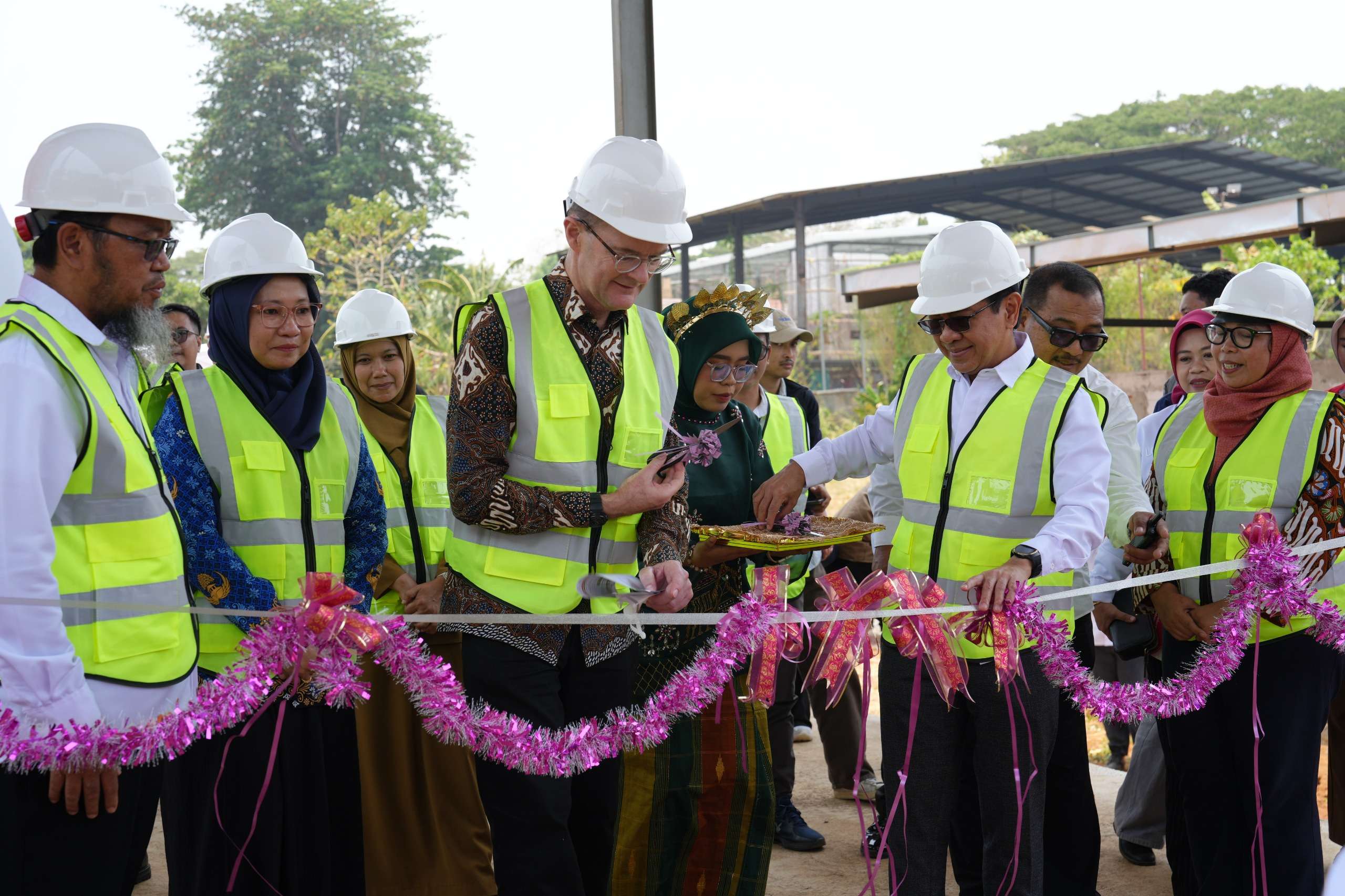
The visit took place on Monday, October 19, 2026, alongside Unhas Rector Prof. Dr. Ir. Jamaluddin Jompa, M.Sc. The occasion also marked the initial trial operation of the Unhas Integrated Waste Treatment Facility (TPST), an initiative developed through innovations by the university’s Faculty of Animal Science.
The facility is designed to transform organic waste into useful resources with potential economic value. Its integrated approach connects several processes, beginning with waste sorting and shredding, followed by Black Soldier Fly (BSF) larva cultivation, organic waste processing using earthworms, and the utilization of the resulting materials to support livestock farming and organic fertilizer production.
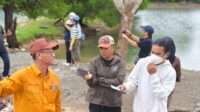
During the visit, the Unhas rector and the British ambassador toured several facilities that form part of the integrated waste processing system.
Linking Waste Processing with Production
The tour began at the waste sorting and shredding area. At this stage, waste is separated according to its characteristics and shredded into suitable sizes for subsequent processing. This initial step is essential to preparing organic materials for more effective utilization throughout the treatment process.
The delegation then visited the maggot cultivation facility, where Black Soldier Fly (BSF) larvae are raised. Organic waste is used as feed for the larvae, which can convert suitable organic materials into protein-rich biomass with potential applications in animal feed.
BSF larva-based bioconversion is one approach to reducing the accumulation of organic waste. In addition to helping reduce the volume of waste requiring disposal, the process produces biomass with potential economic value.
The delegation subsequently visited the Alope chicken facility, which houses a local poultry breed characteristic of South Sulawesi and forms part of Unhas’s circular economy ecosystem.
Integrating maggot cultivation with livestock farming creates opportunities to reuse the outputs of waste processing as resources for other production activities. Maggot biomass has potential as a protein-rich feed ingredient, while organic processing residues may be used, depending on their characteristics, to support fertilizer production and improve soil quality.
This approach seeks to change the perception of waste from something that must simply be discarded into a resource that can be processed and reused to produce valuable materials.
The tour continued to the earthworm facility, where vermicomposting takes place. In this process, earthworms help decompose organic materials into substances that can be used as soil amendments and organic fertilizers. One of the materials introduced was kasgot, or residual material from cultivation media, whose application should be determined according to its characteristics and quality.
The delegation also visited the BSF fly house to observe the cultivation process more closely. BSF larvae can consume suitable organic materials and convert them into biomass. This process is an important component of an integrated system that combines waste reduction with the production of useful resources.
British Ambassador Welcomes Innovation and Research Collaboration
H.E. Dominic Jermey CVO OBE, the British Ambassador to Indonesia and Timor-Leste, welcomed the opportunity to observe firsthand the innovations developed by Unhas in waste management and climate change mitigation.
He noted that cooperation between Indonesia and the United Kingdom offers significant opportunities to advance innovative climate solutions through research and technology. Such collaboration is expected not only to produce environmentally friendly approaches but also to generate economic value and tangible benefits for communities.
The visit also gave Dominic an opportunity to meet students and learn more about South Sulawesi’s historical heritage and research potential. Particular attention was given to the prehistoric cave paintings in the Leang-Leang area, which are important for scientific research and understanding the history of human civilization.
Dominic expressed hope that the strategic partnership between Indonesia and the United Kingdom would continue to strengthen inclusive green growth. The development of low-carbon technologies and the adoption of circular economy principles, he noted, are part of joint efforts to reduce greenhouse gas emissions and achieve net-zero emissions targets.
Research Must Deliver Practical Solutions for Communities
Unhas Rector Prof. Jamaluddin Jompa emphasized the importance of international collaboration in strengthening research that addresses real-world challenges faced by communities.
According to him, research success should not be measured solely by research findings or academic publications. More importantly, knowledge must be translated into practical applications that respond to community needs and deliver tangible benefits.
“This collaboration is extremely valuable for Unhas, particularly in developing research so that its results can genuinely become solutions. One of the challenges we need to address together is how to convert waste into resources that benefit the community,” Prof. JJ said.
He explained that low-carbon development must go hand in hand with the creation of social and economic benefits. Through a circular economy approach, materials previously regarded as waste can be processed into products with practical uses and economic value.
In this context, organic waste processing at the Unhas facility demonstrates how research can connect environmental priorities with productive economic activities. Maggot cultivation, earthworm-based organic waste processing, organic fertilizer production, and Alope chicken farming are designed as interconnected components of a mutually supportive production chain.
This model creates opportunities to make better use of local resources. Available organic materials can be converted into production inputs, while the resulting outputs may be reused to support livestock farming and agriculture. The system is therefore expected to reduce resource wastage while creating new economic opportunities.
Prof. JJ also expressed hope that the integrated waste management model developed by Unhas could be replicated in other regions, with adjustments to suit local conditions and needs. He believes similar systems could help address waste management challenges while encouraging economic activities based on locally available resources.
He also highlighted the potential of Alope chickens, a local poultry breed associated with South Sulawesi. Beyond their role in livestock development, these chickens could support economic initiatives based on the region’s natural and agricultural resources. Their development is expected to create opportunities for productive community enterprises while maintaining environmental sustainability.
Advancing a Sustainable Waste Management Model
The initial trial operation of the Unhas Integrated Waste Treatment Facility marks an important step toward developing a waste management approach that combines research innovation, processing technology, and the productive use of waste-derived materials.
Through this system, Unhas aims to demonstrate that organic waste management can go beyond collection and disposal. Waste can become part of a production chain that supports livestock farming, generates soil amendments, and creates new economic opportunities.
Looking ahead, the initiative is expected to strengthen the university’s contribution to addressing environmental challenges, including reducing waste accumulation and emissions. International collaboration is also expected to expand knowledge exchange, technology development, and the application of innovations suited to community needs.
By integrating research with practical waste management, Unhas is promoting a circular economy system that focuses not only on resource efficiency but also on value creation and environmental sustainability.