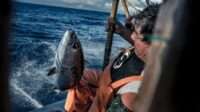

MARITIMEPOSTS.COM – Behind the fish that fills markets and commands value across global seafood supply chains are workers who spend much of their lives at sea, far from land and public scrutiny, facing forms of vulnerability that remain largely hidden within Indonesia’s fisheries governance system.
This reality is among the key findings of an ethnographic study conducted by Destructive Fishing Watch (DFW) Indonesia in collaboration with the Department of Anthropology at the Faculty of Social and Political Sciences, Universitas Indonesia (FISIP UI).
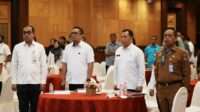
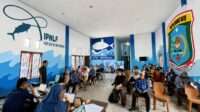
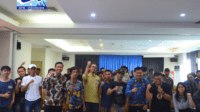
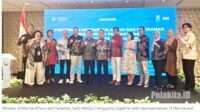
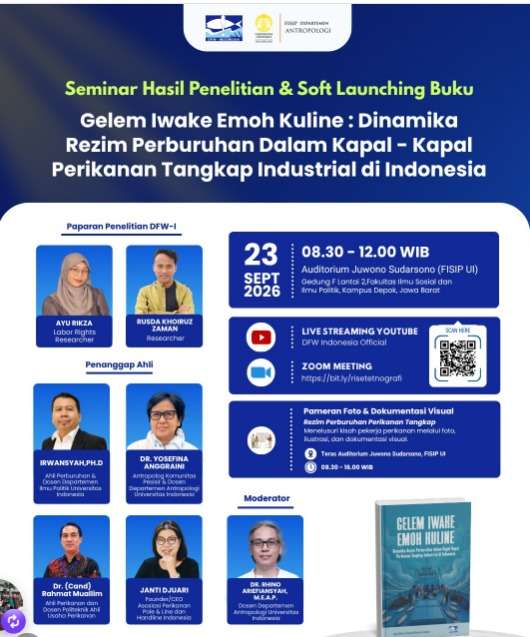
The findings were presented during a research dissemination forum and the soft launch of a book titled Gelem Iwake Emoh Kuline: Dinamika Rezim Perburuhan dalam Kapal-Kapal Perikanan Tangkap Industrial di Indonesia at the Juwono Sudarsono Auditorium, FISIP UI, Depok, on Wednesday, September 23, 2026.
Held during Indonesia’s National Agrarian Day, the event opened a broader conversation about the people behind seafood commodities circulating in domestic and international markets, the conditions under which they work, and the power relations that shape workplaces located far beyond ordinary public oversight.
The research, conducted over nearly two years, used ethnographic methods to examine the everyday lives of fishing vessel crews while exploring labour relations within Indonesia’s industrial capture fisheries. The researchers identified a striking paradox between the high economic value of seafood commodities and the difficult conditions experienced by some of the workers who make their production possible.
“The Fish Is Wanted, the Labour Is Not”
The book’s title, Gelem Iwake Emoh Kuline, comes from a Javanese expression encountered by researchers during fieldwork along Java’s northern coast, known locally as the Pantura.
Literally translated, the expression means “want the fish, but not the labour.”
For Ayu, a DFW Indonesia researcher, the phrase is more than a metaphor. It emerged from the social reality encountered by researchers among coastal communities.
“Gelem iwake emoh kuline itself is an idiom we encountered during the research, and it reflects a reality that frequently occurs among the Pantura communities we met,” she said.
The expression captures a simple but fundamental contradiction. Markets demand fish, and the fishing industry depends on the catch, yet the people who produce that commodity do not always receive comparable protection, recognition or decent working conditions.
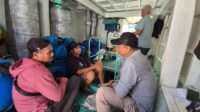
Imam Trihatmadja, Program Director of DFW Indonesia, described industrial fishing vessels as “floating factories” where production takes place far from public scrutiny and where workers may face vulnerabilities that are difficult to see from shore.
“The research, which ran for almost two years, revealed how extremely low wage systems, unequal employment relations and oppressive working conditions force crew members to work beyond their physical limits simply to make a living,” Imam said.
He said these conditions are sustained by what researchers describe as a “silent infrastructure” surrounding the labour system.
This includes recruitment brokerage networks, economic dependency, inadequate facilities aboard vessels, poor sleeping conditions and neglected aspects of workers’ social reproductive health, including the wellbeing of their families onshore.
For DFW Indonesia, therefore, discussions about fisheries cannot stop at production volumes, export values, commodity prices or the sector’s contribution to the economy.
“Fisheries are not only about how many tonnes of fish are caught or how many billions the commodity is worth in the market. It is about who works to bring that fish to market, what their working conditions are, and to what extent we value their dignity fairly,” Imam said.
Power Inside the Production Space
The research prompted responses from academics, labour specialists and industry representatives, who examined the relationship between commodities, workers, industrial governance and mechanisms of control within fisheries production.
Dr Yosefina Anggraini, an anthropologist at Universitas Indonesia, said the book could broaden the way the public understands seafood.
Consumers often encounter fisheries primarily as commodities with economic value, she noted, while the people and environments supporting their production remain outside the immediate picture.
“This book can enrich the understanding of readers who generally know seafood only as a commodity. Behind it, however, are human, environmental and labour dimensions that are essential to keeping the industry running,” she said.
Labour expert Irwansyah Ph.D., widely known as Jemi, pointed to the gap between the standards and norms established to regulate fisheries and the realities experienced by workers.
Although various standards already exist for fisheries governance, he said, exploitation and mechanisms of labour control can still occur.
He described the research as significant because it examines not only employment relations at the surface level but also how labour regimes produce commodities while simultaneously establishing mechanisms of control within the production process.
“The research focuses on reading the labour regime that produces commodities and the mechanisms of control within production. At the very bottom of the production floor, that is where the harshness takes place, what can be described as a coordinated despotic regime,” he said.
The discussion then moved toward the relationship between research and public policy.
Dr (Cand.) Rahmat Muallim, S.St.Pi., M.Si., an academic at Politeknik AUP under Indonesia’s Ministry of Marine Affairs and Fisheries, said the strength of the research lies in its ability to provide policymakers with a grounded picture of fishing crews’ lives.
He compared the research to a sonar system installed on a vessel, capable of detecting conditions that may escape observation from the surface.
“This book is like a sonar installed on a ship that can detect things that have escaped the government’s observation. Hopefully, it can provide input for the government in designing policies,” Rahmat said.
He also stressed the importance of maintaining a relationship in which research informs policymaking through evidence gathered in the field.
“Research must influence the formation of policy; policy should not influence the research,” he said.
Fishing Crews as People, Not Just Labour
The industry perspective was represented by Janti Djuari, CEO of the Indonesian Pole & Line and Hand Line Association (AP2HI), who addressed the position of fishing crews in efforts to make the fisheries sector more sustainable.
Fishing crews, she argued, should not be treated merely as objects within a production chain, but as people whose work is fundamental to building a better fisheries industry.
“Fishing crews are not objects. They are human beings who are building the fisheries industry to make it better,” she said.
Janti also suggested that the research should not simply be viewed as a troubling portrayal of the industry, but as a baseline that could support improvements in fisheries governance and workers’ livelihoods.
She pointed to industry certification, including fair trade schemes, as one possible mechanism for strengthening transparency throughout the production process.
From this perspective, seafood products should increasingly be able to reveal how they were produced and who participated in that process, including fishers and their coastal communities.
The different responses during the discussion converged around an important point: fisheries sustainability is not determined solely by healthy fish stocks or marine ecosystems. It also depends on the social conditions and labour relations of the people working within the seafood supply chain.
From the Sea to the Policy Arena
The research dissemination and book launch also featured a visual exhibition titled “Labour Regimes in Capture Fisheries”, presenting photographs and illustrations depicting the working lives of fisheries workers at sea.
The exhibition complemented the ethnographic research by translating experiences and vulnerabilities documented in academic language into visual representations that could be encountered more directly by the public.
Through the research and publication, DFW Indonesia hopes that the findings on fishing crew conditions will contribute to wider discussions on policymaking, legal protection, labour governance and efforts to advance workplace justice in Indonesia’s maritime sector.
The fish reaching the market never arrives by itself.
Behind every catch is a long chain involving vessels, labour, time, risk and people whose working lives unfold largely beyond public view.
That is where the central question raised by Gelem Iwake Emoh Kuline becomes particularly relevant: if society wants the fish, are we also prepared to see, protect and value the people who work to bring it to us?
This version is deliberately framed for MaritimePosts.com’s international audience, using fishing labour, seafood supply chains, governance, worker protection, and sustainability as the connecting themes rather than presenting the event simply as a book launch.