
MARITIMEPOSTS.COM — JAKARTA — Gelem Iwake Emoh Kuline. In Javanese, the expression roughly means: wanting the fish, but being unwilling to take on the labor behind it.
It is a simple phrase, yet it captures a paradox within the fishing industry: marine commodities are pursued, processed, and marketed all the way to global markets, while the people working behind those catches continue to face complex labor challenges.
That paradox is at the heart of collaborative ethnographic research conducted by DFW Indonesia.
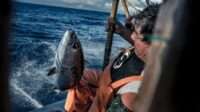
The study examines the dynamics of labor regimes within Indonesia’s industrial capture fisheries, including how fishing vessel crew members—known in Indonesia as Awak Kapal Perikanan (AKP)—work within production systems operating at sea, aboard vessels that in many respects function as “floating factories.”
Far from land, fishing workers operate within a complex structure of labor relations. According to the findings of the DFW Indonesia research, labor control is exercised through paternalistic mechanisms, while workers’ consciousness is also shaped in ways that remain aligned with the interests of production and the extraction of value from marine resources.
These challenges become increasingly visible in wage systems. The research documents both fixed daily wages and profit-sharing arrangements, known locally as bagen, which in practice may fall below the applicable minimum wage standards.
Relatively low wages, in turn, create pressure for workers to extend their working hours.
The research identifies a mechanism referred to as “manufacturing consent,” whereby workers are ultimately encouraged to accept—and even prolong—the exploitation of their own bodies in order to meet their income needs.
One manifestation of this is additional work through independent fishing activities. Workers may spend up to around 10 extra hours a day fishing independently to generate additional income.
The sea, therefore, is not merely a space where fish are produced and harvested. It is also a workplace where laborers’ bodies are continually pushed to work. Rest, physical recovery, and health become inseparable from the conditions of the labor system itself.
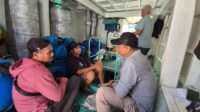
DFW Indonesia’s research also highlights the inadequate attention given to the social reproduction of fishing workers. Cramped and poorly ventilated sleeping quarters, limited sanitation facilities, and physically demanding working conditions are part of the everyday reality faced by vessel crews.
Under such circumstances, the burden of recovering physical strength and bearing health risks is ultimately placed largely on the workers themselves. These challenges can extend to their families when workers’ health deteriorates or their bodies are no longer able to withstand the demands of the job.
Behind this system are also actors and mechanisms that operate more quietly. Labor-brokerage networks, relationships between workers and vessel owners or operators, and various forms of economic dependency constitute what the research describes as a “silent infrastructure” sustaining the industrial capture fisheries sector.
For this reason, the condition of fishing workers cannot be viewed solely through the volume of catches or the economic value of fisheries commodities. Behind the tuna and skipjack moving from Indonesian waters into global market chains are labor relations, human bodies, time, and risks that all contribute to the making of commodity value.
Research Findings Seminar
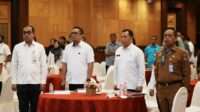
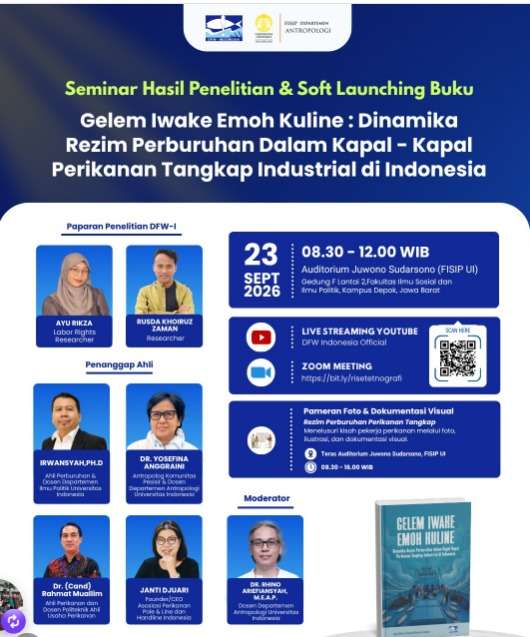
These findings will be explored further at the Research Findings Seminar and Soft Launching of the book Gelem Iwake Emoh Kuline: Dinamika Rezim Perburuhan dalam Kapal-kapal Perikanan Tangkap Industrial di Indonesia (Gelem Iwake Emoh Kuline: The Dynamics of Labor Regimes Aboard Industrial Fishing Vessels in Indonesia).
The event will also feature the visual exhibition Rezim Kerja di Perikanan Tangkap (Labor Regimes in Capture Fisheries), offering a visual perspective on the lives and working conditions of people employed in industrial capture fisheries.
The seminar and exhibition are scheduled for Wednesday, September 23, 2026, at the Juwono Sudarsono Auditorium, Building F, 2nd Floor, Faculty of Social and Political Sciences, Universitas Indonesia, Depok Campus, West Java.
The seminar will run from 8:30 a.m. to 12:00 p.m. WIB, while the visual exhibition will be open from 9:00 a.m. to 4:00 p.m. WIB. For participants unable to attend in person, the seminar will also be available online via Zoom and the DFW-I YouTube channel.
The forum is expected to provide a space for a deeper examination of how labor regimes operate within the capture fisheries industry, which actors sustain them, and how these labor and economic chains affect the lives of fishing crews and their families.
Discussion about the fishing industry is not simply about how much fish can be caught or how much it is worth in the marketplace.
It also raises more fundamental questions: Who works to bring that fish to market? Under what conditions do they work? And to what extent is that labor fairly valued?
Gelem Iwake Emoh Kuline serves as a reminder that the success of the fishing industry should not be measured solely by the fish that reaches the market, but also by how the people who make that journey possible are treated.
Join the discussion, exchange ideas, and build networks to advance more meaningful protection and justice for fishing workers.