
MARITIMEPOSTS.COM – JAKARTA – The Indonesian government has once again shut down exports of lobster seeds, known locally as benih bening lobster (BBL), declaring that the ban will remain in place permanently.
Minister of Marine Affairs and Fisheries Sakti Wahyu Trenggono said the export ban has been reinforced by Ministerial Regulation No. 5 of 2026, which amends Ministerial Regulation No. 7 of 2024 on the Management of Lobsters (Panulirus spp.), Crabs (Scylla spp.), and Swimming Crabs (Portunus spp.).
The policy is further backed by Presidential Regulation No. 69 of 2026, which establishes a Task Force for Combating the Illegal Removal of Lobster Seeds (Satgas P2BBL). The task force is mandated to crack down on the illegal movement of lobster seeds out of Indonesian territory.
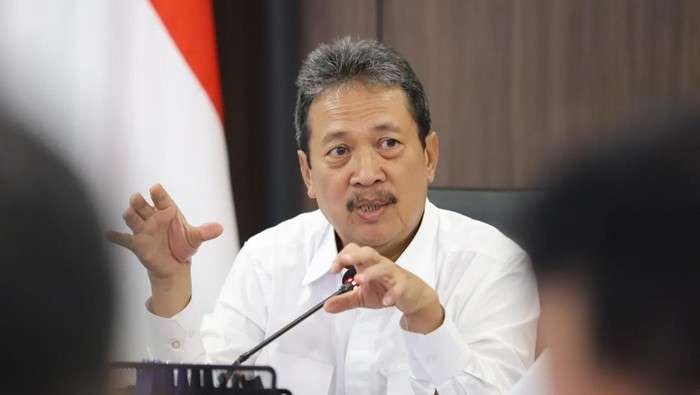
Trenggono stressed that the government would no longer allow lobster seed exports. He made the statement during the launch of the task force in Central Jakarta on Monday, October 12, 2026.
“The ministerial regulation is already in place, Regulation No. 5, and now there is Presidential Regulation No. 69. The latter concerns enforcement, and I cannot allow it [the export] at all,” Trenggono said, as quoted by detikcom.
Instead of exporting lobster seeds, the government plans to expand domestic lobster aquaculture and develop the industry until Indonesian producers can export market-ready lobster products.
Through this approach, more of the economic value generated by the lobster industry is expected to remain in Indonesia rather than being captured primarily through the trade in juvenile lobsters.
“We will stop it permanently. What we will pursue instead is aquaculture here in Indonesia. That is the approach we will implement. If foreign parties still need lobster, they will have to sit down and negotiate with us,” Trenggono said.
A Policy That Has Repeatedly Changed Course
Indonesia’s lobster seed export policy has undergone several major shifts, reflecting changes in leadership at the Ministry of Marine Affairs and Fisheries (KKP).
During Susi Pudjiastuti’s tenure as Minister of Marine Affairs and Fisheries from 2014 to 2019, the government prohibited lobster seed exports through Ministerial Regulation No. 56 of 2016 on the Prohibition of the Capture and/or Removal of Lobsters, Crabs, and Swimming Crabs from the Territory of the Republic of Indonesia.
The policy changed when Edhy Prabowo took over the ministry. Through Ministerial Regulation No. 12 of 2020, signed on May 4, 2020, the government reopened opportunities for the utilization and export of lobster seeds, subject to specific management requirements.
Following Edhy Prabowo’s arrest by Indonesia’s Corruption Eradication Commission (KPK) in a corruption case, the government halted lobster seed exports once again under Trenggono’s leadership. The prohibition was formalized through Ministerial Regulation No. 17 of 2021.
The policy direction shifted again in 2024 when KKP issued Ministerial Regulation No. 7 of 2024.
The regulation permitted the capture of lobster seeds for aquaculture purposes, including provisions allowing aquaculture activities to take place outside Indonesian territory, subject to the applicable regulatory framework.
The reopening of the policy was initially expected to improve Indonesia’s domestic lobster aquaculture productivity through cooperation with countries that had developed more advanced experience and technology in the sector, including Vietnam.
However, foreign investors seeking to participate in lobster seed exports were required to invest in and conduct aquaculture activities in Indonesia.
Keeping More Economic Value in Indonesia
The government is now moving to end lobster seed exports entirely while redirecting the development of the lobster industry toward strengthening domestic aquaculture. This policy shift also includes plans to discontinue cooperation with Vietnam under arrangements associated with lobster seed exports.
Earlier, Pung Nugroho Saksono, Director General of Marine and Fisheries Resources Surveillance, widely known as Ipunk, said KKP was moving toward a moratorium on lobster seed exports.
He made the statement when speaking to reporters at the Indonesian House of Representatives (DPR RI) building on October 16, 2025.
“Yes, [we are closing lobster seed exports]. KKP is already moving toward a moratorium on BBL exports,” Ipunk said.
Under the latest policy, the government’s challenge extends beyond legally ending lobster seed exports and combating smuggling. It must also establish a sustainable domestic aquaculture value chain capable of generating greater economic returns for Indonesia.
The policy’s success will depend heavily on access to technology and financing, stronger support for local aquaculture producers, and consistent enforcement.
These measures will be essential to ensuring that Indonesia’s lobster resources generate greater domestic value and contribute more substantially to the national economy.