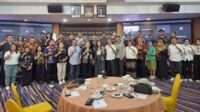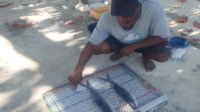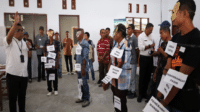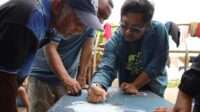

The Talin Group in Aduwei Village, North Misool, Raja Ampat, successfully shipped more than 10 tons of copra to Bitung, North Sulawesi, on October 1, 2026. This achievement reflects the growing potential of a locally driven enterprise that is creating economic opportunities while supporting sustainable natural resource management.
MARITIMEPOSTS.COM – SORONG, October 28, 2026 — Coconut-based livelihoods in Aduwei Village, North Misool District, Raja Ampat Regency, Southwest Papua, are continuing to grow as an increasingly important source of income for local communities.
The Talin Group, which began managing its copra business in a more organized manner in 2022, has successfully expanded its market reach to Bitung, North Sulawesi.
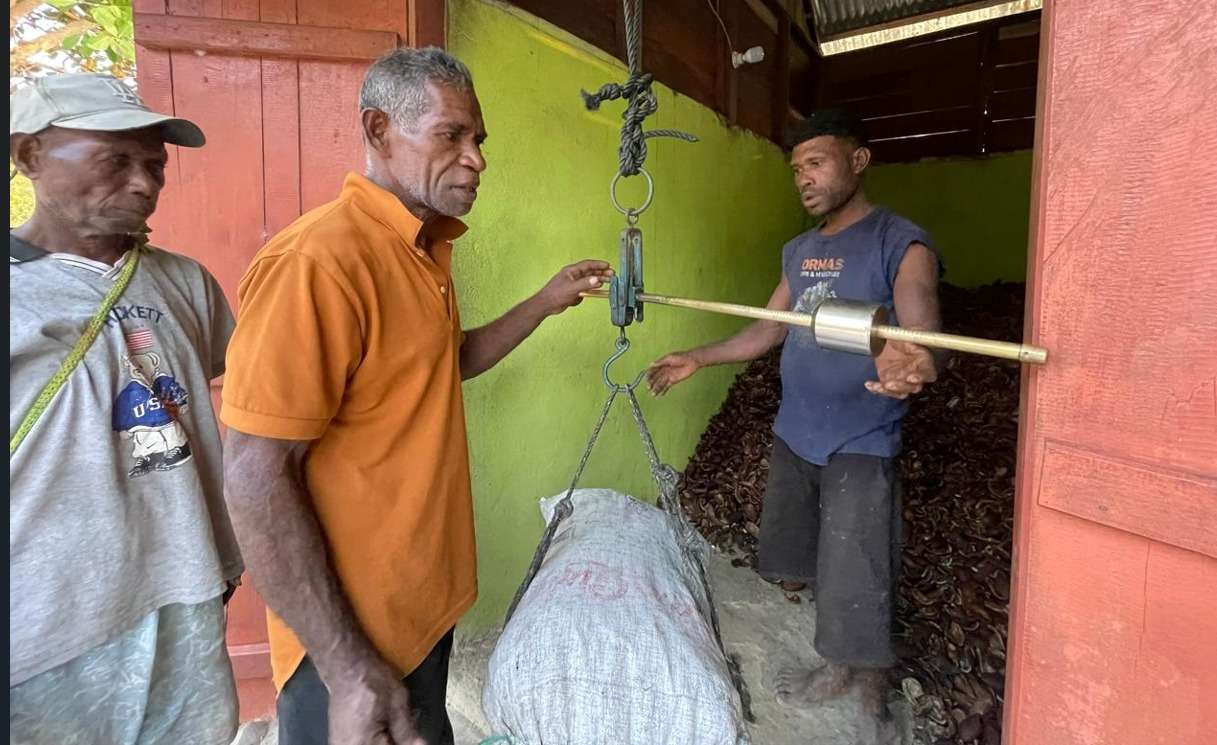
The nine-member group has completed at least seven sales. Its latest shipment, delivered on October 1, 2026, exceeded 10 tons of copra, opening up greater income opportunities for local communities through the utilization of coconut plantation products.
Talin Group Chair Jonathan Elwod said that the way coconuts are managed in the village has begun to change. Previously used primarily for household needs, such as food and oil production, coconuts are increasingly being recognized as a promising business opportunity.
“In the past, coconuts were mostly harvested for daily needs, such as food and making oil. Now, people are beginning to see that coconuts can be managed as a sustainable source of income,” Jonathan said.
With support from the Yayasan Konservasi Alam Nusantara (YKAN), the Talin Group is strengthening its organizational structure and business management. Responsibilities are distributed among the chairperson, secretary, treasurer, and members to ensure that production, recordkeeping, financial management, weighing, and loading are carried out in a more organized manner.
The assistance also focuses on improving copra quality. Group members are encouraged to ensure that coconuts are thoroughly dried through smoking or sun-drying, making the copra more durable during storage and improving its market value.
The development of this business goes hand in hand with efforts to strengthen community capacity in the sustainable management of coastal and marine resources. Most Talin Group members are also involved in local sasi groups, while they have previously participated in Marine Protected Area (MPA) 101 training, which introduces the fundamentals of marine protected areas and their management.
Community involvement in these two areas demonstrates how local capacities can be developed to address different needs. Through sasi groups, communities contribute to natural resource management based on local wisdom, while the Talin Group provides a platform for developing the copra business to support household livelihoods.
Absalom Solossa, Head of the Southwest Papua Provincial Marine and Fisheries Office, expressed his appreciation for the Talin Group’s progress and YKAN’s support in developing community-based enterprises.
“We appreciate the Talin Group and YKAN for developing coconut potential into a business that benefits the community. This initiative aligns with the spirit of the blue economy, which promotes the sustainable use of natural resources while improving community welfare,” Absalom said.
For YKAN, supporting the Talin Group is an effort to strengthen a resource that has long been part of life in Aduwei Village.
The assistance focuses on strengthening group institutions, improving production quality, and expanding market access, while complementing community efforts to protect natural resources through conservation groups and locally rooted management practices.
YKAN also encourages increased production by optimizing existing coconut plantations, without opening new land or converting the island’s natural vegetation. This approach is intended to ensure that greater economic benefits go hand in hand with ecosystem protection.
“Coconuts have long been one of the main sources of livelihood for the people of Aduwei Village. Therefore, we encourage better management of this potential through stronger institutions, improved production quality, and expanded market access. In this way, the business can provide economic benefits to its members while maintaining coconut plantations as a source of livelihood in the long term,” explained Kiki Anggraini, YKAN’s Senior Blue Economy Manager.
Sustaining the Business for Future Generations
Currently, each Talin Group member can produce approximately 80 to 400 kilograms of copra, depending on plantation yields and production capacity. A portion of the business income is also reinvested as production capital and allocated to members’ savings.
The business’s growth has also encouraged members to pay greater attention to the sustainability of their coconut plantations. Jonathan believes that increased care for the plantations is one of the most significant changes since the business began operating collectively.
“With the copra business and the Talin Group, coconut tree owners have become more concerned about maintaining and caring for their land. Coconuts can now be managed better so that their yields can be put to good use,” Jonathan added.
The benefits of the business are also directly felt by members’ families. Income from copra sales helps cover household expenses, children’s education, and daily living needs.
“The copra production business is very beneficial for our families. The income from coconuts helps us meet household needs, pay for our children’s schooling, and support our daily lives,” said Lamek Lan, Talin Group Treasurer.
Before the group was established, copra marketing in Aduwei Village was largely carried out individually. The Talin Group has since organized production from individual coconut plantation owners and connected them with buyers, enabling marketing on a larger scale.
For communities living on islands far from major trading centers, access to markets beyond their immediate region represents a significant development. Products that were previously sold mainly within Raja Ampat can now reach buyers in other regions.
“We are very grateful and proud that our group’s hard work has reached markets outside the region. This also motivates us to continue growing,” Lamek said.
Looking ahead, the Talin Group hopes to continue expanding its copra business and pass it on to future generations. The sustainability of the enterprise is expected not only to benefit current members economically but also to create livelihood opportunities for their children and grandchildren.
“We hope this business will not only continue today but also be carried on by our children and grandchildren in the future. We want the Talin Group to grow stronger and bring greater benefits to the community,” Jonathan Elwod concluded.