
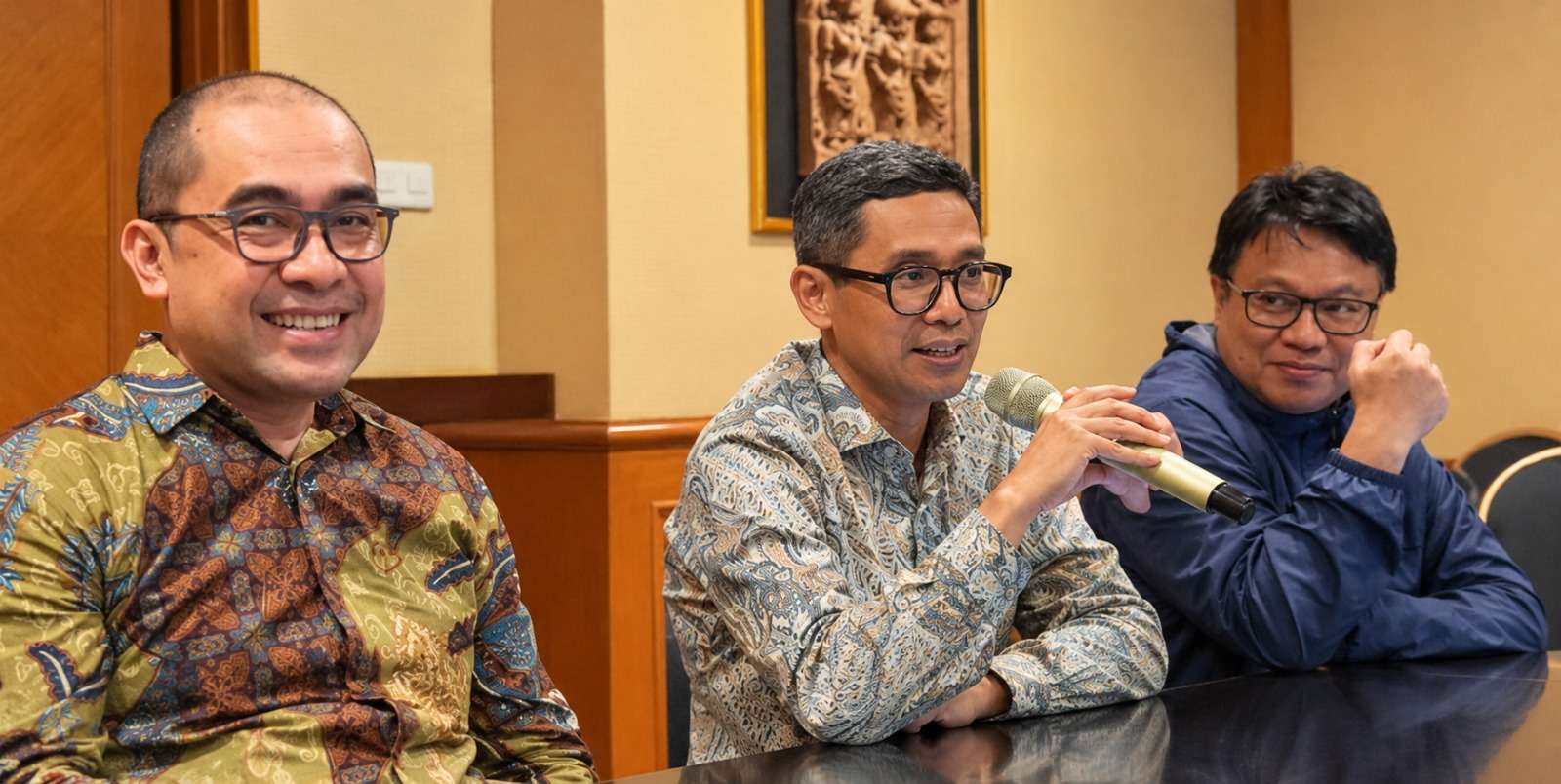
MARITIMEPOSTS.COM – November 6, 2026 — A gathering between Deputy Minister of Marine Affairs and Fisheries (KKP) Irwan Meilano and members of the Task Force for the Preparation and Planning of the 2027 Red and White Fishing Village (KNMP) Program, together with the Task Force’s expert team, provided an opportunity to strengthen commitment, deliver strategic guidance, and listen to the aspirations of those working to prepare the program.
The meeting, facilitated by Mohammad Abdi Suhufan, Chair of the Task Force for the Preparation and Planning of KNMP 2027, took place in a warm and open atmosphere. Also attending were Dr. Irwan Muliawan of the Human Resources Development and Training Center for Marine and Fisheries (PPSDMKP) and Dr. Ilham of KKP’s Directorate General of Capture Fisheries (DJPT).
Abdi briefed the Deputy Minister on the progress and outputs of the KNMP 2027 preparation and planning stages.
The task force has mobilized surveyors across 37 provinces, conducted simultaneous surveyor training sessions, and deployed partner teams comprising universities and non-governmental organizations (NGOs) to locations designated by the task force.
The gathering reflected Deputy Minister Irwan’s commitment to overseeing the preparation and planning of KNMP 2027, ensuring that this government priority program not only meets its targets but is also supported by high-quality planning and delivers meaningful economic benefits to fishing communities.
In his remarks, Irwan outlined three key mandates entrusted to him by Minister of Marine Affairs and Fisheries Sakti Wahyu Trenggono: accelerating program implementation, improving quality, and ensuring compliance with applicable regulations.
He also expressed appreciation for the hard work of task force members and the expert team, who have been carrying out their assignments since September.
He noted that experience from the previous year’s program implementation provides valuable lessons for improving the planning process for the next phase of KNMP.
“Thank you for all your hard work. I appreciate that this has certainly not been easy. We have an opportunity to learn from the initial implementation, and I am optimistic that the current process will be much better,” he said.
Data-Driven Planning and Field Conditions
Irwan emphasized that preparations for KNMP 2027 must be built on a more measurable and evidence-based approach.
He identified three key strengths that should underpin the planning process: using data as the basis for selecting candidate locations, relying on actual field conditions to determine priorities, and using economic models to guide decisions on what infrastructure and facilities should be developed.
According to him, the development of fishing villages should not focus solely on physical infrastructure and the provision of facilities. Planning must begin with a clear understanding of community needs, fisheries potential, local characteristics, and viable business models that can sustain economic activity over time.
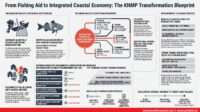
He also highlighted the six criteria and 15 indicators used in the location assessment process. Needs and potential, which carry the highest assessment weights, must serve as decisive factors in determining priorities.
Irwan stressed the importance of consistent assessments, clear distinctions between eligibility requirements and supporting facilities, and a review of stages that may overlap. Given the scale of the program, methodological consistency is essential to ensure that location rankings and selection decisions are accountable.
Measuring Impact, Not Just Construction
One of the Deputy Minister’s central messages was that the success of KNMP must be measured by its economic impact and its contribution to improving fishers’ welfare.
He explained that an external evaluation of the 2025–2026 KNMP program is being prepared, with particular emphasis on assessing its economic impact. The findings will subsequently inform the planning of the 2027 program.
“In the end, whether we like it or not, the question will be whether our fishers are becoming more prosperous,” he said.
According to Irwan, indicators such as the Fishermen’s Terms of Trade (Nilai Tukar Nelayan/NTN) will be among the measures used to assess changes in fishers’ welfare. Therefore, the planning team needs to establish reliable and measurable baseline data for every location.
Such data should cover fish selling prices, fishing operational costs, fishers’ income, fishing households’ debts, transaction volumes, cooperative turnover, and existing community facilities.
These baseline figures are essential for comparing changes in local economic conditions after KNMP facilities have been constructed and become operational.
“This is a valuable opportunity to record the initial conditions at every location. I hope the teams have already started documenting things such as selling prices and the costs of going to sea,” he said.
Business Feasibility and Market Certainty
Irwan also called for serious economic feasibility assessments at every KNMP location. He stressed that physical facilities must be supported by clear market opportunities, sustainable commodity supplies, and the capacity of local communities to operate viable businesses.
He cited observations from one of the areas he had visited, where a fishing village facility faced challenges related to market access.
Across the river, there was a busy fish auction facility, while the KNMP location had not yet been fully connected to the surrounding economic activities.
The experience offers an important lesson: KNMP development must not result in facilities that are disconnected from local needs and the existing economic practices of fishing communities.
“The buyers and the market must be clear. What we assess must be sustainable,” he emphasized.
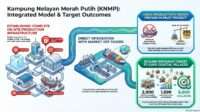
In this regard, Irwan highlighted the importance of mapping supply chains, logistics routes, market access, and connections between central locations and supporting areas. KNMP models based on capture fisheries, aquaculture, and seaweed cultivation must be integrated into a broader economic system.
Each location should therefore not operate in isolation but become part of an interconnected network of production, distribution, and marketing.
Expanding Access to Financing for Fishers
Financing was another important issue raised by Irwan Meilano. He argued that physical development alone would not deliver optimal results if communities lacked access to working capital to develop their economic activities.
He highlighted the importance of People’s Business Credit (Kredit Usaha Rakyat/KUR) as a financing instrument to support sustainable business development in fishing villages. Access to financing, he said, must be considered from the planning stage rather than after facilities have been completed.
Irwan said KKP would pay particular attention to developing KUR financing schemes for the 100 KNMP locations already constructed. At the same time, fishing villages planned for 2027 should demonstrate sufficient economic feasibility to qualify for financing.
“We must not allow the physical facilities to be built while the communities have no capital to operate their businesses,” he said.
He also invited task force members and experts to propose better financing models suited to the characteristics of fishing communities and their businesses.
Ensuring Site Readiness and Safeguarding Investment
Another issue receiving attention was site readiness in terms of spatial planning, environmental carrying capacity, freshwater availability, fuel supplies, and certainty regarding the use of marine space.
Irwan reminded the team that development must comply with spatial planning and licensing requirements, including Marine Spatial Utilization Activity Conformity (Kesesuaian Kegiatan Pemanfaatan Ruang Laut/KKPRL).
Issues left unresolved during the planning stage could become significant obstacles once facilities have been constructed and begin operating.
Safeguarding public investment therefore requires careful planning, ensuring that basic infrastructure needs and legal requirements are addressed from the outset.
He also called for economic modeling to begin as soon as initial data becomes available. This approach would allow the team to identify business potential, infrastructure requirements, market opportunities, and sustainability risks at an early stage.
Irwan also encouraged collaboration with universities and relevant units within KKP to strengthen the economic modeling process.
Overseeing KNMP as a Shared Responsibility
The gathering also highlighted the importance of communication between ministry leadership, task force members, and experts in implementing government priority programs. Strategic guidance must go hand in hand with aspirations, field experience, and technical recommendations from those directly involved in the preparation and planning process.
Irwan reminded participants that KNMP represents a major public responsibility that must ultimately be measured through tangible results. Success should not be judged solely by the number of locations developed or facilities provided, but also by improvements in the economic conditions and welfare of fishing communities.
“Ultimately, the trust placed in us through this government priority program, which is part of the President’s mandate, must be accounted for. The simplest question is: three, four, or five years from now, are our fishers more prosperous or not?” Deputy Minister Irwan said.
He concluded by expressing appreciation for the dedication of all task force members and experts, reminding them that they are part of a new chapter in Indonesia’s development.
For the preparation of KNMP 2027, the gathering reaffirmed that planning goes far beyond identifying locations and constructing buildings. It must connect fisheries potential, community needs, investment certainty, and economic sustainability so that fishing villages can genuinely become centers of growth and prosperity for coastal communities.