
- In several locations, communities continue to live with limited access to adequate facilities and supporting infrastructure. This reality highlights the need for greater attention to the development of fishing villages through more comprehensive, well-planned, and sustainable efforts.
- These conditions further underscore the importance of developing Kampung Nelayan Merah Putih (KNMP) on a national scale. With a target of developing up to 5,000 fishing villages, the program presents both a major challenge and a significant opportunity for the government to expand development coverage and improve support for the livelihoods of coastal communities.
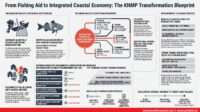
MARITIMEPOSTS.COM — The Red and White Fishing Village Program (Kampung Nelayan Merah Putih, or KNMP) represents an evolution in the Ministry of Marine Affairs and Fisheries’ (KKP) policy approach to strengthening coastal communities.
The program builds on more than two decades of KKP experience in implementing fisheries development initiatives, including Minapolitan, fisheries industrialization, and various flagship programs introduced under successive ministerial leaderships.
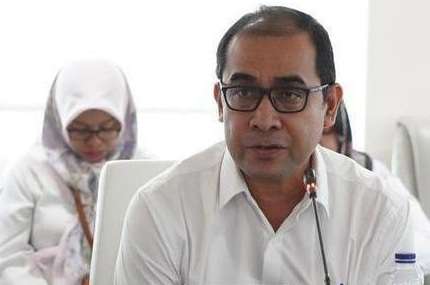
Mohammad Abdi Suhufan, Chair of the KNMP 2027 Preparation and Planning Task Force, explained that lessons learned from these initiatives provide an important foundation for continuously improving the ministry’s development approach.
Programs that have demonstrated success can be continued and expanded, while experiences that have not delivered optimal results can inform evaluations and help shape policies that better respond to local needs and challenges.
Speaking at the Training of Trainers (ToT) for KNMP Task Force members, Abdi emphasized that one of the program’s fundamental changes is its shift from a predominantly sectoral approach toward a more holistic and integrated model of development.
“Where individual work units previously implemented programs according to their respective mandates, KNMP seeks to approach fishing village development as an integrated whole, encompassing various aspects of community life and fisheries economic activities,” he said before more than 60 participants on Friday, October 16, 2026.
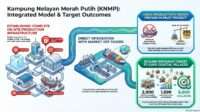
According to Abdi, this approach places infrastructure development within a broader framework that includes local economic potential, fisheries processing and cold-chain facilities, interregional connectivity, institutional strengthening, and partnerships.
“All these elements need to be planned in an integrated manner so that development produces more than physical facilities. It must also support economic activities and deliver tangible benefits to fishing communities,” said Abdi, an expert adviser to Marine Affairs and Fisheries Minister Sakti Wahyu Trenggono.
He explained that this holistic approach is one of the key foundations of KNMP implementation. Development planning must consider how a particular area functions, what potential can be developed, which facilities are needed, and how the area connects with neighboring regions and the broader fisheries economic network.
Consequently, development success cannot be measured solely by the availability of buildings or supporting infrastructure.
Infrastructure must be linked to community needs, business activities, market access, and the capacity of local institutions to manage and operate the facilities. This perspective enables more comprehensive planning and helps ensure that development investments remain relevant to the everyday lives of fishers.
Addressing the urgent needs of fishing villages
The need for this approach stems from the actual conditions of fishing villages encountered by KKP extension officers, researchers, and field personnel during their visits.
In several locations, communities continue to face limitations in facilities and supporting infrastructure. These realities underscore the need for greater, better-planned, and more sustainable investment in fishing village development.
These conditions also reinforce the importance of implementing KNMP on a national scale. With a target of developing up to 5,000 fishing villages, the program presents both a major challenge and an opportunity for the government to expand development coverage and improve support for coastal communities.
Abdi acknowledged that implementing development across thousands of locations simultaneously represents an extraordinary undertaking, even for KKP itself.
“Previous experience implementing programs across dozens or hundreds of locations provides a valuable foundation, but that experience must be further developed to meet the demands of a program with a much broader scope,” he said.
Such an ambitious target requires organizational capacity commensurate with the scale of implementation.
Cross-unit coordination, human resource readiness, planning quality, and the ability to manage information from multiple regions are all essential to supporting the program. These challenges also encourage KKP to strengthen its working systems, clarify responsibilities, and establish a shared understanding among all parties involved.
In this context, the KNMP 2027 Preparation and Planning Task Force plays a strategic role. Its responsibilities extend beyond identifying prospective sites to helping ensure that proposals submitted by local governments are assessed according to actual conditions, local potential, community needs, and site readiness.
Abdi stressed the importance of ensuring that Task Force members fully understand KNMP’s background, objectives, and development approach.
This shared understanding is necessary to ensure that members maintain a consistent perspective when engaging with local governments, communities, private-sector representatives, and other stakeholders.
The holistic development concept must be translated into practical field capabilities. Surveyors need to understand what information to collect, which conditions to inspect, and how to ensure that the data they obtain accurately reflects conditions on the ground.
Facilitators, meanwhile, must be able to communicate effectively with communities, identify their needs and challenges, and help formulate development priorities based on local circumstances.
“Through this process, site proposals should not be treated merely as administrative documents submitted by regencies or cities. Each proposal must be understood as a representation of a region’s needs and objectively assessed so that planning decisions are supported by a sound and accountable evidence base,” Abdi explained.
A data-driven approach is essential because fishing villages differ considerably in their characteristics. Each location has its own fisheries potential, infrastructure challenges, institutional capacity, and economic relationships. Understanding these differences helps prevent a uniform approach that may not adequately address the needs of individual communities.
A sound assessment also helps connect community needs with the interventions being planned. Processing facilities, ice plants, cold storage, and other supporting infrastructure must be considered in relation to local fisheries activities, user requirements, and the feasibility of operating and maintaining the facilities.
In this way, physical development can be planned as part of an integrated local economic system rather than as a standalone activity.
Ensuring site readiness and supporting infrastructure
Beyond improving planning quality, Abdi highlighted the importance of carefully calculating implementation schedules and stages. Physical construction must be followed by equipment installation and the preparation of supporting services.
Equipment procurement and installation, logistics distribution, and operational readiness require careful scheduling, particularly during year-end holidays and religious holidays, when logistics and implementation activities may be disrupted.
These considerations demonstrate that fishing village development requires coordinated planning across technical, administrative, logistical, and operational dimensions. Accurate scheduling enables stakeholders to anticipate obstacles, establish priorities, and keep implementation aligned with its intended objectives.
Abdi also outlined the scale of the development targets currently receiving the government’s attention.
He linked efforts to accelerate KNMP implementation with President Prabowo Subianto’s expectation that tangible progress should be demonstrated, including through plans to present development achievements in the president’s annual address before the People’s Consultative Assembly (MPR) in 2027.
He further explained that, based on the dashboard reviewed during a KKP evaluation, physical progress across the development sites under discussion stood at approximately 15 percent at that time. This figure provided important context for efforts to accelerate implementation toward the year-end targets, particularly for the supporting-type facilities, while progress on the Tip-Hub category was also being accelerated.
“These figures illustrate the strong attention being given to achieving the targets and the need to strengthen implementation monitoring,” he said.
At the same time, he emphasized that acceleration must be supported by sound planning, consistent coordination, and facility readiness so that construction completion can be followed by effective utilization.
For the KNMP 2027 Task Force, lessons from ongoing development provide valuable input for improving the next planning cycle.
These experiences can help identify requirements that need to be checked from the outset, strengthen assessment standards, and ensure that information about site readiness and community needs becomes an integral part of decision-making.
KNMP as a holistic development approach
Ultimately, KNMP’s transformation is not simply about the number of fishing villages to be developed. It also represents a change in how the government plans and delivers development for fishing communities.
“A holistic approach, the use of field data, stronger connectivity, and stakeholder participation are mutually reinforcing elements in achieving more targeted development,” Abdi emphasized.
He added that strengthening the capacity of surveyors and facilitators would help the KNMP 2027 Task Force provide KKP with a more comprehensive understanding of each proposed site. Accurate and verifiable information, combined with an understanding of community needs and local economic potential, provides an essential foundation for quality planning.
KNMP can therefore continue to develop as an initiative to build fishing villages that are not only better equipped physically, but also more economically connected, institutionally stronger, and better positioned to support coastal community welfare.
“Large-scale development requires coordinated efforts, while the quality of assessments at the earliest stages is one of the factors determining whether every development initiative delivers tangible benefits to Indonesia’s fishers,” he concluded.