
MARITIMEPOSTS.COM – The ambition to implement large-scale coastal development projects often collides with the complexities of realities on the ground.
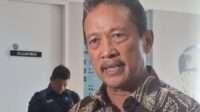
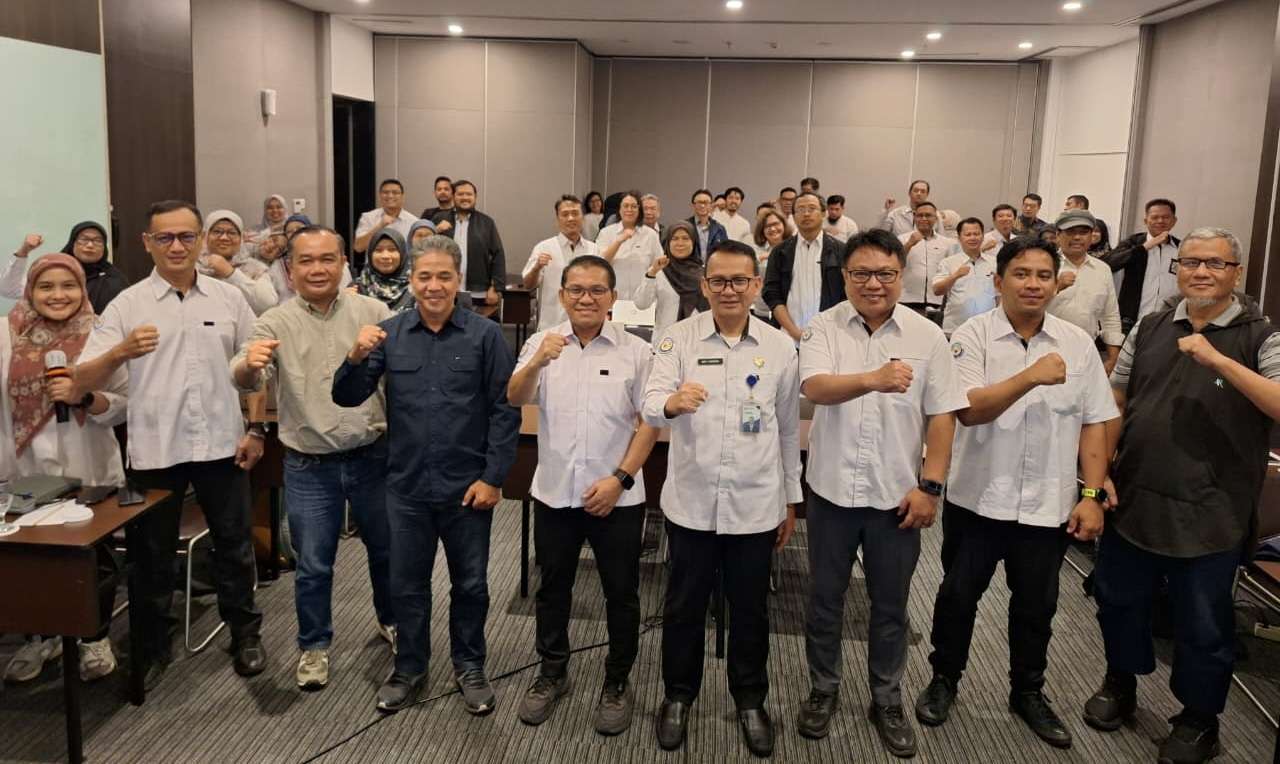
To ensure that newly built infrastructure does not end up abandoned or underutilized, Dr. Ady Candra, Director of Fishermen Protection and Empowerment at the Ministry of Marine Affairs and Fisheries (KKP), emphasized the critical importance of data-driven surveys when opening the Training of Trainers (ToT) for the 2027 Red and White Fishing Villages Task Force (Satgas KNMP) on Thursday, October 15, 2026.
A comprehensive evaluation of development progress and challenges during 2025–2026 is now serving as the primary foundation for ensuring that future planning becomes more systematic, measurable, and accurately targeted.
The Ambitious Target of 5,000 Fishing Villages, Accelerated to 2028
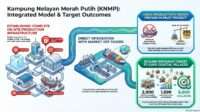
The Red and White Fishing Villages (Kampung Nelayan Merah Putih, or KNMP) program is one of the Ministry of Marine Affairs and Fisheries’ national priority initiatives, with an ambitious target of developing 5,000 fishing villages across Indonesia.
The government has taken a strategic step by accelerating the program’s completion target from its original deadline of 2029 to 2028.
This acceleration is intended to address the fundamental challenges facing coastal communities, increase fisheries production, and significantly improve their welfare.
However, implementing a program of this scale at an accelerated pace requires a careful balance between speed of execution and thoroughness of planning. Without comprehensive site assessments and mapping, efforts to meet the accelerated target could instead create technical weaknesses during implementation.
The Failure of Physical Infrastructure Disconnected from the Economic Value Chain
Past experience has demonstrated that physical development undertaken in isolation from the actual needs of coastal communities carries a significant risk of producing facilities that deliver less than their intended benefits.
Important lessons can be drawn from various previous initiatives, ranging from port-based development projects in Bungus and Bitung to the Minapolitan program, the Fishermen’s Welfare Improvement Program (Peningkatan Kesejahteraan Nelayan, or PKN), and the development of the Modern Fishing Village model in Biak.
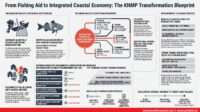
Integrating the Value Chain: Physical infrastructure must not stand alone; it must be directly connected to the entire coastal economic value chain, from production and processing to distribution and marketing. Facilities such as ice plants, cold chain systems, fuel supply support, docking facilities, workshops, and market access must be designed specifically to reflect the scale of local fishing operations and the characteristics of fisheries in each location.
Delivering Tangible Economic Impact: According to KKP studies, there is a strong correlation between increased fisheries production and rural economic growth. Consequently, project success can no longer be measured solely by the completion of physical structures.
Instead, it must be assessed in terms of how effectively the infrastructure improves catch quality, expands access to domestic and export markets, and generates tangible economic added value for fishers.
“The problems currently emerging in 2026 need to be anticipated so that planning for the 2027 KNMP program can proceed properly and, ultimately, the facilities can be put to effective use.”
A Reality Check on the Ground: Land Disputes and Green Open Space Risks
Initial field assessments frequently reveal discrepancies between administrative records and actual conditions. Evaluation findings have identified four major land- and site-related challenges that must be anticipated from the outset:
- Discrepancies in Local Government Data: Information provided by local governments about land availability does not always correspond with conditions on the ground. Sites declared ready for development may turn out to have unresolved legal ownership issues or land-use disputes once construction begins.
- Spatial Planning Violations (Green Open Space): Proposed development sites may conflict with local spatial planning regulations, including locations designated as Green Open Space (Ruang Terbuka Hijau, or RTH).
- Legal Issues Concerning Donated Land: Legal complications may arise when individuals withdraw land donations, donation documents are incomplete, or proposed projects are unsupported by valid proposals and reliable data.
- Distance from Fishing Activity Centers: Facilities may be located too far from fishing settlements or fish landing sites, discouraging fishers from using them even after construction has been completed.
Logistical Challenges on Small Islands and the Threat of Overdesign
Beyond the complexities of land ownership and legal status in mainland coastal areas, planning facilities in remote regions and small islands presents much greater geographical and logistical challenges.
Survey teams must account for limited personnel, travel duration, transportation accessibility, local material prices, and the high costs of transporting construction materials by sea. These factors can inflate project budgets and delay construction schedules.
Verifying Fisheries Data: Hub vs. Supporting Area
Accurate field data verification is essential to ensure that the scale of development matches actual needs. Information on the number of vessels, number of active fishers, daily production volumes, and availability of supporting industries must accurately reflect conditions on the ground. The reliability of these data determines whether a location qualifies for development as a primary fisheries activity center, or hub, or should instead serve as a supporting area.
Controlling Overdesign and Ensuring Technical Readiness
In addition to natural and geographical challenges, projects face technical risks such as excessive or unnecessarily elaborate design (overdesign), inconsistencies between initial survey locations and detailed design documents, and misalignment between construction work and equipment installation.
Fundamental technical requirements—including material quality assurance, reliable freshwater availability, road access, and mechanical, electrical, and plumbing (MEP) systems—must be verified before construction begins. These measures are essential to ensuring that project budgets are allocated efficiently and that facilities can operate as intended.
The Keys to Success: Cross-Sector Collaboration and Fisher Education
Sustainable fishing village development cannot be achieved by KKP alone. Coordination and cross-sector collaboration with relevant technical institutions are required from the earliest stages of planning.
- PT PLN (Persero): To ensure reliable electricity supply and adequate power distribution infrastructure.
- Pertamina Patra Niaga: To conduct a comprehensive assessment of fuel supply requirements, taking into account the number of fishing vessels, fishers’ actual fuel needs, distribution costs, distances from existing fuel supply facilities, and the feasibility of management arrangements through fishing cooperatives.
- The Ministry of Agrarian Affairs and Spatial Planning/National Land Agency (ATR/BPN): To verify land ownership and legal status, as well as compliance with local spatial planning regulations.
- The Police and the Prosecutor’s Office: To provide legal assistance, oversight, and safeguards throughout the physical construction process.
Community Readiness: Beyond physical infrastructure and legal compliance, educating fishers about post-harvest technologies is essential to maintaining the quality of their catches.
Even technically adequate facilities risk being underutilized if local communities are not sufficiently prepared or do not understand how to operate the equipment and benefit economically from the technologies provided.
Conclusion: Beyond Infrastructure, Toward Sustainable Coastal Livelihoods
The physical construction of Red and White Fishing Villages represents only the first stage of a much longer effort to empower coastal communities.
The true success of this ambitious national program will not be measured by the grandeur of its buildings, but by the sustainability of their use in increasing production capacity, strengthening local economic value chains, and improving the livelihoods and welfare of fishers.
As conveyed in the closing verse delivered during the 2027 KNMP Task Force ToT:
The morning shines as we head toward the estuary,
Fishing villages line the harbor’s quay.
Unite our steps and strengthen our endeavor,
So KNMP thrives and fishers prosper together.
Given the many lessons emerging from the field, is it time for public development policy to shift its focus from simply meeting physical construction targets toward strengthening human capacity and the economic ecosystems that sustain these investments?