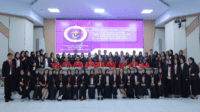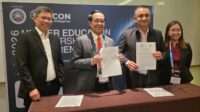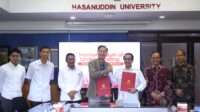

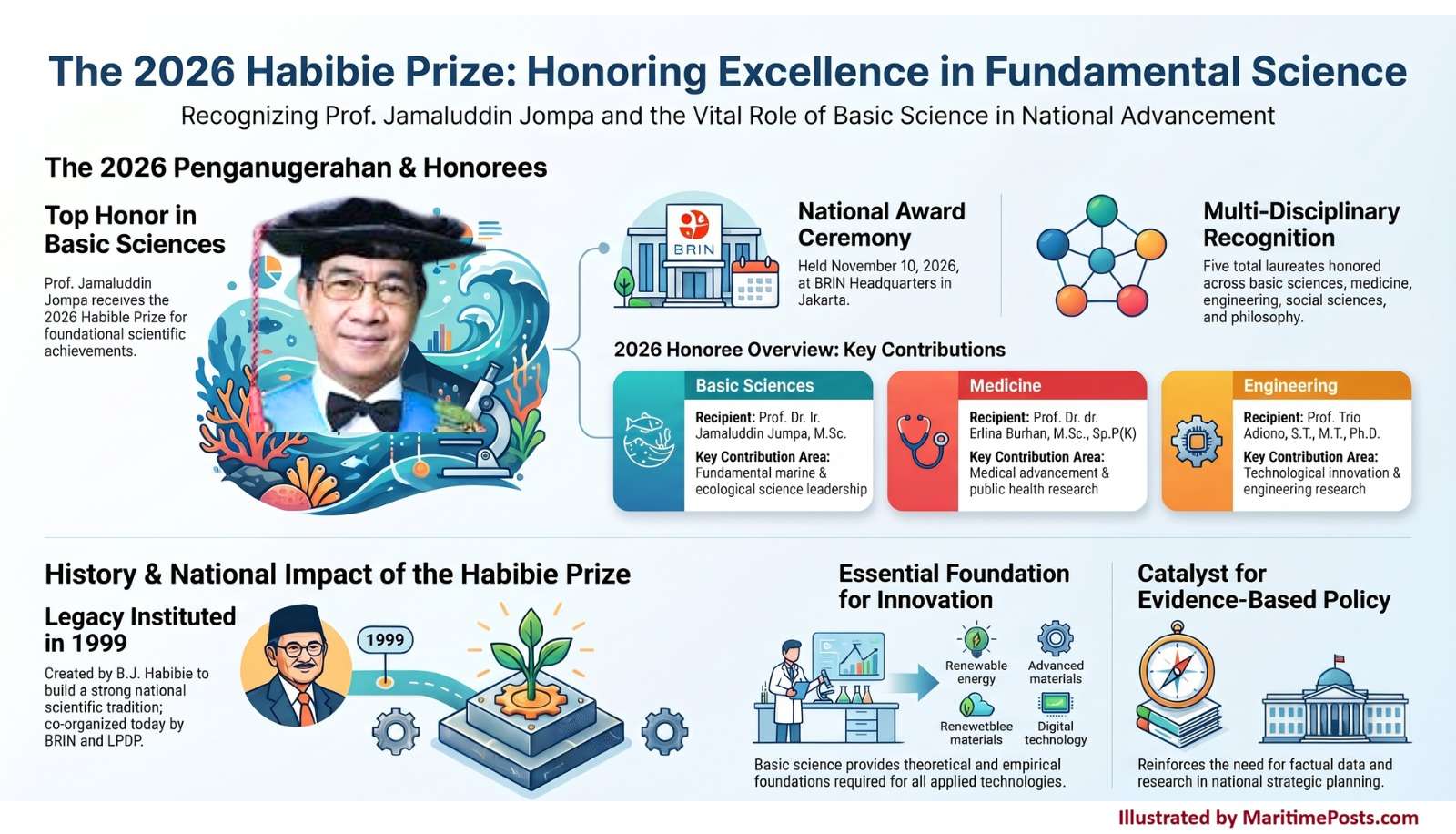
- Prof JJ exemplifies the integration of fundamental scientific inquiry and university administration. His recognition honors a distinguished career dedicated to advancing basic science as a prerequisite for national self-reliance, extending his influence from international laboratory and field research to strategic university governance.
- The event is scheduled for Tuesday, November 10, 2026, at 19:00 WIB, at the BJ Habibie Building, BRIN, Jakarta, with Prof. Dr. Arif Satria, S.P., M.Si., Head of BRIN, as the keynote speaker.
- This high-level state platform demonstrates how institutionalized recognition moves fundamental research out of academic isolation and places it at the center of national development planning. Strategic policy frameworks rely on tangible academic leadership, as demonstrated by the selection of the 2026 laureate cohort.
MARITIMEPOSTS.COM – National scientific advancement requires structured, systemic backing to transform fundamental intellectual inquiry into sustainable, long-term state capacity.
Within Indonesia’s emerging epistemic infrastructure, the Habibie Prize operates not merely as an honorific academic award, but as a vital policy instrument designed to institutionalize long-term investment in scientific research and human capital development.
By according state-level recognition to transformative research and executive academic leadership, the prize reinforces the sovereign imperative of fostering an ecosystem where rigorous scientific inquiry directly informs national policy, regional equity, and societal resilience.
The strategic origins of this honor trace back to May 12, 1997, when Bacharuddin Jusuf Habibie and his family established the Yayasan Sumber Daya Manusia dalam Ilmu Pengetahuan dan Teknologi (Yayasan SDM-IPTEK).
Founded on the structural conviction that national sovereignty requires superior human capital, mastery of science and technology, and home-grown innovation, the foundation launched its flagship recognition program—originally designated as the Habibie Award—in 1999.
The instrument was conceptualized to reward scholars and innovators who made exceptional contributions to discovering, developing, and disseminating breakthroughs with demonstrable impacts on public welfare, social justice, and national progress.
To transition this initiative into a permanent fixture of national research governance, the honor underwent a structural public-private integration.
On November 6, 2020, Yayasan SDM-IPTEK formally partnered with the Ministry of Research and Technology/National Research and Innovation Agency (Kemenristek/BRIN), re-institutionalizing the recognition under its modern title: the Habibie Prize. Since 2022, the National Research and Innovation Agency (BRIN) has hosted the annual conferment, anchored by strategic co-funding from the Education Fund Management Agency (LPDP).
From a higher education policy perspective, this multi-institutional backing—combining sovereign wealth endowment financing via LPDP with state research oversight via BRIN—establishes a resilient funding model. It insulates national scientific recognition from annual ministry budget fluctuations and anchors long-term human capital strategy within state administration.
The formal conferment ceremony for the 2026 Habibie Prize cohort highlights the institutional prestige assigned to national research leadership.
The event is scheduled for Tuesday, November 10, 2026, at 19:00 WIB, at the BJ Habibie Building, BRIN, Jakarta, with Prof. Dr. Arif Satria, S.P., M.Si., Head of BRIN, as the keynote speaker. This high-level state platform demonstrates how institutionalized recognition moves fundamental research out of academic isolation and places it at the center of national development planning. Strategic policy frameworks rely on tangible academic leadership, as demonstrated by the selection of the 2026 laureate cohort.
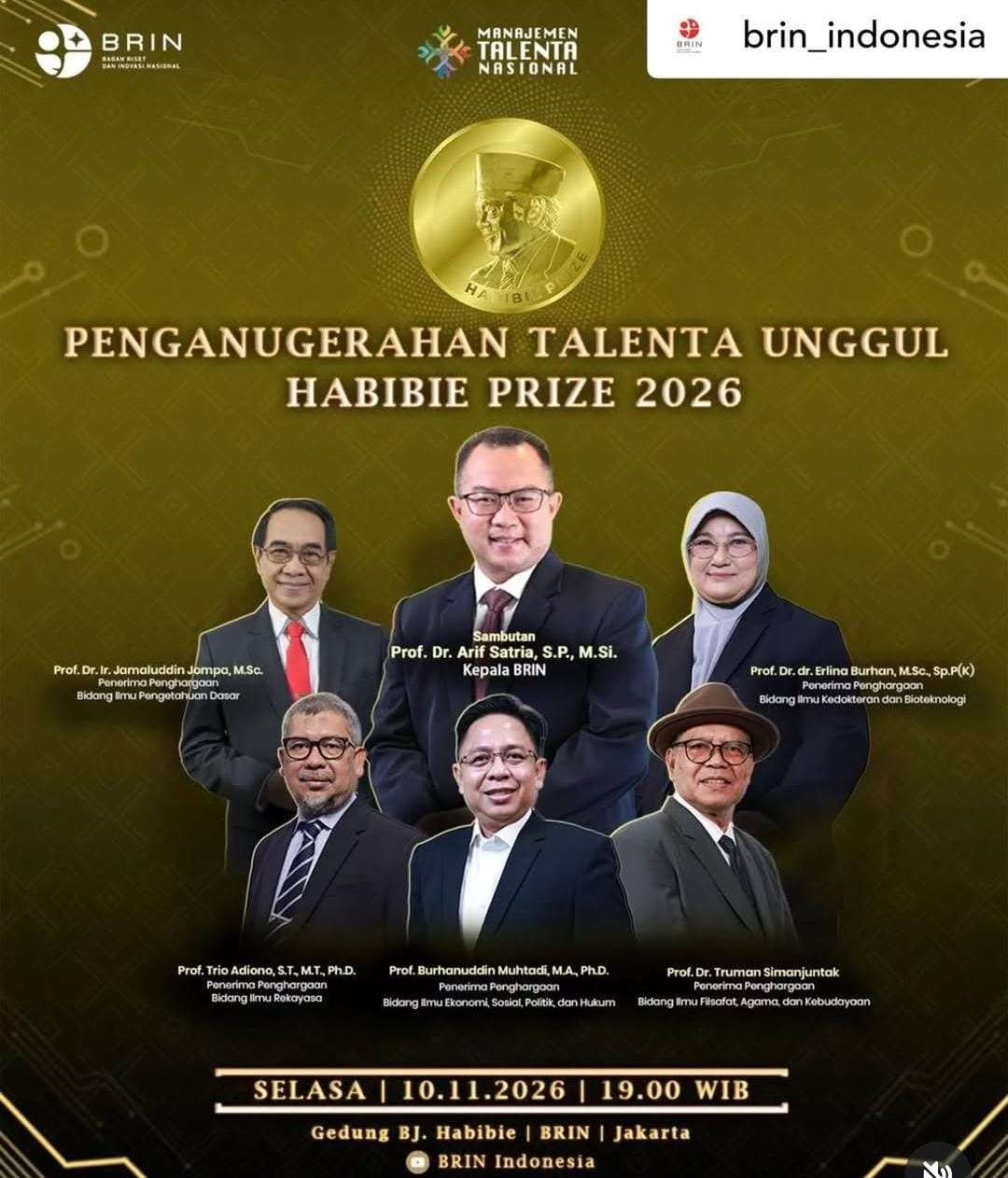
Laureate Spotlight: Prof. Jamaluddin Jompa and the 2026 Cohort
Elevating individual academic leaders plays a pivotal role in bridging basic scientific discovery with institutional governance. Honorific instruments achieve maximum policy impact when they recognize scholars who combine rigorous scientific output with executive leadership, thereby translating empirical inquiry into organizational capability, institutional prestige, and broader socio-economic progress.
Among the honorees of the 2026 conferment is Prof. Dr. Ir. Jamaluddin Jompa, M.Sc. (publicly known as Prof JJ), who has been awarded the Habibie Prize in the category of Basic Sciences (Ilmu Pengetahuan Dasar). Serving as the Rector of Universitas Hasanuddin (Unhas),
Prof JJ exemplifies the integration of fundamental scientific inquiry and university administration. His recognition honors a distinguished career dedicated to advancing basic science as a prerequisite for national self-reliance, extending his influence from international laboratory and field research to strategic university governance.
The 2026 Habibie Prize honors five scholars across distinct academic domains, demonstrating the broad intellectual architecture required for national development. Prof. Dr. Ir. Jamaluddin Jompa, M.Sc., is recognized in Basic Sciences (Ilmu Pengetahuan Dasar); Prof. Dr. dr. Erlina Burhan, M.Sc., Sp.P(K), in Medical Sciences and Biotechnology (Ilmu Kedokteran dan Bioteknologi); Prof. Trio Adiono, S.T., M.T., Ph.D., in Engineering Sciences (Ilmu Rekayasa); Prof. Burhanuddin Muhtadi, M.A., Ph.D., in Economics, Social, Political, and Legal Sciences (Ilmu Ekonomi, Sosial, Politik, dan Hukum); and Prof. Dr. Truman Simanjuntak in Philosophy, Religion, and Cultural Sciences (Ilmu Filsafat, Agama, dan Kebudayaan).
This multidisciplinary cohort illustrates that national progress requires an integrated research ecosystem, where basic sciences provide the theoretical and empirical foundations utilized by applied engineering, medical biotechnology, social policy, and the humanities.
The Strategic Imperative of Basic Sciences and Evidence-Based Development
Basic science rarely yields immediate commercial returns or short-term financial monetization. However, fundamental scientific inquiry serves as the non-negotiable foundation for applied technological, medical, environmental, and industrial advancements.
Without continuous investment in basic research, an emerging economy risks exhausting the intellectual capital, empirical baselines, and methodological frameworks required to solve complex, novel domestic challenges.
The strategic value of basic science within national research architecture operates through three primary policy mechanisms. First, basic science works at the bedrock of knowledge by explaining natural phenomena, formulating foundational theories, establishing empirical facts, and creating rigorous analytical methodologies.
Second, it provides the indispensable scientific base upon which applied solutions across vital sectors—including public health, resource management, renewable energy, and advanced manufacturing—are conceptualized, tested, and scaled. Third, beyond immediate laboratory output, basic research serves as a strategic defense against technological lock-in and foreign intellectual property dependency.
Crucially, it generates the baseline scientific datasets required to build long-term national resilience against climate disruption and natural resource depletion.
This reliance on fundamental scientific rigor forms the core of Prof. Jamaluddin Jompa’s strategic guidance to government planning bodies, development partners, and public policy media regarding the Unitary State of the Republic of Indonesia (NKRI). He repeatedly asserts that national transformation cannot rely on intuition, unverified assumptions, or short-term political expediency:
Real transformation toward a better Indonesia must originate from evidence-based development planning driven by data and factual information, enabling precise, deeply analytical, broad, and accountable problem mapping and strategic solutions.
By positioning basic science as an indispensable tool for evidence-informed governance, Prof JJ underscores that scientific rigor is not an abstract academic pursuit, but an operational requirement for effective public policy, national security, and strategic planning.
Institutional Impact, Regional Empowerment, and Academic Regeneration
National research honors extend beyond individual commendation; they act as structural catalysts that elevate regional academic institutions, advance decentralized research architecture, and reset benchmarks for higher education quality across the archipelagic nation.
The conferment of the Habibie Prize upon Prof. Jamaluddin Jompa—celebrated with distinct pride by the leadership and academic community of the Faculty of Marine Sciences and Fisheries (Fakultas Ilmu Kelautan dan Perikanan / FIKP) at Universitas Hasanuddin—carries profound geopolitical and institutional weight.
As an archipelagic state (NKRI), Indonesia’s long-term sustainability depends on marine science, coastal ecosystem management, and ocean governance. Recognizing a marine scientist and university leader from Unhas in the Basic Sciences category positions Eastern Indonesian higher education at the forefront of national research strategy.
This achievement challenges Java-centric academic centralization, fostering regional academic equity and demonstrating that world-class basic science critical to the nation’s maritime identity can flourish in regional hubs.
This state-level recognition provides a necessary policy framework for recalibrating how higher education institutions evaluate institutional success.
Under conventional administrative pressure, universities often prioritize superficial metrics over long-term scholarly impact. The Habibie Prize reinforces that true academic performance must move beyond routine metrics toward strategic contributions.
Conventional administrative metrics tend to focus on aggregate graduate output volume, unfiltered publication counts, and surface institutional rankings and marketing, emphasizing operational capacity and short-term administrative compliance. In contrast, strategic value and epistemic metrics prioritize the construction of sustained intellectual traditions, expansion of fundamental knowledge boundaries, and rigorous, evidence-based solutions for national challenges.
Their strategic policy focus is long-term national capability, research sovereignty, and evidence-informed governance.
Beyond metrics, national recognition acts as a mechanism for academic regeneration. Honoring established scholars creates visible models of success for university students, early-career researchers, and junior faculty.
It demonstrates that pursuing fundamental inquiry offers a viable, highly valued career path that commands national merit. A self-sustaining research culture cannot be established through physical infrastructure alone; it requires visible leadership, structured mentorship, and public validation of dedicated intellectual labor.
The 2026 conferment of the Habibie Prize to leaders like Prof. Jamaluddin Jompa delivers a strategic message that extends far beyond the formal proceedings in Jakarta.
By honoring scholars who dedicate their careers to fundamental inquiry, evidence-informed leadership, and institutional excellence, Indonesia reaffirms that sovereign statecraft depends on scientific capacity. Prioritizing basic science, championing evidence-based policy, and empowering regional intellectual centers ensures that the nation builds a resilient, self-reliant, and knowledge-driven future
.