
MARITIMEPOSTS.COM — Choosing the right journal is an important step in the academic publishing process. Selecting the wrong target journal can not only delay publication but also expose authors to journals that lack credibility or, in some cases, predatory journals.
The issue was highlighted during the “Socialization on Target Journal Selection and Introduction to Predatory Journals” organized by the Graduate School of Hasanuddin University on Friday, October 2, 2026.
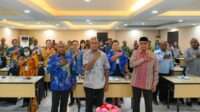
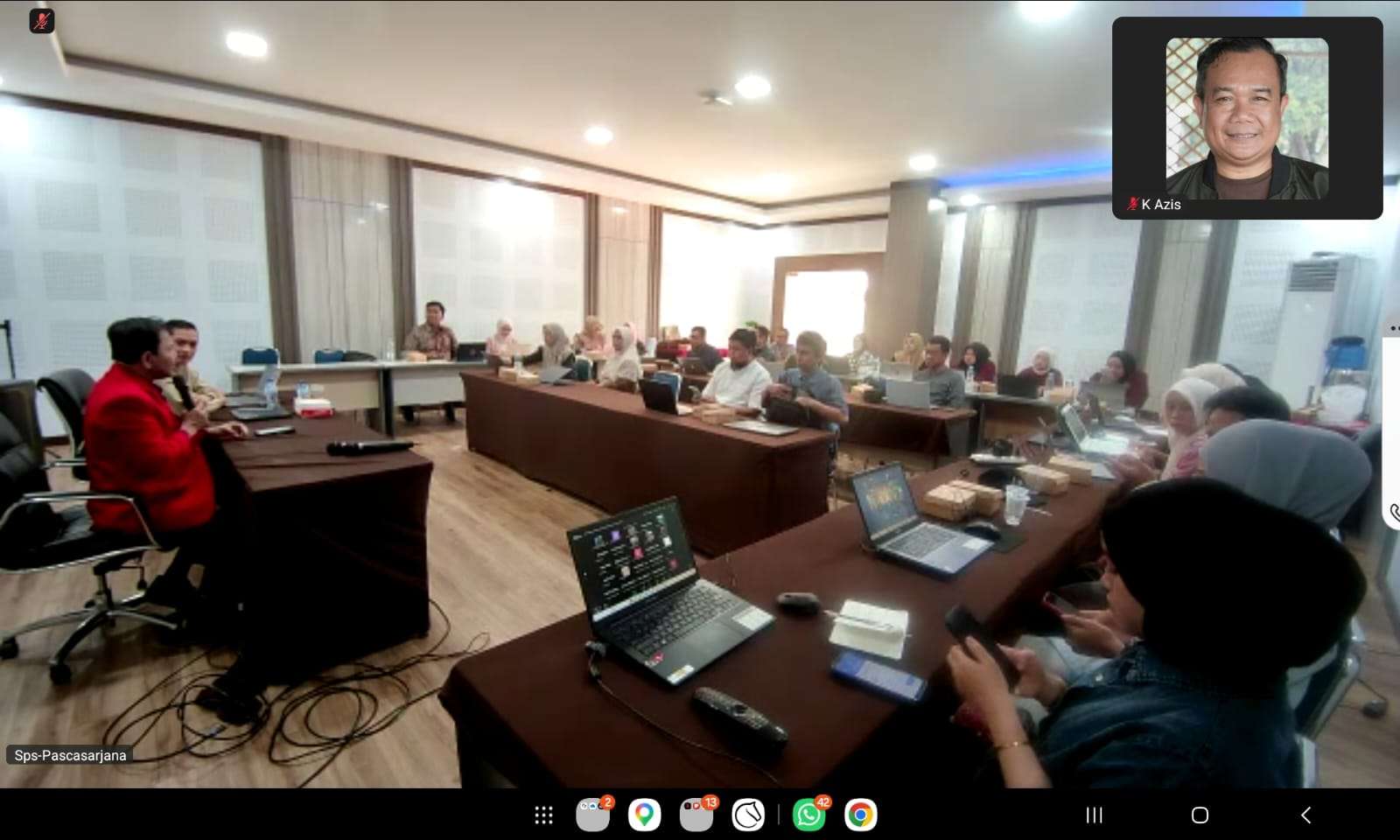
The event was held both online and offline, attracting around 100 online participants and more than 20 participants attending in person at the Graduate School Classroom Hall of Hasanuddin University.
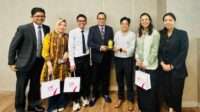
The session featured Prof. Andi Dirpan, Ph.D. as the speaker. Also attending was the Dean of Hasanuddin University Graduate School, Prof. Sukri Palutturi, Ph.D., who emphasized the importance of strengthening the academic community’s capacity to manage scholarly publications more carefully and responsibly.
According to Prof. Sukri, publication skills need to be built upon a solid understanding of basic knowledge that is often considered simple but can determine the quality and suitability of a manuscript.
He said authors need to understand the characteristics of their target journals, including their scope, article format, word limits, citation systems, peer-review processes, and other technical requirements.
“We want students and lecturers not only to be able to write scientific articles, but also to understand where those articles should be submitted. Basic matters such as the required word count, article format, how to submit a manuscript, and how to read a journal’s guidelines need to be understood. These things may seem simple, but they are very important in the publication process,” said Prof. Sukri Palutturi.
He also emphasized that technological developments have made publication literacy inseparable from the ability to use information technology and the internet.
Authors need to be able to search for information, investigate a journal’s reputation, verify its indexing, critically examine journal websites, and distinguish valid information from publication offers that may be misleading.
“Today, literacy is no longer limited to reading and writing. We also need IT literacy and internet literacy—the ability to search for and verify information. We need to know how to find journals, how to check them, who their editors are, where they are indexed, how their review process works, and whether the information provided by the journal is actually accurate,” he said.
According to Prof. Sukri, the development of artificial intelligence (AI) is also creating new opportunities as well as challenges in academic writing.
AI can assist with generating ideas, organizing information, editing language, and handling certain technical tasks. However, its use must remain within the framework of academic ethics and responsibility.
“AI has now become part of academic life. We can make use of technology, but we still need to have a strong foundation in the underlying knowledge. We should not hand over the entire thinking process to AI. We must be able to recheck information, understand its sources, ensure that data and references are accurate, and remain responsible for the work we produce,” Prof. Sukri explained.
Beyond technical skills, Prof. Sukri also reminded students of the importance of focus and their willingness to dedicate sufficient time to completing their studies. The desire to earn a master’s or doctoral degree needs to be accompanied by commitment to the academic process, including research, writing, revisions, and publication.
“If we want to become doctors or masters, we have to stay focused and make time for it. We should not be overly worried about the process. The Graduate School will help and facilitate. What matters is that students have the willingness, stay focused, and make time to complete each stage,” said Prof. Sukri.
He added that students do not have to go through the entire process alone. The Graduate School has a responsibility to provide a supportive academic environment, both through facilities and infrastructure and through human resources who can assist students throughout the various stages of their academic journey, particularly when they enter the publication process.
“We will do our best to facilitate students, both in terms of facilities and infrastructure and through academic assistance. We have excellent lecturers and researchers who can help students, especially when they are dealing with the publication process. Students should not feel that they have to face everything on their own,” he said.
Guidance from Andi Dirpan
During the same session, Prof. Andi Dirpan, Ph.D. emphasized the importance of using reliable channels when searching for academic journals. He said authors should develop the habit of finding journals through established publishers and reputable academic information sources, rather than relying solely on publication offers received through email or other digital platforms.
He also stressed the need to recognize trustworthy sources.
“When looking for journals, we can go through established publishers or recognized academic platforms, such as Elsevier, Wiley, and other reliable sources. This gives us a safer path for searching and allows us to examine the journal, its field, editorial process, and publication information more clearly,” Prof. Andi Dirpan explained.
“Successful research publication does not happen by chance. It comes from careful planning and a strong foundation in basic knowledge. Begin your study by preparing a review paper, use AI technology wisely, and always understand the standards and expectations of editors at reputable journals,” he said.
According to Prof. Andi, the presence of a major publisher or academic platform does not mean that authors can stop verifying information. The publisher’s name still needs to be checked alongside the journal’s information because authors need to ensure that the journal’s identity, scope, editorial process, indexing, and other details correspond with official sources.
“Do not simply look at the name or appearance of a website. We need to go to the official source, read its scope, identify its editors, examine its peer-review process, and check whether the journal is actually indexed as claimed. The principle is simple: the better we verify a journal at the outset, the lower the risk of choosing the wrong one,” he added.
This understanding is increasingly important as authors now operate in a broad and complex publishing environment. Search engines, social media, email, academic platforms, and various AI-based services can help researchers find journal information, but they also require users to critically verify what they find.
In the context of graduate education, publication skills go beyond the ability to produce a scientific article.
Researchers are also expected to understand the publishing ecosystem, recognize journals that match their fields of study, and assess a journal’s credibility and track record before submitting a manuscript.
Ideally, the selection of a target journal begins when authors understand the purpose and contribution of their article. The field of study, journal scope, article type, intended readership, and previous publication record should all be considered so that a manuscript is not simply submitted to a journal because it appears to offer a fast publication process.
“The key to breaking into reputable journals is a combination of deep foundational knowledge and intelligent use of modern technology. When planning is structured and our scientific message aligns with the needs of editors, publishing internationally is no longer impossible.”
— Prof. Andi Dirpan
For this reason, recognizing predatory journals is an important part of academic publication literacy. Authors need to be alert to journals that aggressively solicit manuscripts, make unreasonable promises about publication speed, provide little transparency regarding their editorial processes, or make indexing and reputation claims that cannot be independently verified.
Participants were encouraged to critically examine information presented by journals, including claims about indexing, reputation, review processes, publication fees, editorial board composition, and journal management transparency. Such information should be verified through reliable sources and databases rather than relying solely on the appearance of a journal website or promotional communications received by authors.
The discussion has become increasingly relevant as digital technology has made information about scholarly publishing more accessible.
On the one hand, this situation creates broader opportunities for researchers to publish their work. On the other hand, authors are confronted with an increasing amount of information that must be carefully filtered and critically assessed.
For graduate students, the issue has a broader dimension. Publication is part of an academic journey connected to knowledge development, research track records, and the communication of research findings to the scholarly community. Therefore, decisions about target journals should ideally be part of a research strategy rather than merely an administrative step taken after research has been completed.
The enthusiasm of participants, both those attending in person and those joining online, demonstrated the growing need for practical knowledge about publication strategies, journal selection, and the risks posed by predatory journals.
Around 120 participants joined the event through the two attendance formats, reflecting the growing demand for practical knowledge on publication strategies, journal selection, and identifying predatory journals.
The event served as a reminder that scholarly publishing is not simply about where an article can be published, but also about where the knowledge it contains can be academically accountable. Careful journal selection is therefore part of a researcher’s commitment to academic integrity.
A solid foundation in academic knowledge, information-technology literacy, the ability to navigate and verify online sources, and the capacity to use AI critically are becoming increasingly important competencies in academia. Technology can help accelerate certain tasks, but the quality of academic decisions ultimately depends on people’s ability to understand, verify, and take responsibility for the knowledge they use.
The ability to read a journal’s characteristics, verify its credibility, understand its editorial process, use technology responsibly, and make use of support from lecturers and researchers are complementary elements of the academic journey.
Publication quality is determined not only by the quality of a manuscript but also by the author’s ability to place that work within an appropriate scholarly ecosystem. This socialization program provided a learning space for developing that awareness while strengthening a more critical, transparent, and integrity-based publication culture at the Graduate School of Hasanuddin University.
___
Written by K. Azis