
MARITIMEPOSTS.COM – September 9, 2026 — The Graduate School of Hasanuddin University has further strengthened its global academic outlook through an international guest lecture titled “Communities Behind the Lens.”
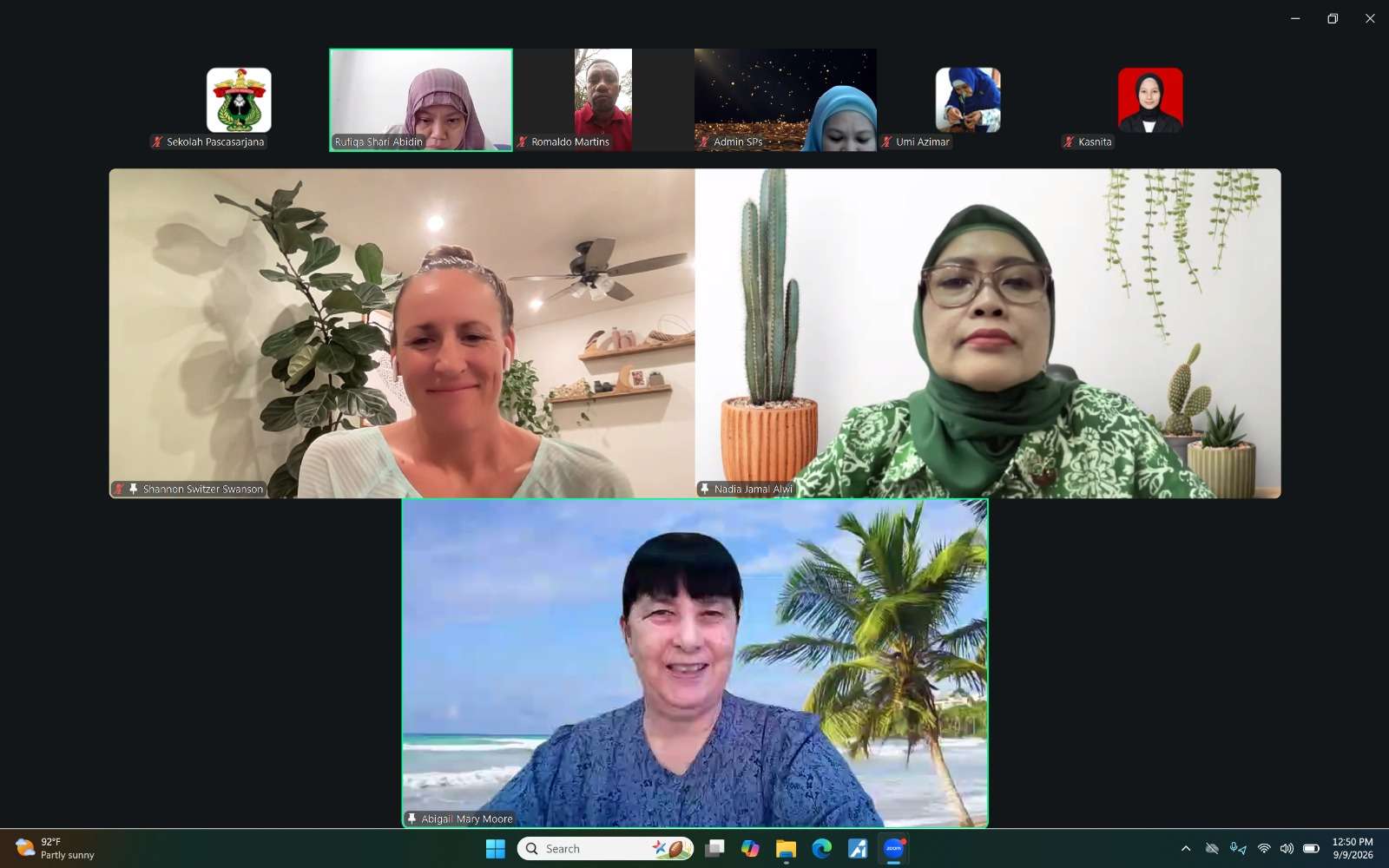
Held online via Zoom, the guest lecture featured Shannon Switzer Swanson, Ph.D., a National Geographic Explorer. The session was moderated by Dr. Abigail Mary Moore, B.Sc., M.Sc., and attended by students, lecturers, researchers, and participants from diverse backgrounds.
Representing the Dean of the Graduate School of Hasanuddin University, Vice Dean for Academic and Student Affairs Prof. Dr. Ir. Nadiarti, M.Sc. expressed full support for the event. She said international guest lectures serve as a strategic platform for connecting the Hasanuddin University academic community with experienced academics and researchers from around the world.
Such initiatives are expected to broaden students’ perspectives, strengthen research capacity, and create opportunities for sustained academic collaboration.
“Hasanuddin University’s Graduate School continues to encourage innovative and internationally oriented academic activities. Students need not only to master theories and research methods, but also to understand communities, build collaborations, and produce knowledge that creates tangible impact,” said Prof. Sukri.
He added that community engagement should be an integral part of multidisciplinary research, particularly studies related to the environment, health, social issues, and sustainable development.
During her presentation, Shannon introduced a range of participatory visual methods, particularly PhotoVoice, participatory video, and the Community Voice Method. These approaches provide community members with opportunities to document and reflect on their experiences, strengths, needs, and challenges through photographs, videos, and narratives.
In this way, communities are not merely positioned as sources of data, but are actively engaged as partners in the production and dissemination of knowledge.
“Behind every photograph, dataset, and scientific publication are communities whose knowledge, experiences, and relationships with nature need to be recognized and valued,” Shannon said.
According to Shannon, universities and researchers should not simply enter communities to study them. They should also listen, learn, and engage community members as meaningful partners. This approach is particularly important in marine, coastal, and environmental research, where local communities possess ecological knowledge developed and passed down through generations of interaction with their surrounding environments.
Shannon also shared her research experiences with coastal communities in various countries, including Indonesia, the Philippines, Kenya, Thailand, and several other island regions.
These studies demonstrate how participatory photography and filmmaking can reveal community experiences and challenges that may not be fully captured through conventional research methods. Such outputs can help foster public dialogue, raise collective awareness, strengthen community voices, and provide input for policies that are more responsive to local needs.
During the discussion session, participants explored opportunities to develop filmmaking as part of the outputs of scientific research and community engagement initiatives.
Shannon explained that participatory filmmaking can be used to amplify community voices while also supporting the research process, provided that it is developed around clearly defined research questions, systematic methods, strong ethical principles, and meaningful community involvement from the planning stage.
“Communities need to be involved in determining the issues to be addressed and the impacts they seek to achieve. Research questions should be aligned with community needs as well as the scientific objectives of researchers,” she explained.
Prof. Nadiarti expressed hope that the guest lecture would inspire the academic community to develop research that is more responsive to people’s voices, experiences, and knowledge.
“Research should not stop at the publication of scientific articles. It should also be capable of building dialogue, strengthening community capacity, and serving as a foundation for more responsive policies and actions,” she emphasized.
Through the international guest lecture, the Graduate School of Hasanuddin University has reaffirmed its commitment to advancing education and research that are excellent, inclusive, ethical, and oriented toward sustainability.
The event also forms part of the university’s broader efforts to expand international collaboration networks and strengthen Hasanuddin University’s contribution to producing relevant knowledge that delivers tangible benefits to society.