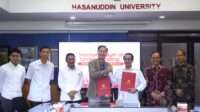

MARITMEPOSTS.COM — BANDAR LAMPUNG — The Doctoral Program in Development Studies at the Graduate School of Hasanuddin University (SPs Unhas) has joined the Development Studies Association (DSA) Indonesia as a new institutional member.
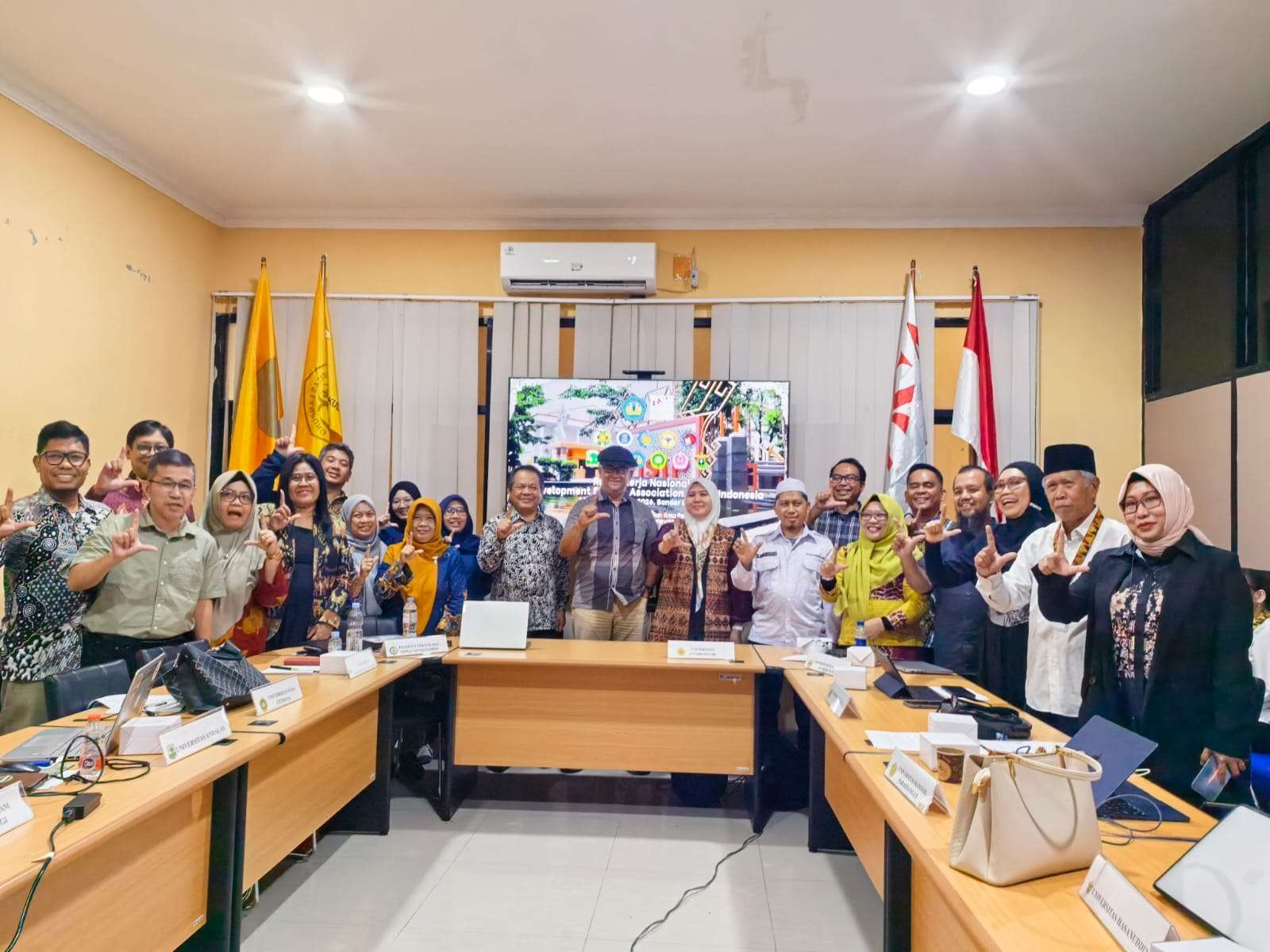
The membership was announced during the Second National Working Meeting (Rakernas II) of DSA Indonesia, held at the Faculty of Social and Political Sciences, University of Lampung, from September 23 to 25, 2026.
Prof. Dr. Ir. Nadiarti Nurdin Kadir, M.Sc., Vice Dean for Academic and Student Affairs at SPs Unhas, attended the meeting on behalf of the Head of the Unhas Doctoral Program in Development Studies.
During the introduction of new members, she explained that the program’s substantive orientation focuses on regional and national development, grounded in the specific characteristics of the Indonesian Maritime Continent ecosystem.
This orientation represents the distinctive perspective that Unhas brings to the DSA Indonesia network.
Development studies, she noted, needs to take into account the characteristics of Indonesia’s diverse regions and ecosystems so that ideas and policies can respond to local needs while contributing to broader national development.
In his remarks, DSA Indonesia Chairman Dr. Wilson MA Therik, S.E., M.Sc., said that with the addition of Unhas, the association now represents 14 study programs: one undergraduate program, seven master’s programs, and six doctoral programs.
He also emphasized that membership in the association is based on study programs, consistent with its original purpose of advancing the field of development studies.
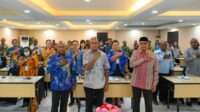
According to the organizing committee, this year’s national meeting brought together 27 participants representing 11 higher education institutions across Indonesia, along with one international representative from Universiti Kebangsaan Malaysia. The forum carried the theme, “Development Studies Research Innovation for Accelerating the SDGs: Strengthening Academic Collaboration Based on Local Potential toward Golden Indonesia 2045.”
Through its membership, SPs Unhas hopes to expand knowledge exchange and explore opportunities for educational and research collaboration with fellow DSA Indonesia members.
The meeting with representatives of Universiti Kebangsaan Malaysia also opened opportunities for cross-border academic communication, including discussions on development approaches grounded in local potential and regional characteristics.
The Second National Working Meeting of DSA Indonesia provided a platform for members to discuss the association’s development agenda, including curriculum alignment and the strengthening of scholarly publications.
For the Unhas Doctoral Program in Development Studies, participation in the forum marks an initial step toward bringing the Indonesian Maritime Continent perspective into a broader academic conversation on development studies.
About the Unhas Development Studies Program
The Doctoral Program in Development Studies at the Graduate School of Hasanuddin University (Unhas) officially began accepting its first cohort of students in late 2020 and commenced academic activities in 2021.
The program was initiated by several Unhas professors, including Prof. Ir. M. Saleh S. Ali, M.Sc., Ph.D., Prof. Dr. Ir. Imam Mujahidin Fahmid, M.TDev., and Prof. Dr. Darmawan Salman. The program is currently headed by Prof. Dr. Darmawan Salman, M.S.
The program’s distinctive feature lies in its emphasis on local development, with the Indonesian Maritime Continent (Benua Maritim Indonesia/BMI) serving as an important contextual framework for understanding development challenges in Indonesia as an archipelagic country.
Unlike development studies programs at other universities, which may emphasize different areas of inquiry, the Unhas program places local development at the entry point for examining broader development challenges, from regional and national levels to wider regional contexts.
From a curriculum perspective, students receive conceptual and methodological foundations through courses such as Philosophy and Theory of Development; Philosophy of Science and Research Methods; Academic Writing and Research Ethics; and Theories of Welfare, Public Services, and Regional Competitiveness.
Depending on their research and dissertation interests, students can explore areas including Agricultural Development, Public Services, Health Development, Regional Development, Gender and Development, Spatial Studies, and Disaster Management. The program offers two academic tracks: a Coursework and Research Track and a Research Track, combining theoretical and methodological training with research, academic seminars, scholarly publication, and dissertation work. The program carries approximately 42–48 credits, with a study period of five to ten semesters.
According to information published by Pelakita.ID, the program is supported by 27 permanent faculty members, including 22 professors, with expertise spanning Development Studies, economics, agriculture, marine and fisheries studies, transportation, infrastructure, spatial planning, architecture, tourism, energy, environmental health, public policy, and sociology.
This disciplinary diversity provides the foundation for an interdisciplinary approach that enables students to understand development not merely as a matter of economic growth, but as a process involving territories, communities, institutions, resources, policies, the environment, and relationships among diverse stakeholders.
With this orientation, the Unhas Doctoral Program in Development Studies seeks to develop researchers, academics, public officials, practitioners, and development leaders capable of producing evidence-based research, innovation, and policy recommendations for regional and national development, as well as for the broader maritime context of Indonesia.
Editor Denun