
The figure of 22 tons offers a new perspective: village waste management is not merely a side activity, but a logistics operation that requires a high degree of precision.
MARITIMEPOSTS.COM – For most of us, the issue of waste is often considered settled once a plastic bag moves from the kitchen to the front of the house.
Behind that house fence, however, unmanaged piles of waste mark the beginning of a paradox: a problem that appears “simple” at the household level can actually reach a massive scale when viewed collectively.
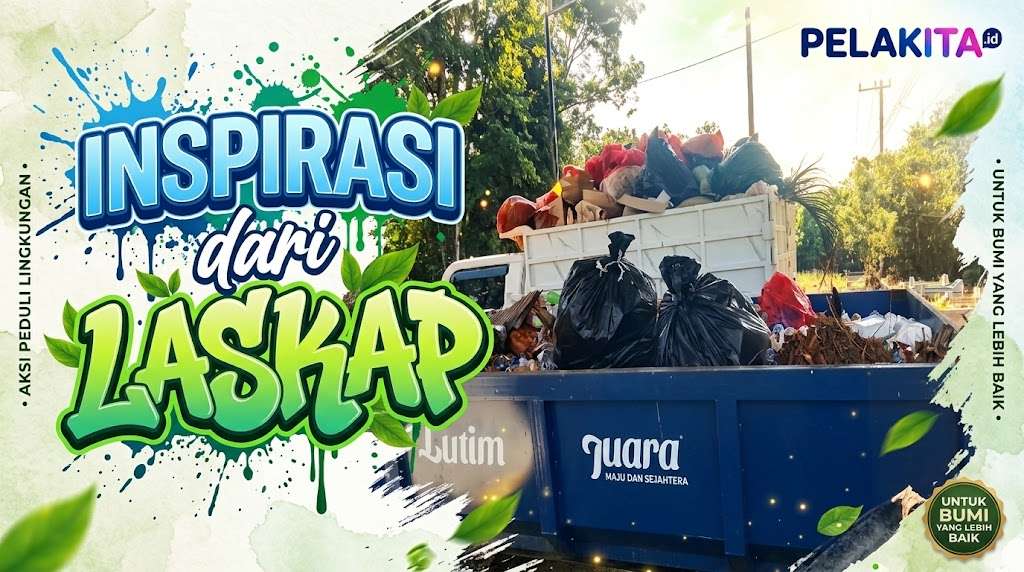
In Laskap Village, East Luwu Regency, this challenge is no longer seen as an endless daily burden. This small village is conducting a smart social experiment, transforming good intentions into a professional, thoughtful, and sustainable system.
Laskap Village’s first step began with the procurement of a Toyota Rangga Pickup waste collection vehicle. However, as an essay on social innovation, we must recognize that the real innovation does not lie in the vehicle’s metal and engine. Laskap is one of the 38 villages in the Mining Area of Vale.
The procurement represents a strategic step within the framework of the PPM PTVI (PT Vale) Program, working in synergy with the Village SDGs. This is the catalyst: collaboration between corporate initiatives and the vision of the village government.
A vehicle is merely an inanimate object if it is not supported by a mature “circulation system.” Without an operational schedule, fuel availability, and routine maintenance, a physical asset can instead become a liability that burdens the budget.
Laskap understands that the provision of facilities must go hand in hand with managerial readiness so that public services do not stop halfway.
“It is part of the initial effort by Laskap Village to build a more organized waste management system, with the village government, service managers, and the community sharing a continuous chain of responsibility,” said Andi Narwis, emphasizing that synergy is the lifeblood of every physical asset.
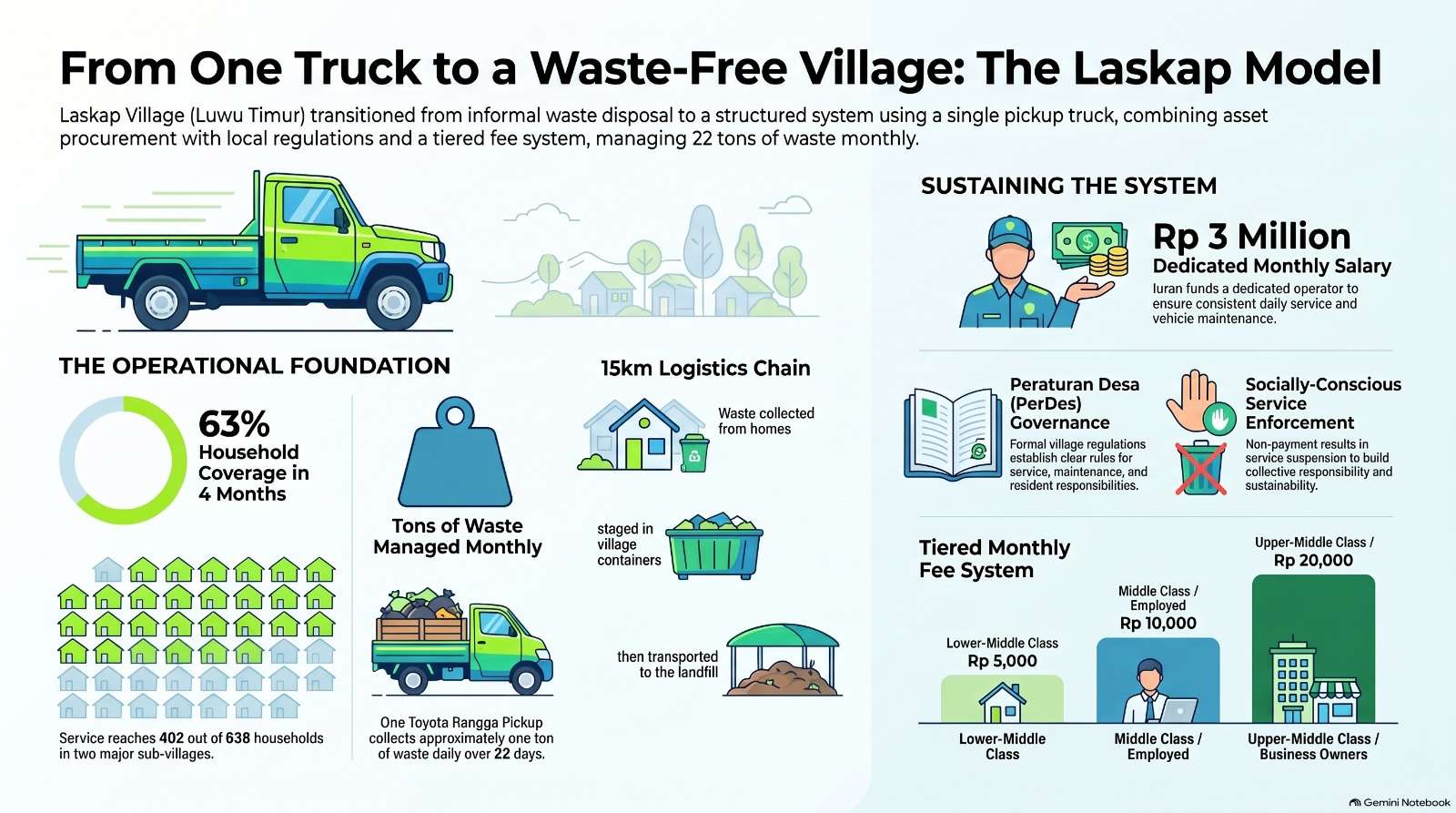
Many people underestimate the volume of waste at the village level. Yet, data collected over the past four months of operations in Laskap Village reveal a reality that demands daily consistency:
- Service Target: A total of 638 households (KK).
- Current Coverage: Reached 402 households in Karebbe Hamlet and Labose Hamlet.
- Waste Volume: An average of 1 ton of waste on each operational day.
- Monthly Logic: With 22 service days, the volume reaches approximately 22 tons per month.
- Logistics: Waste must be transported approximately 15 kilometers to the Ussu Village landfill.
The figure of 22 tons offers a new perspective: village waste management is not merely a side activity, but a logistics operation that requires a high degree of precision.
The sustainability of this system rests on an inclusive financing model. Laskap Village applies a tiered contribution system that reflects the socio-economic structure of its residents:
- Rp5,000: For lower- to middle-income residents.
- Rp10,000: For middle-income residents or those with permanent employment.
- Rp20,000: For upper-middle-income residents or business owners.
This is not merely about generating profit, but about building humane public services. However, there is also an element of firmness within this “social contract”: a service suspension mechanism applies to residents who fail to meet their contribution obligations. This teaches that the right to a clean environment goes hand in hand with collective responsibility.
Bureaucratic innovation is the backbone of physical innovation.
Laskap Village has prepared a Village Regulation (Perdes) on Waste Management to ensure that services remain sustainable beyond political terms of office. The regulation covers everything, from operational procedures to the most crucial aspect: the welfare of the workers.
Setting workers’ honoraria at Rp3 million per month is a radical statement about professionalism at the village level. By providing decent compensation, the village moves away from the “volunteer” model that has often contributed to the failure of village projects. Here, waste management is valued as a dignified profession, ensuring that the entire system rests on a solid foundation.
Providing a vehicle and establishing regulations are administrative steps; changing behavior is a cultural struggle. Laskap’s greatest challenge is not transporting 22 tons of waste to the landfill, but educating residents to sort waste at its source in order to realize a circular economy.
“Transporting waste does make the environment look cleaner, but the problem will continue to recur if people are not yet accustomed to reducing waste, sorting it, disposing of it properly, and following the service mechanisms that have been established,” Andi Narwis said.
The village’s future vision is not merely to “move the problem” to the landfill, but to create an ecosystem in which waste has economic value through disciplined sorting.
The transformation in Laskap Village teaches us that the aspiration of a “Waste-Free Village” is about consistent small choices. The success of this system is not measured by the shine of its waste collection vehicle, but by how deeply a culture of responsibility grows in the hearts of its residents.
Laskap’s journey is evidence that with strong regulations, fair financing, and professionalism that is properly valued, a village can become a pioneer of social innovation.
Are we?
Written by Kamaruddin Azis, founder of Pelakita.ID and maritimeposts.com
___
Gowa, 17 September 2026