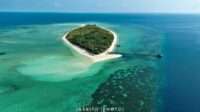

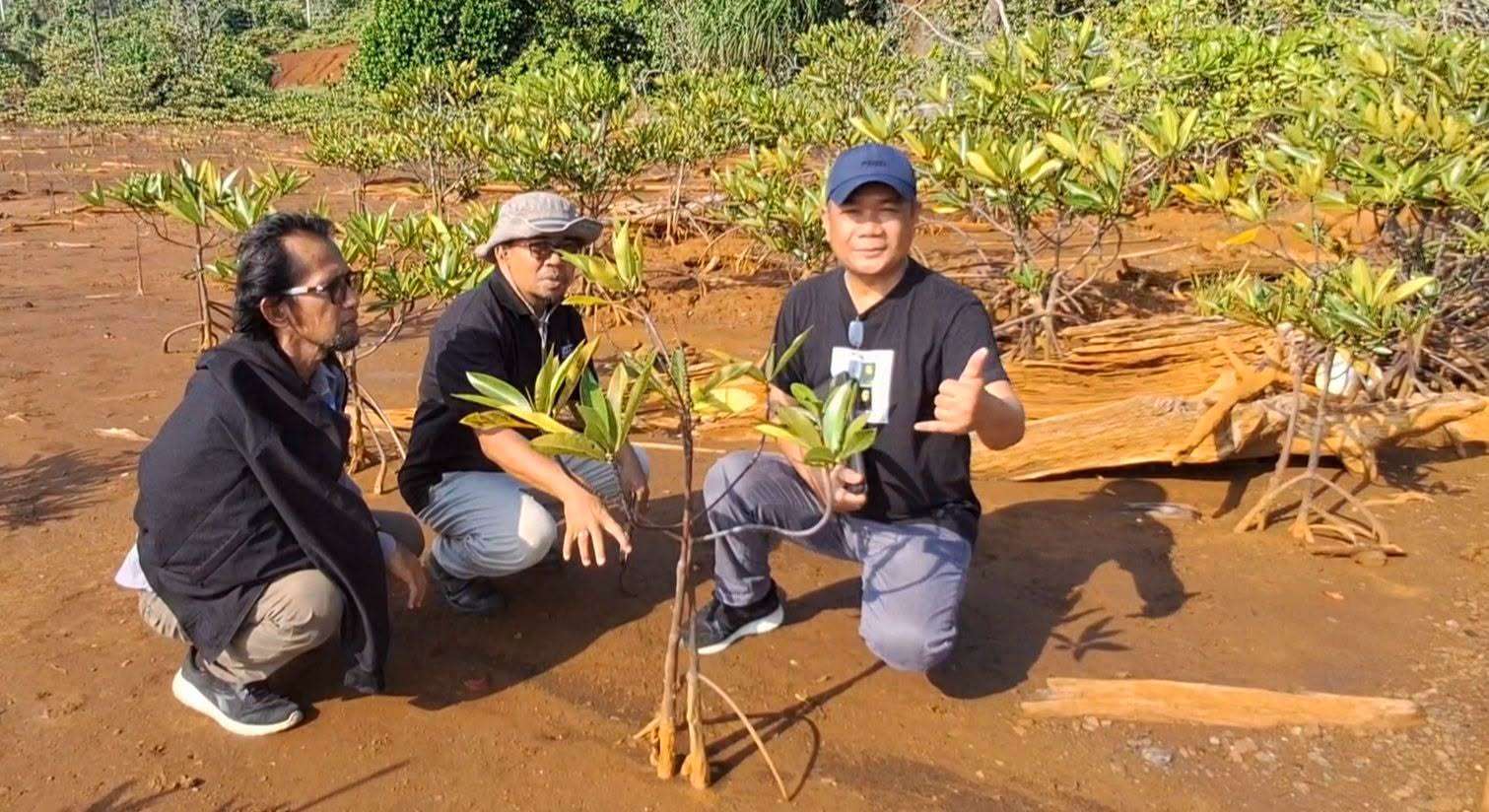
If South Sulawesi’s ecological journey is imagined from south to east, the Selayar Islands provide an important starting point for understanding the relationship between small islands, the sea, and coastal vegetation. In island environments, mangroves are more than shoreline protection. They form part of an ecological mosaic connected to seagrass meadows, coral reefs, shallow waters, and spaces used by local communities.
MARITIMEPOSTS.COM — South Sulawesi has a long coastline, a diverse chain of islands, bays, estuaries, deltas, lagoons, and coastal areas directly exposed to the open sea.
Across this varied geography, mangroves grow as transitional ecosystems that may appear simple from a distance, yet perform highly complex ecological, social, and economic functions.
From the Selayar Islands in the south to East Luwu in the eastern part of South Sulawesi, mangroves occur across habitats with very different characteristics.
Some grow along estuaries, others form green belts behind the shoreline, while some thrive on small islands. Others survive in areas where coastal ecosystems intersect with settlements, fisheries, agriculture, and mining activities.
This diversity means that South Sulawesi’s mangroves should not be understood simply as collections of mangrove trees. They are ecological spaces where seawater meets land, where fish and other organisms feed and seek shelter, and where coastal communities build parts of their livelihoods.
A study released by UIN Alauddin Makassar, for example, identified five true mangrove species along the Tallo River in Makassar: Avicennia marina, Nypa fruticans, Rhizophora apiculata, Rhizophora mucronata, and Sonneratia caseolaris. The finding demonstrates that even a mangrove ecosystem located within an urban landscape can retain significant vegetation diversity.
In other areas, the diversity can be even greater. A 2026 study at PPLH Puntondo in Takalar identified eight true mangrove species: Lumnitzera racemosa, Rhizophora apiculata, R. stylosa, R. mucronata, Sonneratia sp., Avicennia marina, A. alba, and Ceriops decandra, along with two associated species, Pandanus tectorius and Excoecaria agallocha.
Research on Bangkobangkoang Island in Pangkajene and Islands Regency also recorded six mangrove species: Rhizophora stylosa, R. apiculata, R. mucronata, Sonneratia alba, Avicennia marina, and Lumnitzera racemosa. The finding illustrates how the characteristics of small islands can influence the composition of mangrove vegetation.
From Selayar, mangroves shape the coastal landscape
If South Sulawesi’s ecological journey is imagined from south to east, the Selayar Islands provide an important starting point for understanding the relationship between small islands, the sea, and coastal vegetation.
In island environments, mangroves are more than shoreline protection. They form part of an ecological mosaic connected to seagrass meadows, coral reefs, shallow waters, and spaces used by local communities.
In such environments, Rhizophora, Avicennia, and Sonneratia may form parts of mangrove communities, with each species responding differently to substrate conditions, salinity, tidal cycles, and exposure to waves.
Rhizophora is relatively easy to identify through its distinctive prop roots extending from the trunk and lower branches toward the ground. Avicennia develops breathing roots, or pneumatophores, emerging from muddy substrates, while Sonneratia is also known for pneumatophores that help the trees obtain oxygen in waterlogged environments.
These differences in root structures convey a simple ecological message: mangroves have evolved their own ways of surviving in environments that are physiologically difficult for many terrestrial plants to inhabit.
For this reason, when looking at a mangrove forest, attention should not focus only on the number of trees standing. Root structures, regeneration, stand composition, salinity, substrate type, tidal patterns, fauna, and human activities are all important indicators for understanding the health of a mangrove ecosystem.
Takalar and Pangkep: mangroves as living spaces
Moving west and north brings us to Takalar and Pangkep, two areas that demonstrate how closely mangroves are connected to small islands, ponds, settlements, fisheries, and the everyday activities of coastal communities.
In Takalar, studies from several locations have identified Rhizophora mucronata as one of the dominant species, while Bruguiera gymnorrhiza, Sonneratia alba, and Rhizophora stylosa have also been recorded within mangrove communities. The research covered several coastal and island locations, including Tanakeke Island.
The findings from Puntondo reveal even greater diversity. Eight true mangrove species and two associated species were recorded within the environmental education area, where habitat conditions are influenced by substrate, salinity, and tidal dynamics.
Research from Pangkep, including its small-island areas, also shows that mangroves face different challenges depending on their landscape. A study on Bangkobangkoang Island recorded six mangrove species and highlighted the importance of mapping and monitoring approaches for understanding their structure and distribution.
These conditions demonstrate that mangroves do not grow within a uniform ecological space. One species may thrive along an exposed seaward edge, while another is better suited to the relatively sheltered middle or landward zones.
From the urban coast to Sinjai
Around Makassar, mangroves face a different set of challenges because urban pressure has become part of the ecosystem’s dynamics.
The Tallo River provides an important example. Research using transects and morphological identification found five true mangrove species: Avicennia marina, Nypa fruticans, Rhizophora apiculata, R. mucronata, and Sonneratia caseolaris.
Mangroves in an environment such as the Tallo River demonstrate that coastal ecosystems can persist amid rapid changes in land use and urban space. Their survival, however, requires greater attention to water quality, waste, land-use change, sedimentation, and development pressure.
Further east, in Sinjai, the scale of the ecosystem becomes more expansive. The Tongke-Tongke mangrove forest in East Sinjai is reported to cover approximately 700 hectares and is considered one of the largest mangrove areas in South Sulawesi. Reported species include Rhizophora, Avicennia, Bruguiera, and Sonneratia. The area has also been developed with community involvement for conservation and sustainable use.
Tongke-Tongke demonstrates that mangroves can become much more than green belts. They can serve as learning spaces, ecotourism destinations, coastal protection zones, habitats for fish and other organisms, and part of the identity of coastal communities.
During the writer’s journey to East Luwu, mangroves began to be understood not merely as ecological objects but as part of village life.
Pasi-Pasi, in Malili District, is one of the places where this relationship becomes particularly interesting. Mangroves grow along the village’s coastal areas and have attracted community attention as part of conservation and education efforts, as well as attempts to address coastal erosion. Local reports in 2026 have also described Pasi-Pasi’s mangroves as a space increasingly attracting community members and visitors.
The visits to Pasi-Pasi and Harapan Village provided an important context: discussions about mangroves should not stop at questions about how many hectares have been planted or how many thousands of seedlings have been distributed.
More important questions concern who protects them, who benefits from them, how communities understand the area, and whether mangroves have become part of village governance or remain occasional environmental activities.
Mangroves thus become social spaces. They bring together the interests of government, communities, youth groups, businesses, environmental organizations, and others concerned about the future of coastal areas.
Information from Harapan Village shows that in June 2024, the village’s youth organization, Karang Taruna, planted 5,000 mangrove seedlings along the Lampia coast in collaboration with the Youth Alliance for Environmental Protection, Boneck Lampia, and PT Citra Lampia Mandiri.
The activity was intended, among other things, to protect the coastline from erosion and restore mangrove habitat.
Subsequent developments indicate that attention to mangroves in Harapan has continued. On August 29, 2026, 50 Avicennia, or api-api, seedlings were planted at Mangkasa Point in Harapan Village, alongside 200 Enhalus acoroides seagrass seedlings.
In September 2026, mangrove planting continued on an even larger scale. Kodim 1403/Palopo reported the planting of 2,500 mangrove seedlings in Harapan Village, while another activity on September 12 at Batu Menggoro Beach in Lampia involved planting 1,500 mangroves and installing 500 coral reef rehabilitation structures.
The sequence reveals something more important than the number of seedlings: mangrove restoration is increasingly becoming a space for collaboration among different actors. Years earlier, in 2019, three villages—Balantang, Harapan, and Pasi-Pasi—had already agreed to plant thousands of mangrove trees along the Malili coast.
“Village governments, communities, youth groups, security forces, universities, environmental organizations, businesses, and other groups are present in the same space, although each brings different interests, capacities, and perspectives,” Andi Narwis said when he received Pelakita during the third week of September 2026.
According to Narwis, a new awareness is emerging amid the rapid expansion of nickel industrialization in Malili District: villages are not merely planting sites, but spaces where ecological agendas can be translated into concrete activities at the local level.
Lampia adds another layer to the story because the area lies within a coastal landscape that also intersects with various economic activities.
Information obtained by Pelakita also indicates that in September 2026, Batu Menggoro Beach in the Lampia area became the site of a 1,500-mangrove planting activity and the installation of 500 coral reef rehabilitation structures. The activity involved elements of the Indonesian Navy, the local government, police, and community members, and was explicitly framed around erosion mitigation and coastal ecosystem restoration.
Several days later, another 2,500 mangrove seedlings were planted in Harapan Village, involving community members, the village government, university students, security forces, and business representatives.
A need for a more specific approach
According to community-organizing activist Jurmadi Lanta, mangroves require suitable growing space, protection from disturbance, species-habitat compatibility, survival-rate monitoring, and sustained community involvement after planting activities are completed.
Jurmadi argues that mangroves should never be viewed in isolation. Along the East Luwu coast, their existence is connected to the sea, seagrass, coral reefs, rivers, ponds, settlements, economic activities, and community life.
For this reason, he says, rehabilitation approaches that only count the number of trees planted risk overlooking the wider ecological landscape. Healthy mangroves require appropriate hydrological conditions, sediment supply, water quality, sufficient space for regeneration, and connectivity with other coastal ecosystems.
“The experience in Harapan illustrates this relationship quite clearly. On one side, there is mangrove planting, while on the other there is seagrass and coral reef rehabilitation. These three ecosystems are actually parts of one interconnected coastal landscape, with communities living and working within it,” Jumardi said.
Jurmadi Lanta also emphasized that planting can be completed in a day, while maintenance requires longer-term relationships among communities, village governments, youth groups, organizations, universities, businesses, and other institutions.
“Trust matters because communities need to believe that these activities are not merely short-term projects. Governments need community support, while communities need assurance that the coastal spaces they protect are genuinely valued and managed for the long term,” said the man who has spent years working in community organizing in nickel-mining areas.
He stressed that relationships among residents and local groups create bonding social capital, cooperation between groups builds bridges, while relationships between communities and government, universities, businesses, and other institutions create networks connecting communities to broader resources and authority.
“Mangrove conservation, therefore, is not merely a biological issue. It is also a matter of institutions, knowledge, local leadership, benefit distribution, and the capacity to work together,” he said.
A diversity of issues
The journey from Selayar to East Luwu shows that South Sulawesi’s mangroves have many different faces.
In one place, they appear as forests on small islands; elsewhere, as protective coastal belts; in estuaries, as transitional ecosystems between rivers and the sea; and in urban areas, as fragments of nature surviving amid development pressure.
Their species are equally diverse. Avicennia with its pneumatophores, Rhizophora with its prop roots, Sonneratia with its breathing roots, Bruguiera with its knee roots, Nypa growing like a palm along tidal waterways, and various associated species all demonstrate the remarkable capacity of coastal plants to adapt to changing environments.
Pasi-Pasi reminds us that conservation can grow from community attention at the village level. Harapan shows that restoration can become a space for collaboration. Lampia demonstrates that coastal protection increasingly requires cross-ecosystem and cross-sector approaches.
These three places also offer an important lesson: successful conservation should not end with ceremonial planting. More meaningful indicators include whether ecosystems recover, whether seedlings survive, whether natural regeneration occurs, whether marine life returns, and whether communities experience tangible benefits.
Amid climate change, coastal erosion, land-use change, and growing development pressures, mangroves have become a kind of frontline that often works quietly.
They hold back waves without much visibility, store carbon without making a sound, provide nursery grounds for marine life without demanding attention, and support communities without always appearing in formal economic calculations.
Mangroves protect the meeting point between land and sea, sustain spaces shared by people and other forms of life, and provide a social arena where knowledge, interests, and responsibility for the future can come together.
The stakeholders have already begun working side by side, investing in the future through planting and restoration. The effort, however, should not stop there. Conservation cannot become merely a recurring ceremony in which trees are planted year after year without sufficient attention to what happens afterward.
If local institutions can also become active arenas where stakeholders translate their commitments into long-term stewardship of these coastal landscapes, the impact could be far greater.
Written by Kamaruddin Azis, founder of maritimeposts.com