
MARITIMEPOSTS.COM – The ocean is often described as the planet’s great life-support system. It helps regulate climate, provides food, supports ecosystems, and connects communities across continents. But humanity’s relationship with the ocean goes far beyond its role in keeping the planet habitable.
For thousands of years, people have turned to the sea for food, transportation, livelihoods, energy, medicine, recreation, and security. Today, the ocean remains one of the most important foundations of the global economy.
Feeding Billions
Fishing is among the most visible ways humans depend on the ocean. For billions of people, fish and other aquatic foods are an important part of their diets, while millions of fishers and workers depend on fisheries for their livelihoods.
The diversity of marine foods is enormous. Depending on location and culture, people harvest oysters, mussels, crabs, lobsters, shrimp, and other marine species. Seaweed is also an important food in many Asian countries and has become increasingly familiar in cuisines around the world.
Behind every seafood product is a chain of people, vessels, markets, processors, traders, and coastal communities. The ocean therefore provides not only food but also employment and economic opportunities.
A Growing Source of Renewable Energy
The ocean is also becoming an important arena for renewable energy development.
Offshore wind farms can now be found in many parts of the world. From a distance, their turbines may appear small against the horizon, but some turbine blades are extraordinarily long. Wind is not the only marine energy resource being explored. Tides, waves, and ocean currents can also be harnessed to generate electricity.
The growing interest in marine renewable energy reflects a broader search for alternatives to fossil fuels. As technology develops, the ocean is increasingly viewed not simply as a transportation and food-producing space, but also as part of the global energy landscape.
Oil, Gas and the Seabed
Long before offshore wind became a major symbol of the energy transition, the ocean had already become an important site for fossil-fuel extraction.
Offshore oil and gas platforms operate far from shore, with workers sometimes spending weeks at sea. Drilling equipment penetrates beneath the seabed in search of petroleum and natural gas, resources that have historically powered transportation, industry, and economies around the world.
This relationship, however, also highlights a major tension in humanity’s use of the ocean: the sea can simultaneously be a source of economic resources and an environment requiring careful protection.
The Ocean as a Pharmacy
Some of the ocean’s most remarkable contributions may be less visible.
Marine organisms contain chemical compounds that have attracted scientific interest for their potential medical applications. Compounds derived from marine sponges, for example, have been investigated for their ability to combat infections and diseases. Certain compounds associated with cone snails have also contributed to the development of powerful pain-relieving medicines.
The extraordinary chemical diversity of marine life continues to provide researchers with opportunities to investigate new compounds and potential treatments. In this sense, protecting marine biodiversity may also mean protecting a vast biological library whose medical possibilities are not yet fully understood.
Tourism, Recreation and Coastal Economies
For millions of people, the ocean is also a destination.
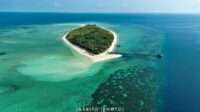
Beaches, islands, reefs, and coastal landscapes attract visitors every year. Tourism generates income for restaurants, hotels, shops, guides, transport operators, dive centres, and countless other businesses connected to coastal economies.
The recreational possibilities are equally diverse. Surfing, windsurfing, sailing, jet skiing, swimming, and scuba diving allow people to experience the ocean in very different ways.
For many coastal communities, tourism can therefore become an important source of employment and income. At the same time, the growth of coastal tourism raises questions about carrying capacity, pollution, habitat protection, and how economic benefits are distributed.
The Ocean Highway of Global Trade
Perhaps one of the least visible but most important uses of the ocean is transportation.
Ships carry enormous quantities of goods between continents, linking producers, manufacturers, consumers, and markets. Around 90 percent of global trade by volume is transported by sea, making maritime shipping a fundamental component of the world economy.
Container ships, bulk carriers, tankers, ferries, cruise ships, and other vessels form a vast transportation network that operates across the world’s oceans.
Everyday products that appear far removed from the sea may have travelled thousands of kilometres by ship before reaching consumers.
A Place to Live
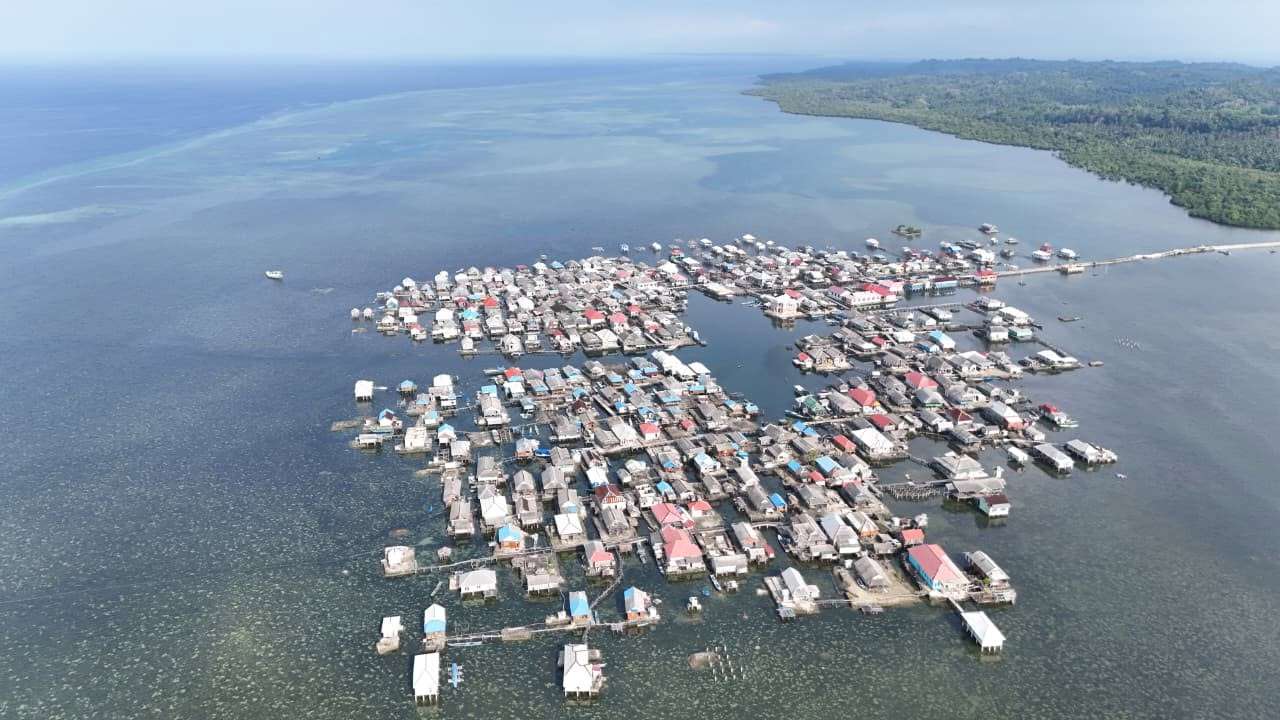
For some people, the ocean is not simply where they work or travel—it is home.
People live aboard boats for extended periods, moving between ports or remaining in particular coastal locations. In some parts of the world, communities also live on boats along inland waterways and canals.
These forms of housing illustrate the extraordinary diversity of human relationships with water. They also demonstrate how settlements and livelihoods can develop around aquatic environments rather than simply alongside them.
Security at Sea
The ocean also has a strategic dimension.
Many countries maintain naval forces responsible for maritime security and national defence. Naval operations can include protecting national interests, supporting maritime security, and contributing to the security of important sea routes.
Because oceans connect countries and carry much of the world’s trade, stability at sea has consequences far beyond national borders.
Keeping People Safe
Alongside naval forces, coastguards play a more direct role in protecting people and maintaining safety at sea.
Their responsibilities can include maritime surveillance, navigation safety, law enforcement, pollution response, and search-and-rescue operations. When vessels encounter difficulties or people become lost at sea, coastguard and rescue services can become a critical lifeline.
They also help ensure that ships are aware of safe routes and maritime hazards, reducing risks in an environment where weather, currents, visibility, and distance can quickly turn routine journeys into emergencies.
An Ocean of Possibilities—and Responsibilities
Humanity uses the ocean in remarkably diverse ways. We harvest food from it, generate energy from its winds and movements, extract resources beneath its seabed, investigate its organisms for medicines, travel across it, trade through it, live on it, and depend on it for security and recreation.
But every use comes with responsibilities.
The ocean is not an infinite warehouse of resources or an empty space for human activity. It is a complex living system whose health is closely connected to the health of coastal communities, economies, and the planet itself.
The challenge for the coming decades is therefore not simply to ask how humans can use the ocean, but a more fundamental question:
How can humanity continue to benefit from the ocean while ensuring that the ocean remains healthy, productive, and accessible for generations to come?
That question lies at the heart of the emerging conversation about sustainable ocean governance—where economic activity, human wellbeing, science, and ecological protection must increasingly be considered together.