
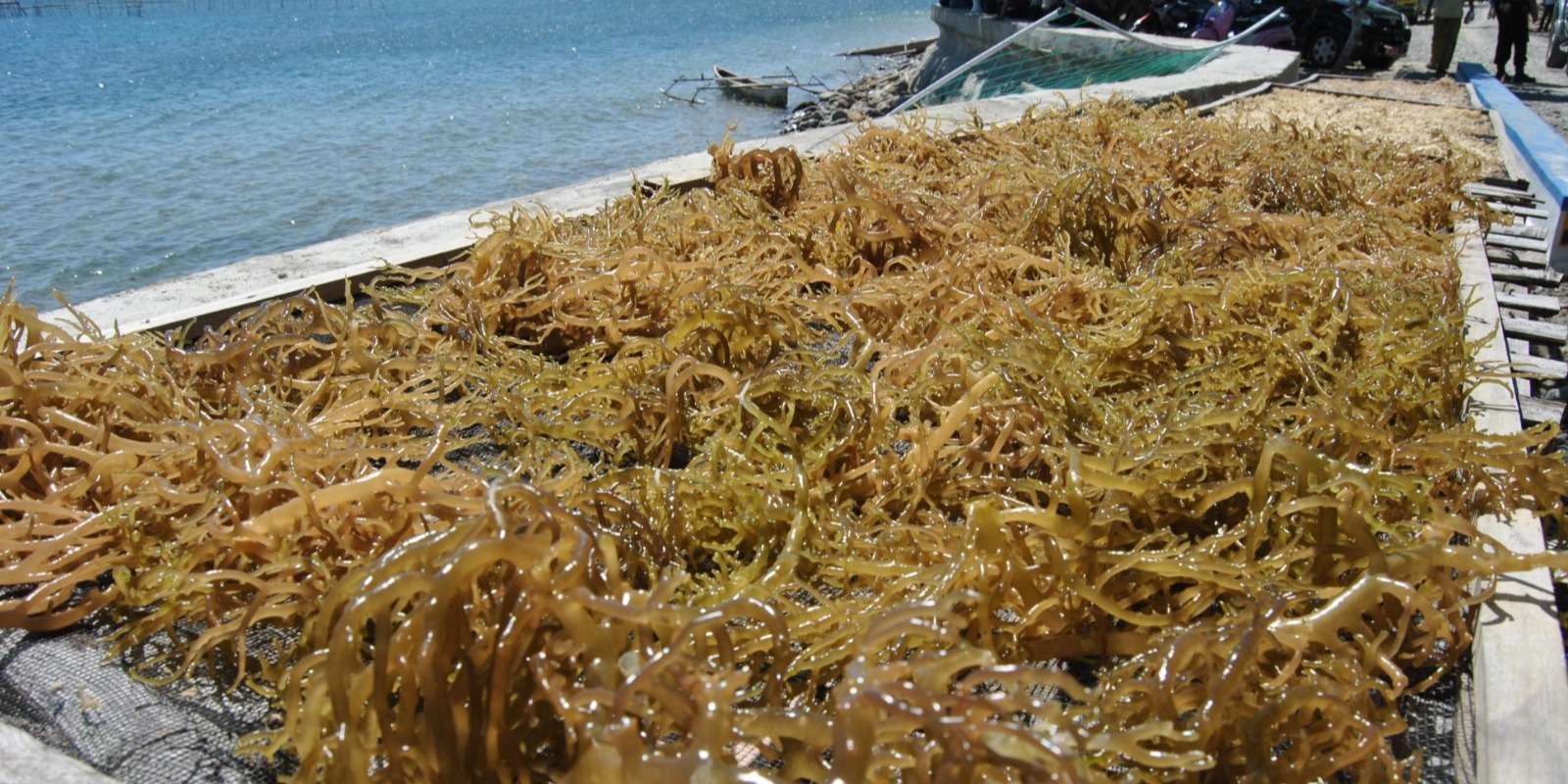
MARITIMEPOSTS.COM = Indonesia is opening up opportunities to expand the market for seaweed and agar-agar products in the United States following an exemption from the additional 10 percent Section 301 tariff. These products are subject only to the Most-Favored-Nation (MFN) tariff, which is set at 0%.
The exemption creates opportunities for market expansion in the US, as several competing countries, including China, South Korea, Spain, Italy, Japan, Thailand, the Philippines, and Vietnam, remain subject to additional Section 301 tariffs ranging from 10% to 12.5%.
“Alhamdulillah, Indonesian agar-agar and seaweed/algae products have been exempted from the additional Section 301 tariff and are therefore subject only to the Most-Favored-Nation (MFN) tariff,” said Acting Director General of Competitiveness Strengthening for Marine and Fisheries Products (PDSPKP) Erwin Dwiyana in a written statement issued in Jakarta on Friday (August 21).
Erwin said the exemption is stipulated in the Notice of Actions issued by the United States Trade Representative (USTR) on July 23, 2026, and published in the Federal Register on July 28, 2026.
The policy represents the final decision following a US trade investigation under Section 301 of the Trade Act of 1974 involving 60 countries/economies concerning the implementation and enforcement of import bans on goods produced using forced labor.
The USTR imposed an additional Section 301 tariff of 10% on goods originating from Indonesia, effective July 24, 2026. Meanwhile, several other major Asian suppliers, including Vietnam, Thailand, the Philippines, and China, are subject to a higher additional tariff of 12.5%.
“Therefore, Indonesia has a 2.5% tariff advantage that can strengthen the competitiveness of Indonesian fishery products in the US market,” he explained.
In addition to these two products, Indonesian shrimp also has strong prospects in the US market.
The total tariff on Indonesian shrimp stands at approximately 13.90%, consisting of the additional 10% Section 301 tariff and a 3.90% anti-dumping duty. This total tariff is lower than India’s, at approximately 19.53%, and Vietnam’s, at around 41.10%.
“There is also an opportunity to increase Indonesia’s shrimp market share, particularly compared with Asian suppliers, although competition with Ecuador is expected to remain intense,” Erwin said.
The same applies to crab products, including blue swimming crab. Indonesia enjoys a 2.5% tariff advantage over several other Asian suppliers, such as Vietnam and the Philippines. Indonesian tuna products also have a similar tariff advantage compared with products from Thailand, Vietnam, the Philippines, and South Korea.
“Indonesian squid, cuttlefish, octopus, and tilapia also have opportunities to improve their competitiveness compared with products from several Asian suppliers, such as China, Vietnam, and Thailand,” Erwin said.
To safeguard competitiveness and capitalize on these opportunities in the US market, Erwin said his office would strengthen collaboration with relevant ministries and agencies, fisheries associations, exporters, and Indonesian representatives in the United States.
The collaboration will support shrimp exporters in undergoing the anti-dumping administrative review process; expand market access for tuna, blue swimming crab, squid, cuttlefish, octopus, and tilapia; develop markets for agar-agar and seaweed products that have received exemptions from additional tariffs; and identify opportunities for other Indonesian fishery products.
Erwin also emphasized the importance of strengthening supply-chain credibility. He therefore encouraged all stakeholders to improve compliance with social and labor standards as well as traceability through the development of the National Fish Traceability and Logistics System (STELINA).
“This is necessary to maintain market confidence and reduce the risk of other trade barriers,” Erwin concluded.
___
Source MMAF