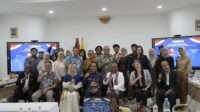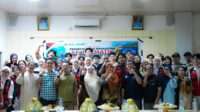

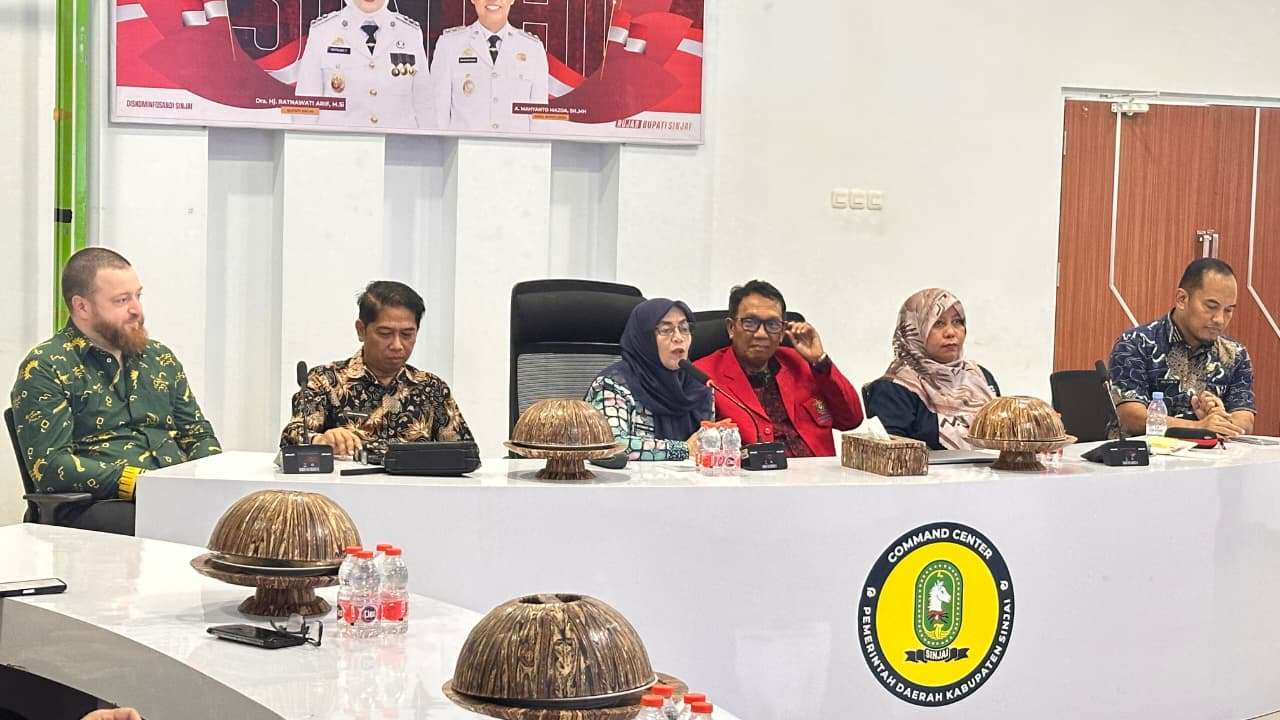
MARITIMEPOSTS.COM — The Department of International Relations, Faculty of Social and Political Sciences (FISIP), Hasanuddin University (Unhas), successfully conducted a Community Service Program in Sinjai Regency from 5 to 7 August 2026.
Carrying the theme “Strengthening Collaboration for Sustainable Tourism Development through Diplomacy, Governance, and Community Empowerment Approaches in Sinjai Regency,” the program was centered at the Command Centre of the Sinjai Regent’s Official Residence. The event was attended by the Head of the Sinjai Tourism Office, H. Andi Mandasini, S.IP., M.SE., representatives of the local government, community leaders, journalists, and local Micro, Small, and Medium Enterprises (MSMEs).
The collaborative program was officially opened by Sinjai Regent Hj. Ratnawati Arif, M.Si. In her remarks, she emphasized the importance of research and academic expertise from universities in supporting regional development, particularly the tourism sector.
The initiative is considered strategically important given the region’s limited fiscal capacity, with only around 10 percent of the Regional Revenue and Expenditure Budget (APBD) available for development purposes.
For this reason, strong collaboration with academics and meaningful engagement with the private sector are considered essential to advancing tourism development in Sinjai.
The Regent also expressed her appreciation for the presence of the Unhas Community Service Team through the Unhas International Relations Laboratory, led by Dr. H. Adi Suryadi Culla, M.A., together with visiting Australian lecturer Dr. Peter Lilly.
She highlighted Sinjai’s unique geographical character, which encompasses what she described as a “Three-Dimensional Landscape”: mountainous areas, lowlands, and extensive marine territory, including the Kecamatan Pulau Sembilan area, home to Lapoipoi Island, described in the program as Indonesia’s smallest island.
The Regent also stressed that tourism development should preserve local wisdom. She gave the example of using healthy, natural kapok mattresses in accommodation facilities rather than automatically replacing them with spring mattresses. At the same time, she emphasized that international sanitation standards, including hygienic toilets, must still be provided to ensure the comfort of international visitors.
Sinjai’s Tourism Potential and Cultural Calendar
Head of the Sinjai Tourism Office, H. Andi Mandasini, S.IP., M.SE., outlined the regency’s tourism potential and its annual cultural events, which the local government continues to preserve and promote.
Among them is the Ma’rimpa Salo Cultural Festival, scheduled for 10 October, as well as the Sinjai Culture Fest, scheduled for 12 August 2026 at Balangnipa Fort. The latter is intended to reconnect the community with the region’s cultural heritage.
Sinjai is also home to traditional practices such as Megosi Hanua in Bulupoddo District and Mapo Hanua in Central Sinjai District.
The Tourism Office also highlighted the importance of maintaining the visual character of leading tourism destinations such as Kampung Galung in Barania Village, which previously won second place in a national tourism village competition.
After 17 August, the Tourism Office plans to educate landowners in Kampung Galung about restrictions on constructing permanent buildings along rice fields. The policy is intended to protect the area’s natural landscape from being dominated by concrete structures.
Waste management will also receive greater attention as new facilities, including a mini waterboom and fly box, are added to the area.
Meanwhile, the potential of locally produced coffee in the Madaya Tourism Area, Arabika Village, continues to be developed through the provision of appropriate tourism facilities for the local community.
Diplomacy as a Tool for Regional Tourism Development
Head of the Department of International Relations at FISIP Unhas, Prof. Seniwati, S.Sos., M.Hum., Ph.D., explained that the community service program represents the university’s moral and academic responsibility to provide knowledge that is relevant, applicable, and capable of delivering tangible benefits to society.
She explained that modern diplomacy has expanded beyond traditional government-to-government relations. Today, it increasingly involves active collaboration among government institutions, universities, the private sector, and local communities to promote regional potential at both national and international levels.
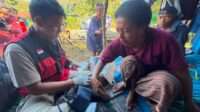
Prof. Seniwati also revealed that in 2026, a team of Unhas lecturers secured competitive funding from the Ministry of Research and Technology in Jakarta to provide direct assistance to local tourism businesses on Barrang Caddi Island, Makassar.
The assistance included more than Rp3 million worth of frozen food products and more than Rp10 million worth of durable business-support equipment. She expressed hope that a similar collaborative initiative could eventually be developed in Sinjai.
The program featured several practical presentations, including “ASEAN Standards for Tourism,” delivered by Munif Arif Ranti, S.IP., M.A., and “International Class Outreach,” presented by Muhammad Fajhriyadi Hastira, S.IP., M.H.I.
Also contributing academic perspectives were Dr. H. Adi Suryadi Culla, M.A., Head of the Unhas International Relations Laboratory; Imam Fadhil Nughraha, S.IP., M.A., lecturer at the Department of International Relations; visiting Australian lecturer Dr. Peter Lilly; and Syafiqa Azzahra Djibran, a 2025 International Relations student.
Connecting Coastal and Mountain Tourism
During the discussion session, participants explored a number of challenges facing Sinjai’s tourism sector.
Zainal Abidin, representing the editorial team of Sinjai Info, appreciated the initiative and emphasized the importance of cross-sector consistency. He also called for an update to the regional tourism master plan, or Rippankab (Regional Tourism Development Master Plan), so that tourism policy can remain aligned with current trends.
Responding to the input, Head of the Sinjai Tourism Office H. Andi Mandasini expressed agreement with the points raised.
He emphasized the local government’s commitment to developing integrated tourism connectivity, linking coastal destinations with mountain areas, including the highland tourism area known as “Negeri Berselimut Kabut.”
Andi Mandasini acknowledged that budget efficiency remains one of the major challenges facing the local government. However, he stressed that limited APBD resources would not stop Sinjai’s tourism development agenda.
The Tourism Office is actively exploring alternative funding sources, including partnerships with businesses to secure sponsorship and Corporate Social Responsibility (CSR) funding. These resources are expected to support the sustainability of tourism destinations and cultural festivals across Sinjai.
Empowering Local Businesses
For local entrepreneurs, the program also provided an opportunity to expand knowledge and strengthen their businesses.
Nurlina, owner of the MSME business Kerupuk Mama Ina, expressed her gratitude for being able to participate in the training. She hopes that the program will help local Sinjai products gain wider recognition.
The collaboration between Unhas academics, international researchers, the Sinjai local government, media organizations, and local entrepreneurs is expected to become an important catalyst for tourism development in Sinjai.
More than simply promoting destinations, the initiative seeks to build an ecosystem in which research, public policy, local communities, businesses, culture, and international networks work together.
With its distinctive combination of mountains, lowlands, islands, cultural heritage, local products, and community traditions, Sinjai has the ingredients to develop a tourism sector with broader national and international competitiveness.
The challenge now is to turn those assets into a coordinated, sustainable, and community-driven tourism development strategy.