
The Biru Fund program is part of the Koralestari initiative supported by the Global Fund for Coral Reefs (GFCR). It promotes the development of a blue economy that integrates community welfare improvement with the protection of coastal ecosystems.
MARITIMEPOSTS.COM – Berau, East Kalimantan, April 7, 2026 — The first investment of the Biru Fund program, initiated by the Yayasan Konservasi Alam Nusantara (YKAN), has begun implementation through the revitalization of a black tiger shrimp hatchery (breeding facility) at State Vocational High School (SMKN) 3 Tanjung Batu, Berau Regency, East Kalimantan.
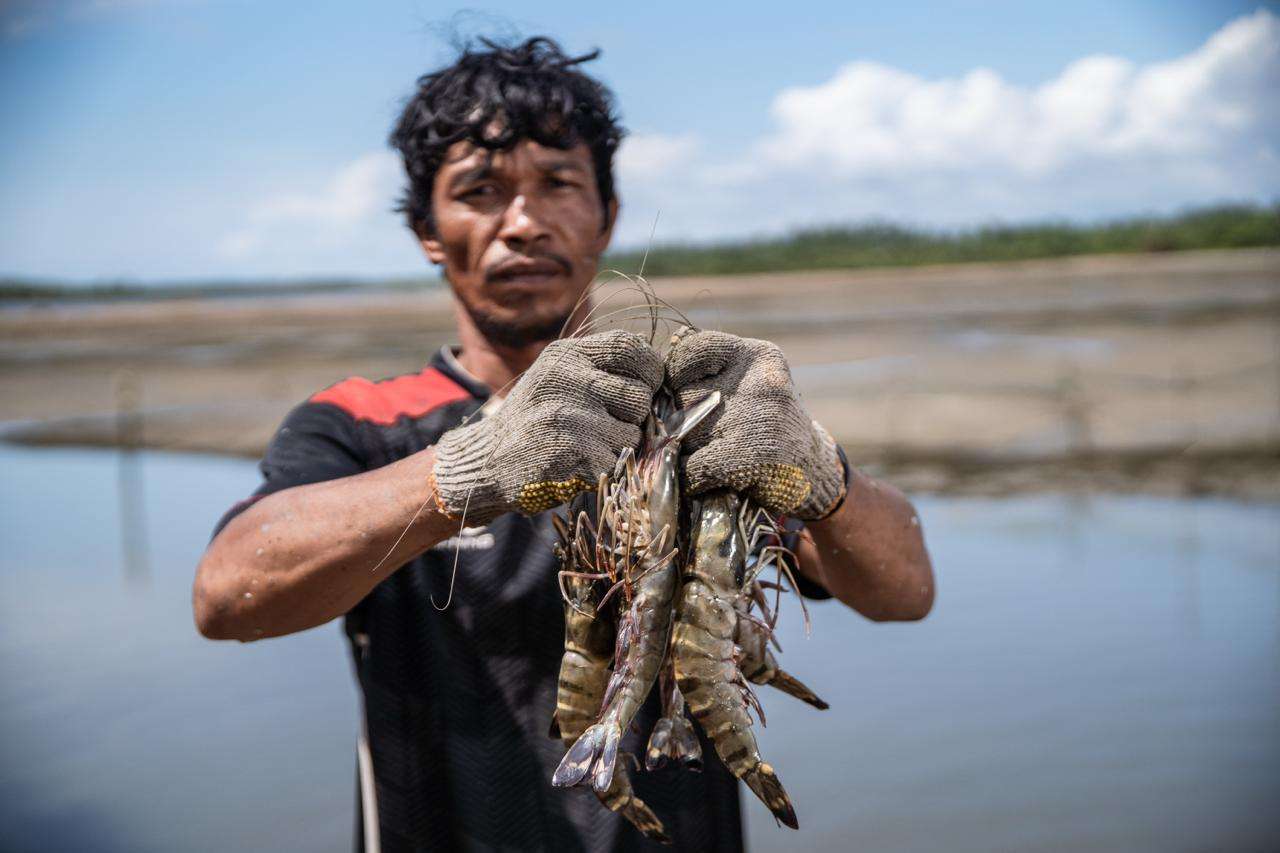
This initiative aims to strengthen farmers’ access to high-quality shrimp seed while promoting more sustainable aquaculture practices.
The program addresses a major challenge in Berau’s aquaculture sector: the limited supply of shrimp seed, which has long depended on external regions such as Surabaya and Tarakan.
This dependency often leads to uncertainty in both quality and quantity due to the risk of seed mortality during transportation. With the presence of a local hatchery, farmers can now obtain more reliable seed quality and accurate quantities tailored to their production needs.
In addition to strengthening production, the program introduces a more inclusive financing scheme. Through the Biru Fund, farmers can access financing with 0% interest, along with a grace period of up to 10 months.
Repayment is based on a profit-sharing percentage, allowing flexibility aligned with harvest outcomes and reducing financial pressure at the early stages of the cultivation cycle.
Head of the Berau Fisheries Office, Abdul Majid, stated that the increase in black tiger shrimp seed production at SMKN 3 is an excellent example of collaboration between government, the private sector, and NGOs.
He added that this collaboration represents a breakthrough in providing superior shrimp fry and advancing brackish water aquaculture technology.
“This is an innovative and creative effort by the government and stakeholders to address the fundamental needs of shrimp farmers who have long struggled to access quality black tiger shrimp seed in Berau,” he said.
According to Majid, the program aligns with the vision and mission of the Regent of Berau to improve community welfare, particularly in the fisheries sector.
“We also thank the Provincial Government for its continued support in optimizing public service delivery for the people of Berau,” he added.
He expressed hope that programs from development partners like YKAN will continue to inspire others to develop sustainable business innovations for the future livelihoods of coastal communities in Berau, while supporting existing innovation programs such as KAWAN BAIK, SANG RATU, and SIPURI.
“This is a model that can be replicated—sustainable fisheries business that contributes to both conservation and community livelihoods,” he explained.
Catur Sketsa Suroso, a teacher of Brackish and Marine Fisheries Agribusiness at SMKN 3 Tanjung Batu, emphasized that the integration of education and industry is a key value of this program.
“This hatchery not only functions as a production unit but also as a practical training facility for students to develop skills relevant to industry needs. We also collaborate with private sector partners to ensure optimal operational standards and curriculum development,” he explained.
For farmers, the hatchery not only improves access to seed but also provides business certainty. Jumardi, a shrimp farmer from Suaran Village, Berau, noted that supply uncertainty has been a major risk in aquaculture.
Catur added that the hatchery is also developed as a practice-based learning center through a teaching factory model at SMKN 3 Tanjung Batu. The facility allows students to be directly involved in shrimp seed production processes, from technical stages to business management.
Operationally, the hatchery is jointly managed with a private technical partner, PT Tri Karta Pratama (PT TKP), which is responsible for production management and the development of practical training curricula for students.
“Shrimp fry deliveries often did not match the expected quantity or declined in quality due to long-distance transport. Now we can obtain shrimp fry more reliably and easily, as the shorter distance reduces mortality risks before reaching the ponds,” said Jumardi.
Supporting the Development of the Blue Economy
The Biru Fund program is part of the Koralestari initiative supported by the Global Fund for Coral Reefs (GFCR). It promotes the development of a blue economy that integrates community welfare improvement with the protection of coastal ecosystems.
Through this approach, aquaculture activities are expected to focus not only on production but also on environmental sustainability.
YKAN supports the implementation of the Biru Fund as an innovative financing instrument to encourage environmentally friendly fisheries businesses. This support includes capacity building, technical assistance, and the development of business models aligned with conservation principles.
“Through the Biru Fund, we aim to create business models that are not only economically profitable but also contribute to the protection of mangrove ecosystems and coral reefs. This is a crucial step to ensure the sustainability of the fisheries sector in Berau Regency,” said Muhammad Ilman, Director of Marine Programs at YKAN.
Going forward, this partnership-based and innovative financing model is expected to be replicated in other coastal regions, particularly those facing similar challenges.
By integrating financial support, capacity building, and conservation-based incentives, this initiative is expected to strengthen community economic resilience while preserving coastal ecosystems in the long term.
About YKAN
Yayasan Konservasi Alam Nusantara (YKAN) is a science-based non-profit organization operating in Indonesia since 2014. YKAN delivers innovative solutions to achieve harmony between people and nature through effective natural resource governance, a non-confrontational approach, and strong multi-stakeholder partnerships for a sustainable Indonesia.
For more information, visit: www.ykan.or.id
Contact Person
Adia Puja Pradana
Communications Specialist, Ocean Program YKAN
adia.pradana@ykan.or.id