
MARITIMEPOSTS.COM – Beneath the towering karst formations of Maros lies a mystery frozen for seven millennia. Have you ever wondered who the first people were to truly call Sulawesi’s dramatic landscape “home”? The curiosity about origins is a deeply human instinct.
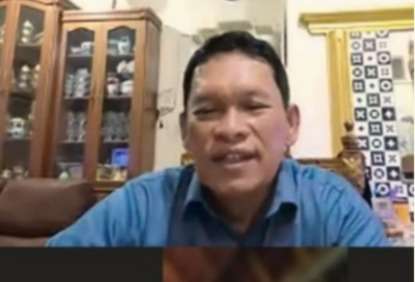
For Prof. Dr. Akin Duli, M.A., Researcher of the Faculty of Cultural Sciences at Hasanuddin University, the answer to that question was buried deep beneath layers of damp earth.
Through decades of persistence, he uncovered a “message” from the past—one that not only shook the world of archaeology but also rewrote the map of human migration in Southeast Asia.
What follows is the journey behind the remarkable discovery of “Besse,” and the profile of the archaeologist who bridges modern science with traces of an ancient past.
The Star of Liang Panninge: More Than Just Bones
In 2015, within the silence of Liang Panninge Cave in Maros Regency, Prof. Akin Duli and his team excavated to a depth of about two meters—a vertical journey through time. There, they uncovered the oldest human skeleton ever found in Sulawesi.
In Bugis tradition, “Besse” is an affectionate name for a young girl. By giving this name, the discovery was humanized—Besse is not merely a specimen, but an individual with a story.
Archaeologically, Besse represents a missing “key.” Genetic analysis revealed that she possessed a unique genetic identity, now associated with the Toalean population. This finding is profoundly significant, as it demonstrates a distinct human lineage separate from previously accepted migration models, making it one of the most transformative discoveries in the region’s prehistoric history.
Scientific Diplomacy: Waiting for the Time Capsule to Open
Although Besse was discovered in 2015, the world could only truly “hear” her story four years later. A significant delay preceded the in-depth analysis conducted in 2019. This gap reflects a persistent challenge in Indonesian archaeology: limited access to advanced scanning technology, specialized laboratories, and research funding.
However, Prof. Akin Duli viewed these limitations as an opportunity for scientific diplomacy.
International collaboration is not a form of dependency, but a crucial bridge in modern research. Partnerships with laboratories in Germany transformed fragile bone fragments into irrefutable genetic data, demonstrating that Indonesian science can speak at a global level through strategic cooperation.
His patience during this waiting period highlights that high-quality archaeology is a balance between rigorous fieldwork and the discipline to preserve data integrity until technology can reveal its full story.
The Architect of History: A Journey Toward a Breakthrough Discovery
The discovery of Besse was not a stroke of luck, but the culmination of a lifelong dedication that began during Prof. Akin Duli’s student years. His research career dates back to 1993, when he participated in the Indonesian Field School of Archaeology (IFSA) at the Trowulan site.
He later earned his PhD in Archaeology from Universiti Sains Malaysia in 2012, strengthening his regional perspective.
Each project he led became a stepping stone toward Besse. In 2001, he contributed to the international research project The Origin of Complex Society in South Sulawesi (OXIS) in collaboration with the Australian National University and the University of Hull.
From there, he continued to explore Sulawesi’s historical layers:
- Early sites of the Wajo Kingdom
- Islamic archaeological remains in Maros
- Cave art in Pangkep
- Megalithic cultures in Mamasa and Toraja
- Academic work supporting Tana Toraja’s nomination as a UNESCO World Heritage Site
For Prof. Akin, every site—whether a cave painting or a megalith—forms part of a vast mosaic of human civilization.
Global Recognition: When Sulawesi Reshaped Migration Theory
The culmination of this work came when the research on Besse was published in Nature, one of the world’s most prestigious scientific journals.
This achievement was not only personal but also a statement that Hasanuddin University and Indonesian archaeology stand at the forefront of global prehistoric research.
The publication clearly demonstrated Besse’s impact on our understanding of human migration. Her unique genetic profile forced international scholars to reconsider how ancient humans moved across Southeast Asia.
This discovery repositioned Sulawesi—not as a forgotten passageway—but as a dynamic and central node in human history.
Conclusion: A Legacy Still Being Unearthed
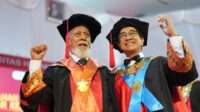
Prof. Dr. Akin Duli reminds us that history beneath our feet is never truly gone—it is simply waiting to be discovered. His contributions, including more than 40 scientific publications and his role in national cultural heritage initiatives, have laid a strong foundation for future generations of archaeologists.
Yet, even after revealing Besse’s identity, a larger question remains:
If a single excavation two meters beneath the surface in Maros can reshape global history, what other secrets remain hidden—within the silent megalithic sites of Mamasa, or beneath the remnants of early Islamic civilizations along Sulawesi’s coast?
Sulawesi still holds thousands of untold chapters, waiting for the next generation of determined explorers to uncover the deeper truths of who we are.
Source: Tribun Timur