

A Healthy City Is Not About Having More Hospitals: 5 Shocking Facts and West Jakarta’s Roadmap to 2030
MARITIMESPOSTS.COM – We are currently in the midst of the largest wave of urbanization in human history. Today, around 4.4 billion people worldwide live in urban areas, and this figure is projected to rise to 68% by 2050.
Cities promise progress and access, yet the reality reveals a troubling health paradox. Air pollution now contributes to 8.1 million deaths annually, while 1.1 billion people living in slums struggle with poor sanitation.
“As urban residents, we must dare to ask a reflective question: Do the cities we live in truly sustain us, or are they slowly harming us?”
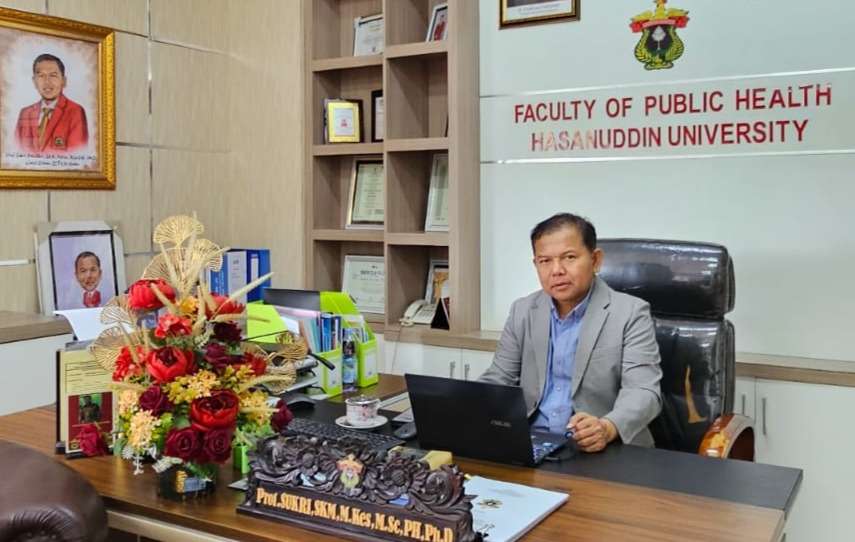
This was conveyed by Prof. Sukri Palutturi, SKM, M.Kes., MSc.PH, PhD, Professor at the Faculty of Public Health, Hasanuddin University, and an Indonesian Healthy City expert, during his presentation at the Social Welfare Working Group Forum of the West Jakarta Musrenbang (Development Planning Meeting), held on April 7, 2026.
Tambora and Southeast Asia’s Highest Density Record
According to Prof. Sukri, West Jakarta bears a very real burden of urbanization. With an average population density reaching 19,200 people per km², it is one of the most densely populated areas in Indonesia.
“However, the main spotlight is on Tambora District, where density exceeds 40,000 people per km²—the highest in Southeast Asia,” he stated.
This extreme density is not merely a statistic, but a systemic double burden of disease:
- Mental Health: The risk of schizophrenia is 2.37 times higher among dense urban populations, while mood disorders increase by 1.39 times due to chronic stress, noise, and lack of green space.
- Infectious Diseases vs NCDs: West Jakarta faces a dual challenge. On one hand, poverty-related diseases like tuberculosis remain high (500–1,000 cases per 100,000 people in slum areas). On the other hand, non-communicable diseases (NCDs) such as stroke and heart disease are rising due to pollution and sedentary lifestyles.
- Environmental Risks: Density in areas like Tambora and Angke multiplies the risk of infectious diseases such as cholera by 7–10 times compared to formal residential areas.
The “Process” Philosophy Behind Healthy Cities
As policymakers and citizens, Sukri emphasized the need to realign our understanding of what a “Healthy City” truly means.
Based on the WHO framework formulated by Hancock & Duhl (1988), a Healthy City is not an endpoint or an award status—but a process.
“A healthy city is defined by a PROCESS, not an outcome. It continually creates and improves its physical and social environments and expands those community resources which enable people to mutually support each other in performing all the functions of life and in developing to their maximum potential.” — WHO/Europe
“This philosophy is crucial for West Jakarta. Recognizing that a Healthy City is an ongoing process means we must not be discouraged by current challenges. The key lies not in perfection, but in strong political commitment and active community participation for continuous improvement,” Sukri explained.
The Sanitation Puzzle: Why Toilets Determine Children’s Future
In his presentation, Sukri revealed that West Jakarta’s Open Defecation Free (ODF) achievement currently stands at 63%. This means 37% of the population (around 925,000 people) still lack proper sanitation access.
The short-term challenge is to close a 17% gap (around 425,000 people) to reach the interim target of 80%.
Why does this matter?
- Stunting Cycle: The risk of stunting is twice as high in households without access to proper toilets. Poor sanitation triggers chronic diarrhea, which inhibits nutrient absorption in young children.
- E. coli Contamination: About 72% of drinking water sources in the area are unsafe due to contamination from unmanaged domestic waste.
- Economic Burden: Sanitation-related diseases such as diarrhea—which accounts for 38% of cases among children under five—place heavy financial pressure on urban poor families.
Learning from the Champions: Surabaya and Wajo
Sukri highlighted that urban health transformation is not impossible. Valuable lessons can be drawn from successful regions in Indonesia:
- Surabaya City: The first and only recipient of the Swasti Saba Wistara Paripurna award (2025). The city reduced stunting dramatically from 28.9% to 1.6%, driven by the Kader Surabaya Hebat (KSH) program, which uses real-time population data based on national ID numbers, supported by a high Human Development Index (HDI) of 84.69.
- Wajo Regency: Demonstrates remarkable consistency, achieving the Wistara award six consecutive times. Wajo proves that by fully implementing the nine Healthy City frameworks and maintaining cross-leadership commitment, quality of life (HDI 73.98) and economic growth can improve simultaneously.
The key lessons, according to Prof. Sukri, include:
- Digital innovation must be supported by integrated community health data down to neighborhood levels.
- Pentahelix collaboration, involving community leaders, academics, and the private sector as active development actors.
- Strong leadership that prioritizes health above sectoral interests.
Health in All Policies (HiAP)
Sukri emphasized that West Jakarta must adopt the Health in All Policies (HiAP) approach—ensuring that every public policy considers health impacts through Health Impact Assessments (HIA).
In West Jakarta, public health is shaped across government offices. A transportation official ensuring TransJakarta stops are within 500 meters of health facilities, or a local village head managing waste effectively, plays as vital a role as a doctor.
Strategically, health budget allocation in the regional budget (APBD) must increase from below 10% to at least 15%, with a focus on preventive and promotive measures.
Roadmap to 2030
At the conclusion of his presentation, Prof. Sukri outlined a measurable and transformative roadmap for West Jakarta:
- Phase I: Foundation (2024–2025)
Revitalize the Healthy City Forum, achieve 75% ODF, issue a Mayor’s Regulation on Healthy Cities, and activate a digital surveillance dashboard. - Phase II: Acceleration (2025–2027)
Reach 80% ODF, integrate HiAP into the regional development plan (RPJMD), and reduce stunting prevalence below 15%. - Phase III: Consolidation (2027–2030)
Achieve WHO Healthy Cities network accreditation and position West Jakarta among the Top 5 National Healthy City Index rankings.
A Fundamental Principle
To conclude, one principle must be upheld:
“A healthy city is not defined by the number of hospitals, but by the fewness of sick people.”
If cities shape our habits, what small change in your environment today could save lives in the future? Real transformation begins with people-centered policies and concrete actions—even in the narrow alleys of Tambora.
Editor: Denun