
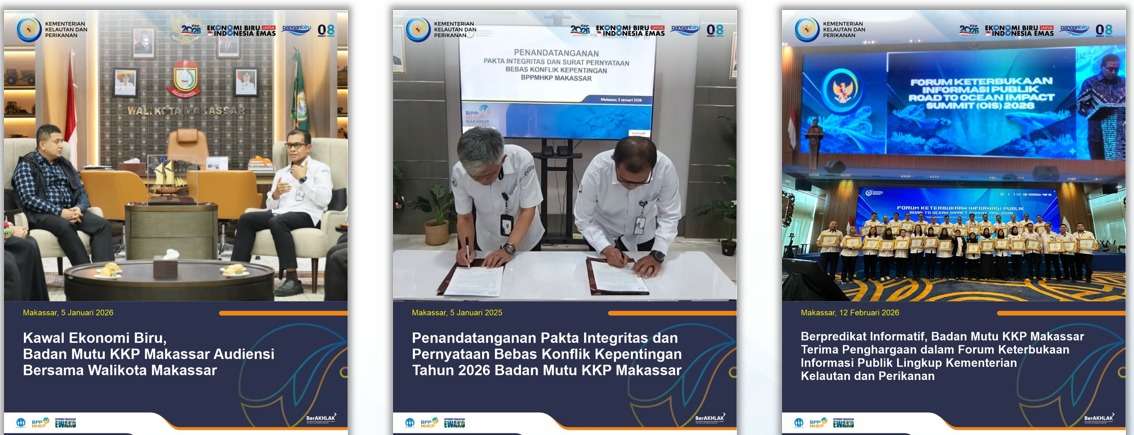
- This vital role is carried out by the Marine and Fisheries Product Quality Control and Supervision Center (BPPMHKP) Makassar.
- The year 2025 marks an important milestone for the fisheries economy of South Sulawesi. Data shows that this sector is not only large but continues to grow sustainably.
- Export Volume: 202,712.5 tons | Export Value: IDR 7.1 trillion | Growth: +0.8% (vs 2024)
MARITIMEPOSTS – South Sulawesi is not merely the gateway to Eastern Indonesia, but a blue economy giant that is beginning to show its strength on the global stage.
If you have ever enjoyed the delicious taste of vannamei shrimp at a restaurant or processed seaweed products, there is a strong chance that the raw materials came from the rich waters of this region.
Behind the soaring export figures, there is a layered monitoring system ensuring that every product leaving our ports meets global standards.
Have you ever wondered who the “gatekeeper” is that ensures octopus from Bantaeng or blue swimming crab from Maros remains fresh and safe to consume all the way to dining tables across the world?
This vital role is carried out by the Marine and Fisheries Product Quality Control and Supervision Center (BPPMHKP) Makassar, currently led by Acting Head Muhammad Zamrud, S.Pi, M.P.
Here are five surprising facts that demonstrate the resilience of South Sulawesi’s fisheries industry today.
Stable and Remarkable Economic Growth
The year 2025 has become a significant milestone for South Sulawesi’s fisheries economy. Data shows that this sector is not only large but also continuously growing.
Export Volume: 202,712.5 tons | Export Value: IDR 7.1 trillion | Growth: +0.8% (vs 2024)
Despite global market dynamics, South Sulawesi recorded a positive growth of 0.8% compared to the previous year. The five leading commodities driving this growth are:
- Seaweed: The top commodity with a value of IDR 2.3 trillion (158,727.5 tons)
- Carrageenan: A processed product reaching IDR 1.2 trillion
- Vannamei Shrimp: A favorite export commodity valued at IDR 1.1 trillion
- Blue Swimming Crab: Contributing IDR 402.3 billion
- Octopus: Contributing IDR 311.9 billion
Penetrating Global Markets: From China to the Exotic Mexico
South Sulawesi’s export market has now reached across the globe. China remains the dominant partner with a value of IDR 3.3 trillion, followed by the United States, Japan, South Korea, and Vietnam.
Market diversification continues to expand into Europe and Latin America.
One of the most historic moments was the first export of frozen octopus to Mexico on April 14, 2025. Through PT Celebes Ocean Fisheries in Bantaeng Regency, the Octopus vulgaris species from South Sulawesi officially entered the Mexican market.
In addition, European markets such as the Netherlands and Germany, as well as Russia, have become key destinations for carrageenan and vannamei shrimp products.
“The first export of frozen octopus (Octopus vulgaris) to Mexico from Bantaeng Regency marks a new chapter in the success of local products meeting the strict standards of the Latin American market.”
“Si Jempol Imut” Innovation for MSME Empowerment
BPPMHKP Makassar understands that quality must start upstream, including from small business actors. This led to the creation of the innovation SI JEMPOL IMUT (Integrated Outreach System for Literacy and Quality Assistance for Fisheries MSMEs).
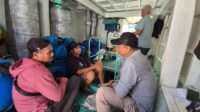
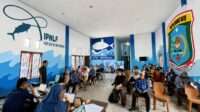
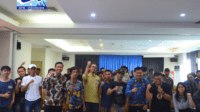
BPPMHKP officers do not just sit behind desks. They go directly into the field—from coastal areas of Pangkep, Sinjai, to Bone—to provide technical assistance.
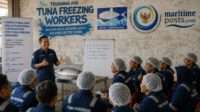
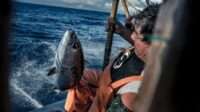
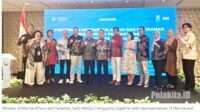
Documentation photos show warm yet professional interactions, with officers delivering training on Good Fish Handling Practices (CPIB) aboard fishing vessels and HACCP standards (Hazard Analysis and Critical Control Point) for processing unit managers.
This proactive approach ensures that MSMEs obtain a “quality passport” to compete with large industries.
Food Safety Fortress: Testing Without Compromise
Behind every quality certificate lies a rigorous laboratory process. The operational scale of BPPMHKP Makassar in safeguarding food safety is truly massive.
In 2025, their internal laboratories conducted 11,168 tests, forming the basis for issuing 13,057 Quality and Safety Certificates (SMKHP).
Imagine a sterile laboratory environment: experts in white lab coats and full protective equipment meticulously testing samples. The testing breakdown includes:
- Microbiology: 6,329 tests to detect harmful bacteria
- Chemistry: 2,434 tests to ensure products are free from hazardous contaminants
- Organoleptic: 2,405 sensory tests to maintain product freshness
This reliability is supported by four international standards: ISO 17020 (Inspection), ISO 17025 (Laboratory), ISO 9001 (Quality Management), and ISO 37001 (Anti-Bribery).
Service Integrity with Near-Perfect Satisfaction
Strict quality control is balanced with outstanding public service. BPPMHKP Makassar has achieved the status of a Corruption-Free Zone (WBK), ensuring that all certification processes are transparent and free from illegal fees.
Public trust is reflected in the 2025 Community Satisfaction Index (IKM), which reached a score of 98.40 (Very Good).
Furthermore, in early 2026, the institution received recognition as an “Informative” organization in the Public Information Disclosure Forum.
For exporters, this transparency and bureaucratic integrity provide business certainty, fostering a thriving fisheries investment climate in South Sulawesi.
Conclusion and Final Reflection
The synergy between uncompromising quality control, proactive MSME support innovations, and a strong commitment to integrity is the key behind the IDR 7.1 trillion export figure. South Sulawesi has proven that it is not only capable of exporting in large volumes but also of maintaining global trust through consistent quality.
As we enjoy seafood today, have we truly realized the long chain of supervision that ensures the safety of every bite?
This resilient fisheries ecosystem represents the future of our blue economy—preserving food sovereignty while improving the welfare of fishermen from Bantaeng to Bone.
Editor: Denun