
MARITIMEPOSTS.COM – Sorong, April 8, 2026 — The Provincial Government of Southwest Papua, supported by development partners including Yayasan Konservasi Alam Nusantara (YKAN), is currently accelerating the review process of the marine conservation area zoning plan in the Raja Ampat Islands.
This step is a crucial effort to ensure that marine biodiversity protection remains optimal, in line with evolving social and economic conditions as well as the best available science.
Head of the Marine and Fisheries Office of Southwest Papua Province, Absalom Solossa, emphasized that this effort is part of sustainable governance.
“This zoning review is a strategic step to ensure that conservation areas continue to provide optimal protection for biodiversity while also addressing the evolving needs of local communities. We want to ensure that the zones within the conservation areas align with local needs so that livelihoods can be sustained,” he explained.
Since the issuance of Ministerial Regulation No. 31 of 2020 on the Management of Conservation Areas, the Raja Ampat Marine Conservation Area has consistently maintained its independently managed status.
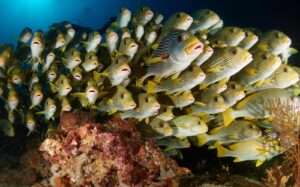
Given its rich ecosystem—crucial for both the local economy and conservation operations—a zoning review is now necessary to balance biodiversity protection with the growing intensity of tourism and fisheries activities.
This review aims not only to strengthen ecosystem protection but also to ensure that marine resource use remains within environmental carrying capacity limits and respects traditional practices of Indigenous communities, such as sasi.
“Through this review process, we aim to clarify zoning boundaries, enhance monitoring, and ensure that high conservation value areas such as core zones remain protected. It also opens space for stronger community-based management,” said Hasan Makasar, Head of the BLUD UPTD for Raja Ampat Marine Conservation Area Management.
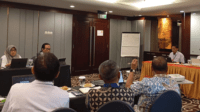
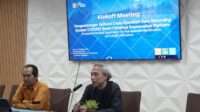
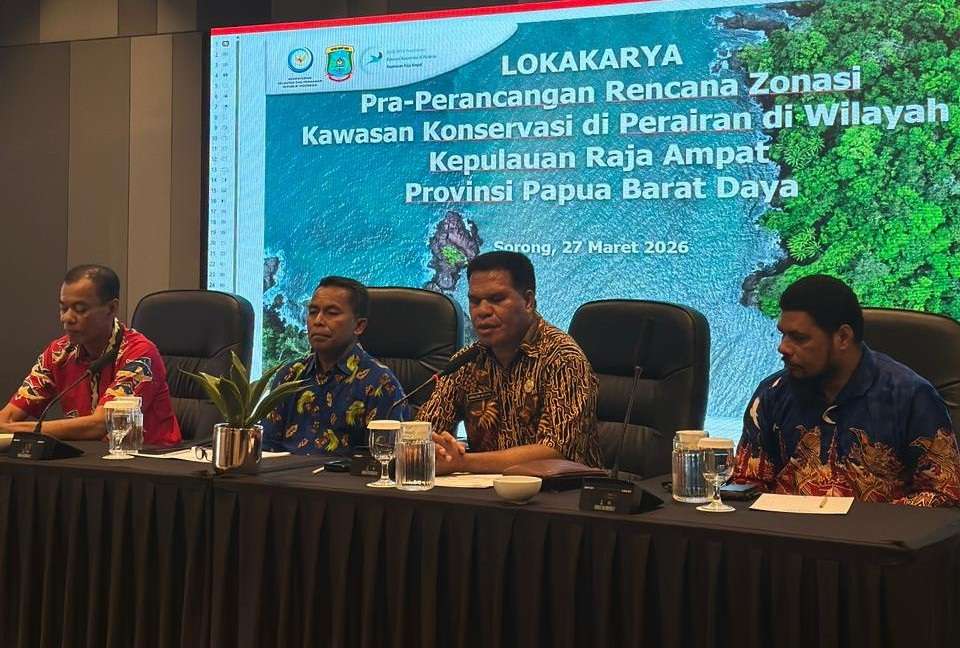
As part of the process, a pre-design zoning workshop was held on March 27, 2026, in Sorong, involving various stakeholders including central and local governments, academics, Indigenous communities, and conservation partners.
The workshop produced initial agreements on conservation targets, bio-physical and socio-economic-cultural criteria, as well as development goals and objectives for the area.
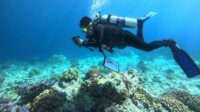
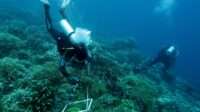
This was followed by a series of field data collection activities from late March to mid-May 2026, including coral reef monitoring using the manta tow method and participatory mapping to document spatial use patterns and existing resource utilization by communities.
These data will serve as the scientific basis for reviewing and designing a more accurate and up-to-date zoning system. The data collection is conducted collaboratively by the Southwest Papua Marine and Fisheries Office, the Raja Ampat Conservation Area Management Unit, the Kupang Marine Management Center, and YKAN.
As a development partner, YKAN supports this process through science-based and participatory approaches.
YKAN Senior Marine Protection Manager, Yusuf Fajariyanto, stated that the zoning review is a critical moment to strengthen the effectiveness of Raja Ampat’s conservation management by evaluating the performance of the previous zoning system and its alignment with existing regulations.
“We support the local government in ensuring that conservation zoning is developed based on scientific data and local knowledge. This review is essential to maintain Raja Ampat as a global center of marine biodiversity while ensuring that economic benefits continue to be felt by local communities,” he said.
Raja Ampat, known as part of the world’s Coral Triangle, is facing increasing pressure from resource utilization.
Therefore, revising the zoning system is crucial to regulate activities such as marine tourism infrastructure development, capture fisheries, and the protection of ecologically significant areas.
Through this review process, the Raja Ampat conservation zoning plan is expected to become more adaptive and data-driven—capable of addressing present and future challenges while safeguarding marine heritage for generations to come.