
Celebration of the 62nd Anniversary of Central Sulawesi Province
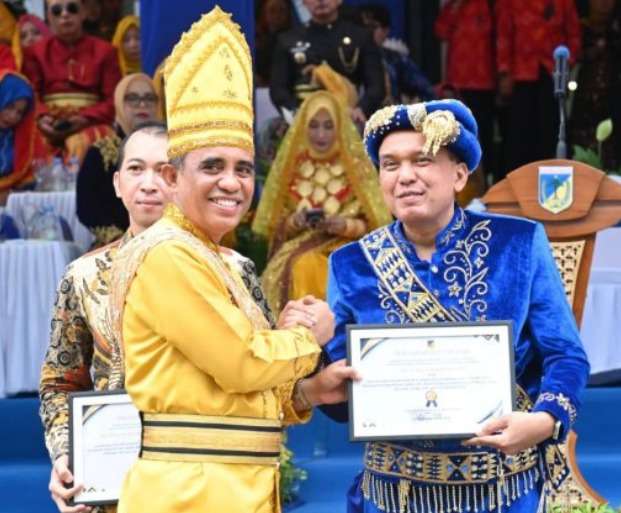
- During the commemoration, the Governor of Central Sulawesi, Anwar Hafid, extended special appreciation to PT Vale Indonesia Tbk (PT Vale). This recognition was not mere bureaucratic formality, but a genuine acknowledgment of the company’s timely compliance in paying Heavy Equipment Tax.
- As part of MIND ID (Indonesia’s Mining Industry Holding), PT Vale understands that heavy equipment is the lifeblood of mining operations; tax compliance, in this context, serves as a litmus test of industrial maturity.
MARITIMEPOSTS.COM – The 62nd Anniversary celebration of Central Sulawesi Province, held in Palu on Monday, April 13, 2026, may at first glance have appeared as a typical annual ceremony—colorful, solemn, and filled with rhetoric of progress.
Yet behind the festivities lies a far more substantive narrative about how a region undergoes transformation.
There is an interesting paradox at play: an administrative obligation often perceived as a burden—tax compliance—becomes a stage for demonstrating the real contribution of the industrial sector.
The question is, how can a giant mining company transform its image from a purely extractive entity into a crucial strategic partner for Regional Original Revenue (PAD)? The answer lies in the depth of synergy between government policy and corporate integrity.
Fiscal Compliance as the “Fuel” and Litmus Test of Industry
In the commemoration, Governor Anwar Hafid gave special recognition to PT Vale Indonesia Tbk (PT Vale).
This award goes beyond ceremonial praise—it acknowledges the company’s consistent and timely payment of Heavy Equipment Tax.
As part of MIND ID, PT Vale recognizes that heavy equipment is central to mining operations; compliance with its taxation reflects the maturity and responsibility of the industry itself.
Timely tax payments represent the purest form of support for regional development. Without healthy fiscal liquidity, visions for infrastructure and public services would remain merely on paper.
Such compliance generates a multiplier effect, ensuring the availability of “fuel” to drive Central Sulawesi’s development engine. Governor Anwar Hafid emphasized the importance of this momentum:
“This commemoration is not merely ceremonial, but a momentum to drive the people’s economy through cross-sector collaboration.”
The “Sulteng Nambaso” Philosophy: Countering the Resource Curse
The sustainability of mining regions is often overshadowed by the risk of the “resource curse,” where growth is short-lived and cyclical (boom-and-bust).
To mitigate this, PT Vale adopts the “Sulteng Nambaso” philosophy. According to Endra Kusuma, Head of External Regional & Growth at PT Vale, this concept is not just a slogan, but a foundation for fostering inclusive and sustainable growth.
Its strategic premise is simple yet profound: synergy between government, the private sector, and communities must bridge the gap between large corporations and grassroots economies.
Through the spirit of “Nambaso” (symbolizing greatness and collective growth), industry is no longer an isolated entity, but an anchor ensuring that prosperity remains in Central Sulawesi—even long after mining operations cease.
An Industrial Locomotive for the Grassroots Economy
A tangible manifestation of this synergy can be seen in the Sulteng Expo 2026.
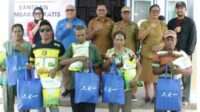
MSME products from Morowali emerged as “stars” of the exhibition, demonstrating that the presence of global-scale industry can act as a locomotive for surrounding small businesses.
This strategy marks a shift from traditional corporate social responsibility toward strengthening grassroots economic competitiveness.
Key flagship programs supporting non-mining economic diversification include:
- Organic Rice Development: A crucial sustainable agriculture initiative, serving as an economic transition strategy to ensure food security and independent income beyond the mining sector.
- CSR Program IGP Morowali: A community development program focused on long-term impact, ensuring that economic value continues to circulate within the operational area.
Here, large industries act as catalysts, opening market access for MSMEs and ensuring that regional economic growth is not fragile or overly dependent on a single sector.
GCG and “Industrial Peace” through Strong Governance
PT Vale’s recognition also underscores the importance of integrating Good Corporate Governance (GCG) with concrete actions.
For modern corporations, fiscal transparency is the gateway to obtaining a social licence to operate.
Companies that demonstrate transparent tax compliance tend to face fewer regulatory and social barriers, as they build trust with stakeholders.
Endra Kusuma reaffirmed that fiscal discipline reflects a commitment to national sovereignty:
“Alhamdulillah. This is our commitment to continue contributing to the government. Timely tax payments are our tangible contribution to supporting both regional and national development.”
Toward a Synergistic Future
The future of regional development is no longer determined by how much natural resource can be extracted, but by how strong collaboration can be built.
The era of isolated industries has ended. Central Sulawesi offers an important lesson: figures in tax and financial reports must align with real improvements in the quality of life at the grassroots level.
This model of inclusive synergy and strong fiscal compliance raises a reflective question for all of us: if harmony between large industry and the people’s economy can be achieved in Central Sulawesi, can this model be consistently replicated across the archipelago to realize true national economic independence?
Author: Kamaruddin Azis, Founder of MaritimePosts.Com