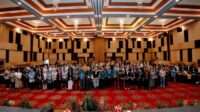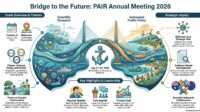


MARITIMEPOSTS.COM – Among the many conversations that unfolded during the PAIR (Partnership for Australia-Indonesia Research) Annual Meeting 2026 at Hasanuddin University, one encounter stood out for its quiet significance.
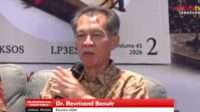
It was my meeting with Prof. Dr. Ir. Muhammad Bachtiar Nappu, S.T., M.T., M.Phil., Ph.D., one of Hasanuddin University’s leading electrical engineering scholars and a proud alumnus of the University of Queensland (UQ), Australia.
The meeting was also a pleasant reunion. Several years earlier, I had the opportunity to collaborate with Prof. Bachtiar during the implementation of the ENACTING (Enhancing Governance for Clean Energy Transition in Indonesia) program, supported by GIZ Germany between 2019 and 2021.
At the time, I served as the program’s Provincial Facilitator in South Sulawesi, while Prof. Bachtiar contributed his academic expertise in the field of electrical engineering and energy systems.
That collaboration demonstrated how universities can play a strategic role in supporting public policy and sustainable development.
It also showed Prof. Bachtiar’s willingness to bridge academic knowledge with practical solutions, particularly in initiatives related to clean energy and institutional capacity building.
Seeing him again at PAIR 2026 was therefore more than meeting a respected academic. It was a reminder of how international partnerships—whether through Germany’s development cooperation or Australia’s higher education system—continue to shape Indonesia’s research ecosystem through the people who participate in them.
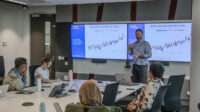
The PAIR Annual Meeting itself was more than a gathering of researchers. It reflected how Australia and Indonesia continue to deepen their partnership through science, innovation, and higher education.
Hosted by Hasanuddin University in collaboration with the Australia-Indonesia Centre (AIC), the event brought together academics, policymakers, government representatives, and development practitioners to explore collaborative solutions to some of the region’s most pressing challenges.
Meeting Prof. Bachtiar reminded me that the Australia–Indonesia partnership is not only represented by institutional agreements or research grants. It is equally embodied by individuals whose educational journeys have crossed borders and whose expertise now benefits both countries.
Prof. Bachtiar completed his undergraduate studies in Electrical Engineering at Hasanuddin University before pursuing advanced education at the University of Queensland, Australia, where he earned both a Master of Philosophy (M.Phil.) and a Doctor of Philosophy (Ph.D.) in Electrical Engineering.
His years in Australia exposed him to one of the world’s leading research environments in electric power systems, experience that he has since brought back to Indonesia.
Today, he serves as a Professor in the Department of Electrical Engineering, Faculty of Engineering, Hasanuddin University, specializing in electric power systems, high-voltage engineering, smart grids, and the application of artificial intelligence in electrical infrastructure.
In 2026, he was also appointed Vice Dean for Partnership, Research, Innovation, and Alumni at the Faculty of Engineering, reflecting his continued commitment to strengthening international collaboration.
His career illustrates the long-term value of educational exchange. Knowledge acquired in Australia has not remained in laboratories abroad; it has been translated into research, innovation, student supervision, and institutional development at one of eastern Indonesia’s leading universities.
That story resonates strongly with the broader objectives of PAIR. The Australia–Indonesia research partnership is designed not merely to support research projects but to cultivate enduring networks of expertise capable of addressing complex development challenges—from climate resilience and sustainable agriculture to digital innovation, food systems, and community wellbeing.
Throughout the Annual Meeting, one message consistently emerged from Australian and Indonesian leaders alike: meaningful partnerships are built on trust, shared learning, and mutual respect.
Those principles are reflected in the careers of academics like Prof. Bachtiar, whose professional journey demonstrates how international education can strengthen local institutions and national development.
As an alumnus of an Australian university, Prof. Bachtiar represents an expanding community of Indonesian scholars who continue to connect Australia and Indonesia through research, education, and innovation. Their contributions extend well beyond academic publications. They mentor future researchers, build institutional partnerships, and help ensure that international collaboration delivers tangible benefits for society.
For Indonesia, these academic networks are increasingly important as universities expand global engagement while responding to national priorities in energy, infrastructure, and sustainable development.
For Australia, they demonstrate that investments in education continue to yield long-term dividends through alumni who become leaders in academia, research, and public policy.
Walking through the PAIR Annual Meeting, I was reminded that every successful international collaboration has a human story behind it. Sometimes that story is found in a research project or a policy initiative.
Sometimes it is reflected in a conversation with a professor whose educational journey began in Makassar, continued in Brisbane, and returned to Indonesia carrying new knowledge, broader perspectives, and a commitment to advancing science for the public good.
For me personally, meeting Prof. Bachtiar again also brought back memories of working together under the ENACTING program several years ago.
Different international partners, different initiatives, yet driven by the same spirit: building stronger institutions through collaboration, knowledge exchange, and mutual trust.
In that sense, Prof. Bachtiar Nappu’s journey is more than an individual success story.
It is a living example of what international cooperation can achieve when investments in education, research, and people are sustained over time. His career embodies the enduring connections between Indonesia and Australia while illustrating how global partnerships can empower local leadership and contribute to Indonesia’s future.
___
Editor by Kamaruddin Azis