
A Sea That Shaped Nations
The history of the North Sea is deeply connected to the rise and fall of European powers. Ancient tribes once crossed its waters to trade amber, furs, and metals. The Romans used it as a route to Britain, recognizing its strategic significance.
PELAKITA.ID – The North Sea has long been more than a stretch of water between the British Isles and continental Europe. For centuries, it has served as a battlefield, a trade corridor, an industrial frontier, and a source of immense wealth.
Wooden warships, steel battleships, fishing vessels, merchant convoys, and offshore oil platforms have all faced the sea’s unforgiving conditions. Beneath its waters lie countless shipwrecks, silent reminders of wars, storms, and maritime disasters that have influenced the course of European history.
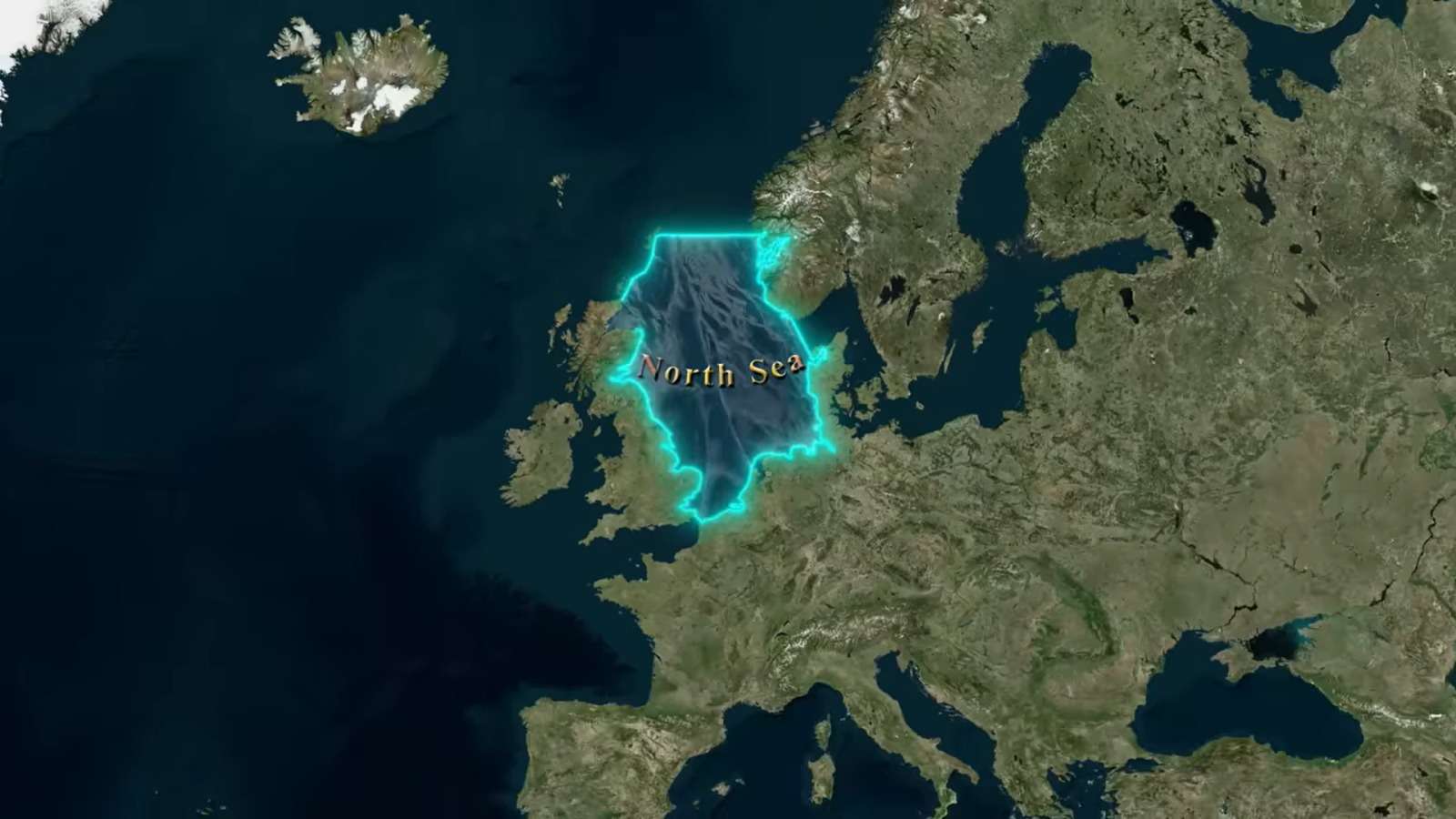
Bordered by the United Kingdom, Norway, Denmark, Germany, the Netherlands, Belgium, and France, the North Sea occupies a strategic position in northwestern Europe.
Though relatively small compared to major oceans, covering approximately 570,000 square kilometers, its influence extends far beyond its size. It shapes weather patterns, supports critical trade routes, powers national economies, and remains central to Europe’s energy security.
Geography of a Complex Maritime Region
The North Sea connects multiple regions and waterways. To the south, it links with the English Channel through the Strait of Dover. To the north, it opens into the Norwegian Sea and the Atlantic Ocean. To the east, the Skagerrak and Kattegat straits connect it to the Baltic Sea.
Despite its importance, the sea is surprisingly shallow. Much of its southern basin averages only 30 to 50 meters in depth, while the deepest section, the Norwegian Trench, reaches approximately 725 meters. These variations influence everything from shipping routes and fishing grounds to storm behavior and offshore engineering projects.
Unlike a uniform body of water, the North Sea is divided into national economic zones, crossed by pipelines, covered with shipping lanes, and dotted with oil platforms and wind farms. Human activity has transformed it into one of the most heavily managed marine environments in the world.
A Reputation Built on Storms
Few seas have earned a reputation for rough weather quite like the North Sea. Strong westerly winds from the Atlantic regularly sweep into the basin, especially during autumn and winter. Because the sea is relatively shallow, it cannot absorb wave energy as effectively as deeper oceans. As a result, storms often generate steep, powerful waves that can exceed 20 meters in height.
The region is also vulnerable to storm surges, where strong winds and low-pressure systems push seawater toward the coast. One of the most devastating examples occurred in 1953 when a catastrophic storm surge overwhelmed coastal defenses in the Netherlands, the United Kingdom, and Belgium.
More than 2,500 people lost their lives, while thousands of homes were destroyed and vast areas were flooded.
A similar disaster struck Germany in 1962 when storm waters breached dikes along the Elbe River. Large sections of Hamburg were submerged, resulting in over 300 deaths and prompting significant reforms in flood management and emergency response systems.
The low-lying coastlines of the Netherlands, Germany, and Denmark remain particularly vulnerable to flooding. Although the British and Norwegian coasts are generally higher, they are still exposed to powerful waves and severe weather events.
Combined with large tidal ranges, strong currents, fog, sleet, and rapidly changing weather conditions, these factors make the North Sea one of the most challenging maritime environments in Europe.
Centuries of Conflict and Competition
The history of the North Sea is deeply connected to the rise and fall of European powers. Ancient tribes once crossed its waters to trade amber, furs, and metals. The Romans used it as a route to Britain, recognizing its strategic significance.
By the seventeenth century, the sea had become a focal point of competition among emerging maritime powers. The Dutch Republic, England, Denmark, and Sweden all understood that control of the North Sea meant control of trade throughout Northern Europe.
During the Dutch Golden Age, Dutch merchant fleets dominated regional commerce, linking the Baltic, Atlantic, and overseas colonies.
This dominance led to a series of conflicts with England, including the Anglo-Dutch Wars. Naval battles such as the Four Days’ Battle and the Battle of Texel were fought across waters that today carry some of the world’s busiest shipping traffic.
The nineteenth century saw Britain establish naval supremacy over the region. Major ports such as Hull, Grimsby, and Newcastle flourished as centers of global trade. The sea also became one of the world’s richest fishing grounds, particularly for herring, creating economic opportunities while fueling disputes over access to marine resources.
A Graveyard Beneath the Waves
The North Sea’s seabed contains thousands of shipwrecks accumulated over centuries. Storms, navigational hazards, warfare, and human error have all contributed to this vast underwater graveyard.
One of the most notorious hazards is the Goodwin Sands off the coast of Kent. Known as the “ship swallower,” the area has claimed more than 2,000 vessels. Among them was HMS Stirling Castle, a 70-gun warship lost during the Great Storm of 1703, one of the worst storms ever recorded in the British Isles.
The dangers persisted into the modern era. In 1895, the German ocean liner SS Elbe collided with another vessel in dense fog and sank, killing more than 330 people. The tragedy highlighted the persistent navigational risks of the region even during the age of steam.
The twentieth century transformed the North Sea into a major theater of war. During World War I, the Battle of Jutland left numerous British and German warships on the seabed. Massive vessels such as HMS Queen Mary and HMS Invincible were destroyed by shellfire and sank with heavy loss of life.
World War II intensified the destruction. Mines, submarines, and aerial attacks turned the sea into a deadly battlefield. Merchant convoys supplying Britain and continental Europe faced constant threats from German U-boats, while countless smaller vessels disappeared with little documentation. Even today, new wrecks continue to be discovered by fishermen and survey teams.
Offshore Disasters and Human Tragedy
The North Sea’s dangers are not limited to ships. Offshore energy development introduced new risks associated with industrial operations in one of the world’s harshest marine environments.
In 1980, the Alexander L. Kielland semi-submersible platform capsized in the Norwegian sector of the North Sea after a structural failure caused by metal fatigue. The disaster claimed 123 lives and remains one of the worst offshore accidents in history.
Several years later, in 1987, the ferry Herald of Free Enterprise capsized shortly after departing Belgium when water flooded its vehicle deck. Nearly 200 people died. The tragedy prompted sweeping reforms in ferry safety and vessel design.
These incidents reinforced a lesson long understood by sailors and offshore workers alike: the North Sea demands constant vigilance and respect.
Dividing a Valuable Sea
For centuries, the North Sea was largely open to whoever could navigate it. That changed dramatically after the discovery of offshore oil and gas.
As exploration expanded during the mid-twentieth century, coastal states sought to define their maritime boundaries. International agreements and evolving legal frameworks eventually established Exclusive Economic Zones (EEZs), granting countries rights over seabed resources, fisheries, and energy development.
Today, the sea is divided among neighboring nations through a network of carefully negotiated boundaries. Most major disputes were resolved by the 1970s, allowing offshore exploration and development to proceed without significant conflict.
Fishing rights remain a sensitive issue, particularly following the United Kingdom’s departure from the European Union. Access to valuable fishing grounds continues to generate political tension among coastal states, reflecting the sea’s ongoing economic importance.
The Oil Revolution
The discovery of major oil and gas reserves transformed the North Sea into one of the world’s most important energy regions.
The breakthrough came in the 1960s when large natural gas fields were discovered near the Netherlands, followed by significant oil discoveries in Norwegian waters. Offshore platforms rapidly appeared across the sea, marking the beginning of a new industrial era.
Britain and Norway emerged as the primary beneficiaries. The Brent oil field, discovered in 1971, became one of the region’s most productive fields and gave its name to the global benchmark for crude oil pricing.
At its peak during the late 1990s, North Sea production reached approximately six million barrels of oil per day. Revenues transformed national economies, particularly Norway, which used oil wealth to establish what became the world’s largest sovereign wealth fund.
Natural gas also became a cornerstone of European energy infrastructure. Extensive pipeline networks connected offshore fields to consumers across the continent, helping secure energy supplies for millions of households and industries.
The Future: From Oil to Renewable Energy
Although production from many oil and gas fields has declined since the early 2000s, the North Sea remains a strategic energy hub. Aging platforms are being decommissioned, while new technologies are extending the life of existing fields.
At the same time, the region is becoming a center for renewable energy. Massive offshore wind farms now dominate sections of the sea, particularly near the coasts of the United Kingdom, Germany, and Denmark. Former oil infrastructure is increasingly being adapted for carbon storage projects and renewable energy support operations.
The energy crisis that followed Russia’s invasion of Ukraine renewed interest in North Sea resources, reminding policymakers that domestic energy production remains a critical component of European security.
A Sea That Still Matters
The North Sea has shaped the history, economy, and security of Northern Europe for centuries. It has witnessed naval battles, devastating storms, industrial revolutions, and technological breakthroughs. Its waters support major shipping routes, fisheries, offshore energy production, and growing renewable industries.
Far from being a relic of the past, the North Sea continues to evolve. Its role is shifting from a traditional oil-producing region to a broader center of energy innovation, environmental management, and maritime security.
The storms remain, the wrecks still rest beneath the waves, and the strategic importance endures. Few bodies of water have influenced Europe as profoundly as the North Sea—and its story is far from over.
Source: Here!