
MARITIMEPOSTS.COM – In an era when global leadership is increasingly shaped by collaboration rather than geography, one young Indonesian is demonstrating that influence is no longer reserved for those born in capital cities or elite institutions.
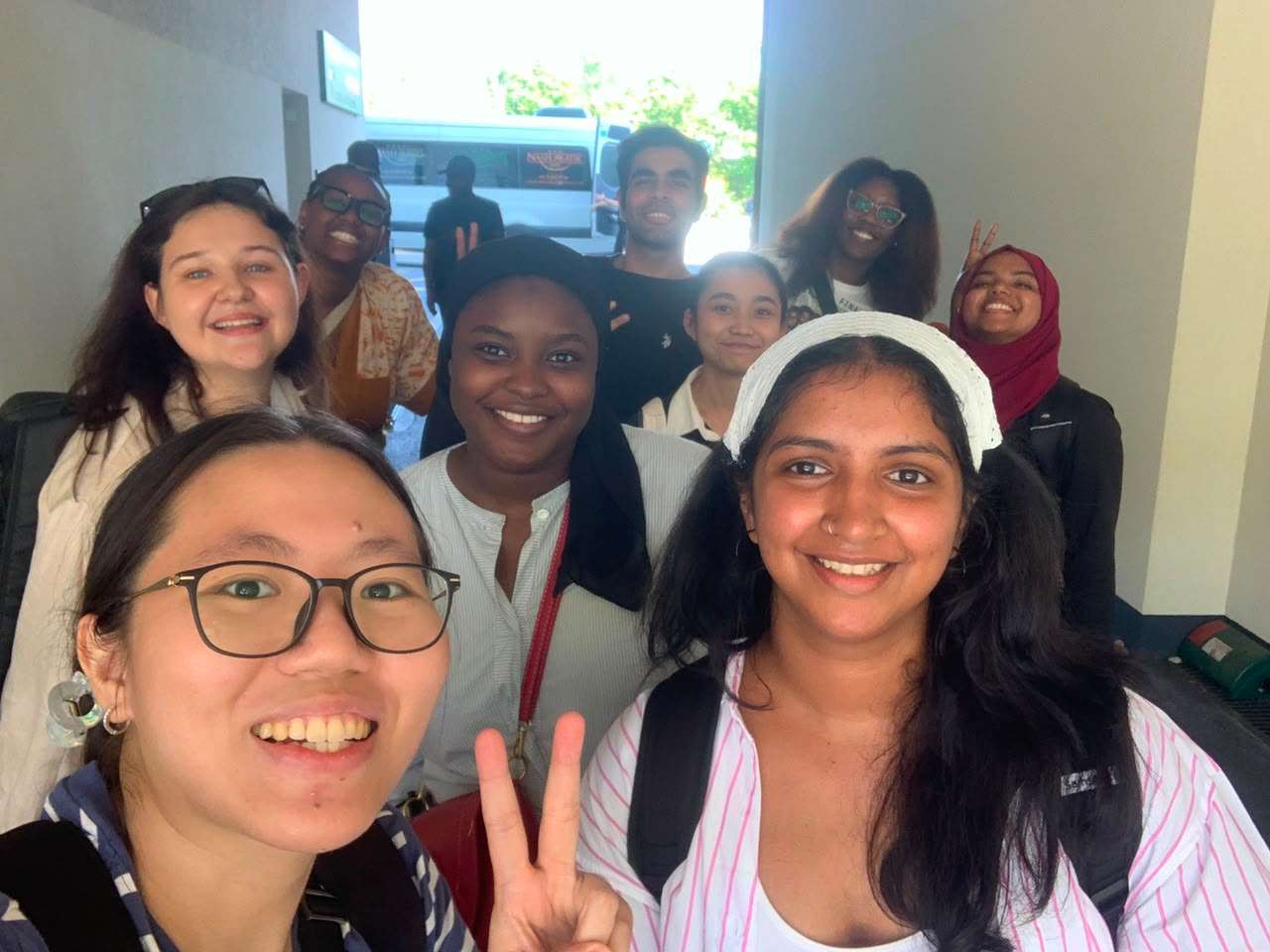
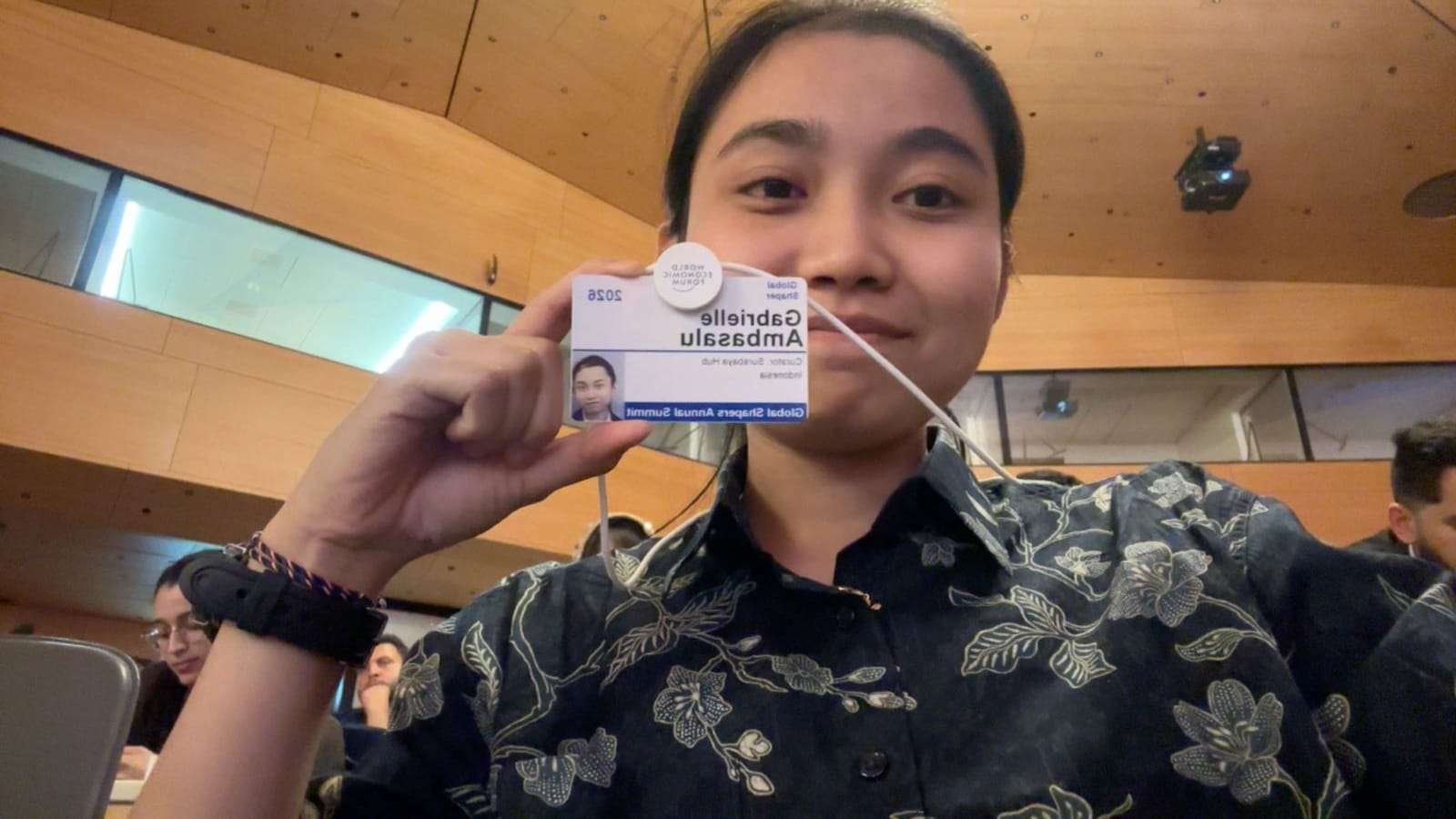
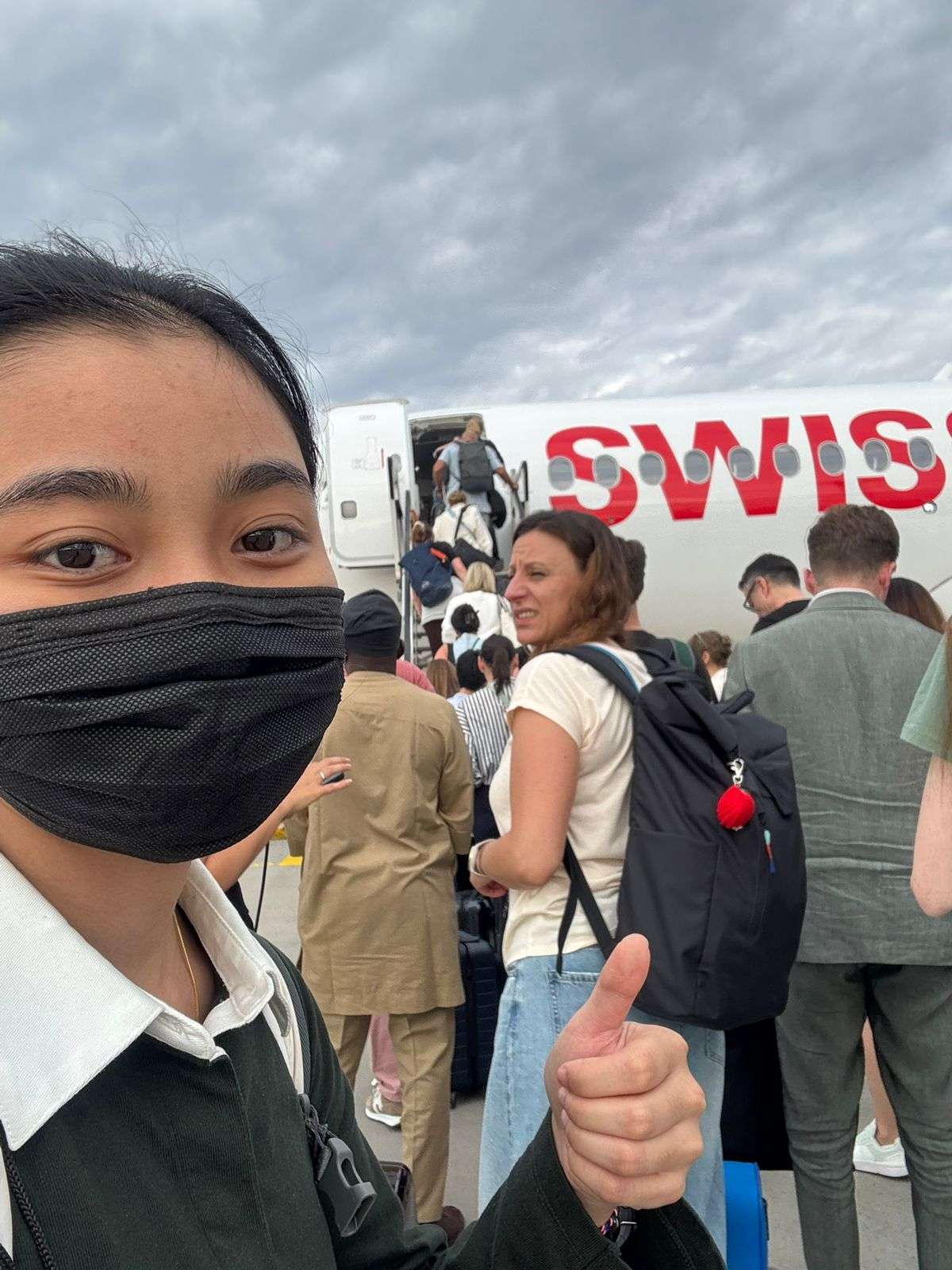
In June 2026, Gabrielle Angelina Ambasalu, a university student originally from Wawondula in Luwu Timur, South Sulawesi, walked into the Global Shapers Annual Summit in Geneva, Switzerland—not merely as a participant, but as one of the emerging leaders entrusted with representing the next generation of changemakers.
Her presence at the summit, organized by the World Economic Forum (WEF), marked far more than an individual achievement.
It symbolized a broader transformation in how global leadership is being reimagined: one where talent, purpose, and measurable impact matter more than geography.
Now pursuing her studies at Petra Christian University in Surabaya while serving as Curator of the Global Shapers Surabaya Hub for the 2026–2027 term, Gabrielle embodies a generation of Indonesians proving that local roots can inspire global influence.
Her journey offers four powerful lessons for young leaders across Southeast Asia and beyond.
Global Networks Can Democratize Leadership
For decades, international policymaking and leadership opportunities were often concentrated among young professionals from major metropolitan centers.
Organizations such as the World Economic Forum’s Global Shapers Community are gradually changing that equation.
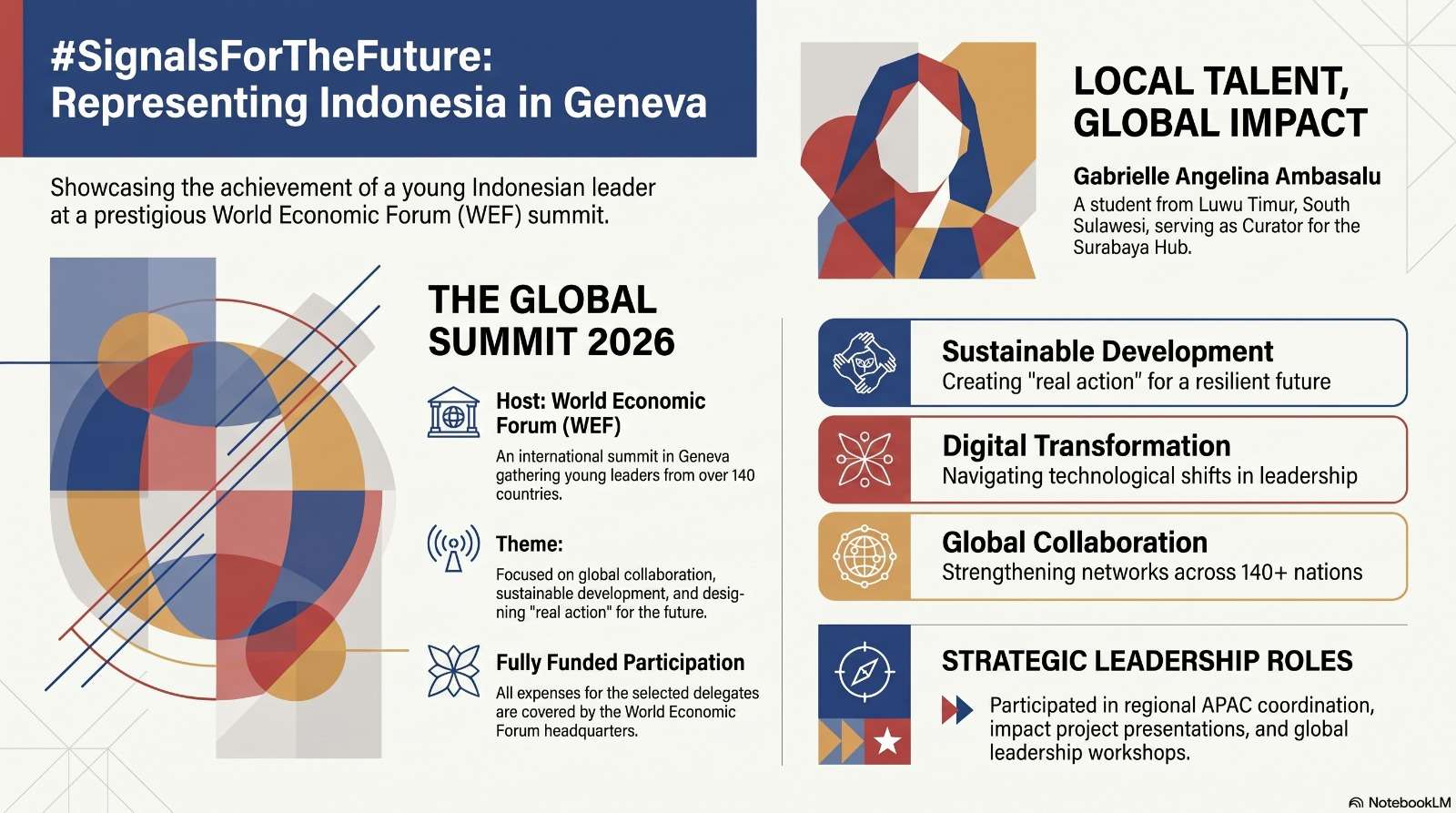
Established by the WEF to empower exceptional young leaders under the age of 30, the Global Shapers Community now spans more than 140 countries through locally driven hubs addressing challenges ranging from climate resilience to social inclusion and digital transformation.
For young people growing up in regions like Luwu Timur, such networks provide something far more valuable than international exposure—they create institutional access.
Instead of viewing regional identity as a limitation, Global Shapers positions local perspectives as indispensable assets.
Community challenges become globally relevant conversations, while local innovations gain pathways toward international collaboration.
Gabrielle’s participation illustrates how a young woman from eastern Indonesia can contribute meaningfully to discussions that shape global development priorities.
Leadership Is Measured by Responsibility, Not Recognition
Titles often attract attention. Responsibilities define leadership.
As Curator of the Global Shapers Surabaya Hub, Gabrielle’s role extends well beyond ceremonial representation.
She is responsible for coordinating initiatives, strengthening collaboration across the Asia-Pacific region, and ensuring that local impact projects align with broader global objectives.
During the Geneva summit, delegates participated in intensive leadership dialogues, strategic workshops, and collaborative sessions designed to translate international priorities into actionable community initiatives.
The experience reinforced an important principle increasingly embraced by global institutions: leadership is not about visibility but accountability.
As Justine Lyris Bacay, Community Champion for Maritime Southeast Asia within the Global Shapers Community, noted,
“Gabrielle is the Curator of Global Shapers Surabaya for the 2026–2027 period and is an official member of the Surabaya Hub.”
The appointment reflects a merit-based ecosystem where competence and commitment carry greater weight than background or status.
Reading the Future Requires Ethical Leadership
The central theme of the 2026 Global Shapers Annual Summit—#SignalsForTheFuture—challenged participants to identify emerging trends that will define the coming decades.
Artificial intelligence.
Climate adaptation.
Economic resilience.
Digital transformation.
Cross-border collaboration.
Yet beneath every discussion emerged a common conclusion: none of these priorities can succeed without capable, ethical leadership.
Technology alone cannot solve inequality.
Innovation without integrity cannot sustain trust.
Sustainability requires leaders capable of translating ambitious global agendas into practical local action.
For Gabrielle, the summit underscored that future-ready leadership is less about predicting tomorrow than preparing communities for it.
The leaders of tomorrow will not simply respond to change—they will help shape it.
Merit Can Break Geographic and Financial Barriers
Perhaps the most compelling aspect of Gabrielle’s story is not where she went—but where she came from.
Raised in Wawondula Village, Towuti District, she represents a generation whose ambitions are no longer constrained by physical distance from Indonesia’s political or economic centers.
Her father, Amerin “Vaulth” Ambasalu, works as a community empowerment facilitator within PT Vale’s operational area and previously gained professional experience in Japan. His career reflects the intersection between local community development and international standards of practice.
Watching his daughter travel to Geneva through her own achievements carried profound meaning.
“I am proud, and I hope everything goes smoothly for her in the future,” he said.
Equally significant is the fact that Gabrielle’s participation at the summit was fully funded by the World Economic Forum.
Financial barriers—which have historically prevented many talented young leaders from accessing international opportunities—were removed through a merit-based selection process.
The message is unmistakable.
Global leadership should not depend on wealth, family connections, or proximity to power. It should depend on demonstrated ability, commitment, and the willingness to create meaningful change.
Beyond Representation
Gabrielle’s journey is ultimately about more than individual success.
It reflects the growing recognition that solving global challenges requires voices from communities often overlooked in international conversations.
Climate policy cannot ignore mining regions.
Digital transformation cannot overlook rural communities.
Economic development cannot succeed without understanding local realities.
Young leaders from places like Luwu Timur bring perspectives shaped by lived experience—perspectives that are increasingly essential in designing solutions for a rapidly changing world.
Rather than asking whether regional youth belong in global forums, institutions are beginning to recognize that these voices are indispensable.
The Future Is Already Emerging
The distance between Luwu Timur and Geneva spans thousands of kilometers.
The distance between local aspiration and global influence, however, has never been smaller.
Gabrielle Angelina Ambasalu’s story demonstrates that the next generation of leadership will not be defined by birthplace but by purpose, preparation, and the courage to act.
The signals for the future are already visible—in village classrooms, university campuses, community organizations, and youth-led initiatives across Indonesia.
The challenge is no longer gaining permission to participate.
It is deciding who is ready to lead.
And if Gabrielle’s journey is any indication, the next generation of global leaders may already be emerging from places the world has yet to fully discover.
___
Written by Kamaruddin Azis