
- The resulting aerial imagery achieved a very high level of precision, with spatial resolutions ranging from 1.5 to 5 centimeters. This resolution allowed the team to accurately distinguish turtles from other objects in the sea.
- Supported by the Solutions for Marine and Coastal Resilience in the Coral Triangle (SOMACORE) Program, the monitoring results showed that most turtle nesting habitats in Berau remain in good condition, while also reaffirming the importance of strengthening science-based conservation management and community participation.
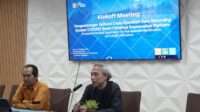
MARITIMEPOSTS.COM – Tanjung Redeb, May 23, 2026 – Yayasan Konservasi Alam Nusantara (YKAN), together with the Marine and Fisheries Agency (DKP) of East Kalimantan Province, the Pontianak Marine Management Center, and community-based conservation groups, has completed a series of monitoring activities on sea turtle habitats and populations.
The monitoring was conducted in the Coastal and Small Islands Conservation Area of the Derawan Islands and Surrounding Waters (KKP3K KDPS), Berau Regency, East Kalimantan.
Supported by the Solutions for Marine and Coastal Resilience in the Coral Triangle (SOMACORE) Program, the monitoring results showed that most turtle nesting habitats in Berau remain in good condition, while also reaffirming the importance of strengthening science-based conservation management and community participation.
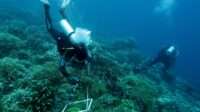
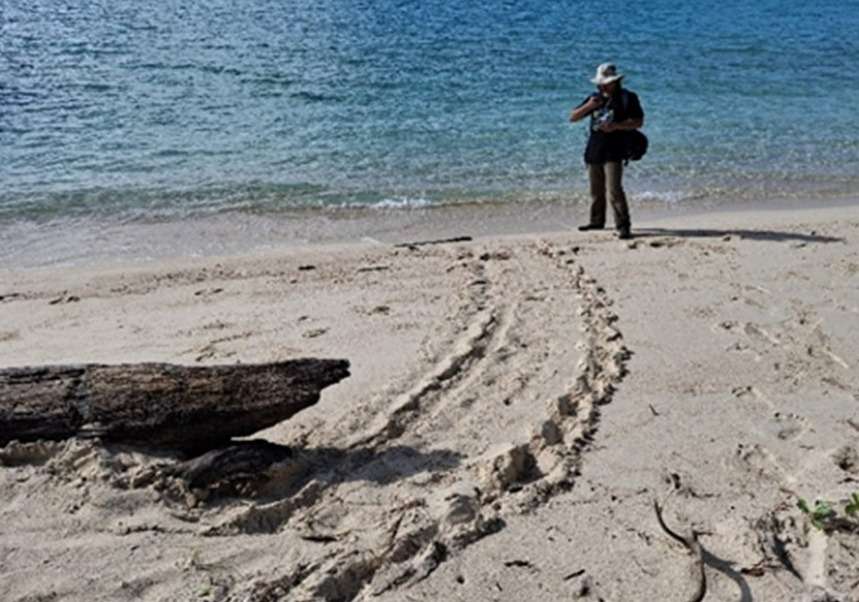
Surveys were carried out in several key locations, including Mataha Island, Bilang-bilangan, Sangalaki, Derawan, Teluk Sulaiman, and Balikukup.
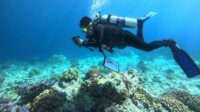
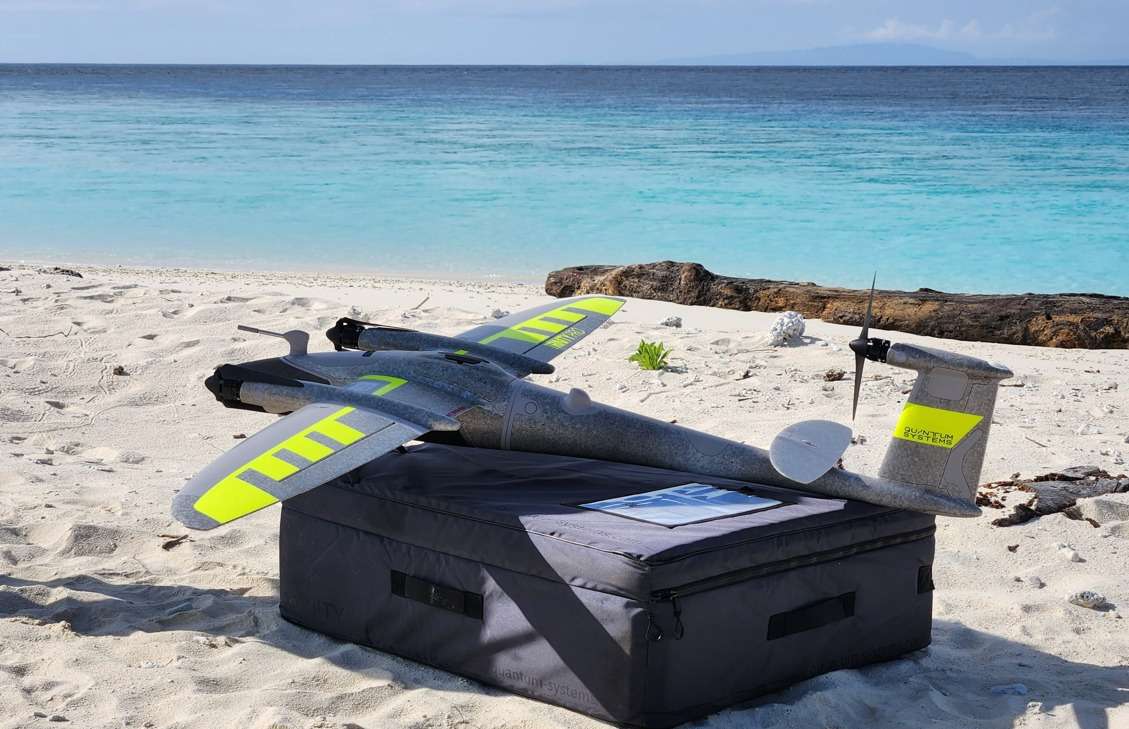
The activities included turtle nesting habitat surveys, population monitoring using unmanned aerial vehicle (UAV) technology, and surveys of coastal community perceptions regarding sea turtle conservation.
Berau forms an important part of the Sulu-Sulawesi seascape within the world’s Coral Triangle region. The area is known as Indonesia’s largest habitat for green turtles (Chelonia mydas) and also serves as a migration route for various ecologically important marine species.
Strengthening Conservation Management
Head of the East Kalimantan Marine and Fisheries Agency, Irhan Hukmaidy, stated that the monitoring results provide an important foundation for strengthening conservation area management in Berau.
“Berau holds extremely important ecological value, not only for East Kalimantan but also for the world. These monitoring results show that turtle nesting habitats in several locations remain in very good condition and must continue to be protected through collaborative conservation management involving local communities,” he explained.
Irhan added that the regional government continues to encourage stronger area surveillance, sustainable tourism management, and public education to support the long-term survival of turtle populations in Berau.
Habitat monitoring showed that out of 27 observation points, 26 were categorized as “green” or highly suitable as turtle nesting sites. These locations possess favorable beach characteristics such as appropriate sand composition, ideal beach slopes, natural vegetation, and minimal human disturbance.
Mataha Island was identified as one of the highest-scoring locations. The uninhabited island is considered highly ideal for turtle nesting due to minimal light pollution, human activity, and physical obstacles along the beach.
However, threats such as coastal abrasion, sea level rise, and natural predators were still identified in several locations.
Meanwhile, densely populated areas such as Derawan Island and Balikukup face greater pressures from waste, artificial lighting, and coastal human activities that may disturb turtles during nesting.
Technology-Assisted Monitoring
Head of the Pontianak Marine Management Center, Syarif Iwan Taruna Alkadrie, stated that technological support helps generate more accurate and efficient data for conservation management.
“With technological support, habitat and turtle population monitoring can be conducted more extensively and in greater detail, even in hard-to-reach areas. This data is extremely important for supporting science-based decision-making in conservation area management,” he said.
Through aerial surveys, the team successfully mapped turtle habitats across 12 locations. High-resolution aerial imagery enabled researchers to visually identify turtles in shallow waters, seagrass beds, and coral reef areas.
During the aerial survey, the team identified as many as 913 individual turtles in the coastal waters of the KKP3K KDPS area.
The resulting aerial imagery achieved a very high level of precision, with spatial resolutions ranging from 1.5 to 5 centimeters. This resolution allowed the team to accurately distinguish turtles from other objects in the sea.
YKAN Senior Marine Protection Manager Yusuf Fajariyanto stated that community involvement and technological utilization are key components in supporting turtle conservation in Berau.
“Turtle conservation cannot be carried out solely by the government or conservation organizations. Coastal communities play a crucial role because they live directly alongside turtle habitats. At the same time, the use of high-resolution drone technology helps obtain faster and more accurate data on turtle distribution across extensive coastal areas. The discovery of hundreds of turtles in the KKP3K KDPS area demonstrates that this region is an important habitat that must continue to be protected together,” he said.
Active Community Participation
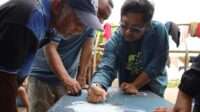
In addition to ecological monitoring, the survey also explored coastal community perceptions regarding turtles. A total of 75 fishers from Balikukup, Derawan, Maratua, Teluk Sulaiman, and Biduk-Biduk were interviewed.
The results showed a relatively high level of public awareness regarding the importance of turtles. As many as 98 percent of respondents understood that hunting turtles is illegal.
Most respondents also considered turtles important for maintaining marine ecosystem balance and supporting tourism.
The majority of fishers admitted that they still frequently encounter turtles both at sea and along beaches throughout the year, particularly green turtles and hawksbill turtles.
Many respondents believed turtle populations are now beginning to recover compared to the past due to legal protection, monitoring efforts, and conservation activities.
The monitoring also highlighted the importance of maintaining balance between conservation and community economic activities, including fisheries and tourism.
In several tourism destinations such as Sangalaki, Maratua, and Derawan, proper tourism management was considered effective in minimizing disturbances to turtle habitats.
As a conservation area covering more than 285,000 hectares, KKP3K KDPS plays a vital role in maintaining the sustainability of Berau’s coastal and marine ecosystems.
The area serves not only as turtle habitat but also as home to other important biodiversity, including coral reefs, seagrass beds, mangroves, manta rays, and marine mammals.
“Through this assessment and monitoring effort, we support effective and sustainable conservation area management based on scientific data and local community knowledge. The findings are expected to strengthen conservation policies, protect critical turtle habitats, and promote fisheries and tourism practices that are more environmentally friendly for Berau’s coastal ecosystems,” explained YKAN Marine Program Director Muhammad Ilman.
Moving forward, YKAN, together with the government and partner organizations, will continue data analysis and formulate more comprehensive management recommendations to support the sustainable protection of turtle habitats and Berau’s coastal ecosystems.
About YKAN
Yayasan Konservasi Alam Nusantara (YKAN) is a science-based non-profit organization that has operated in Indonesia since 2014. YKAN develops innovative solutions to create harmony between nature and people through effective natural resource governance, non-confrontational approaches, and partnership networks involving all stakeholders for a sustainable Indonesia. For more information, visit www.ykan.or.id.
About SOMACORE
The SOMACORE Program is supported by the German Federal Ministry for the Environment, Climate Action, Nature Conservation and Nuclear Safety (BMUKN) through the International Climate Initiative (IKI), and implemented by a consortium consisting of 10 national, regional, and international organizations across six Coral Triangle countries.
Contact Person
Nugroho Arif Prabowo
nprabowo@ykan.or.id