
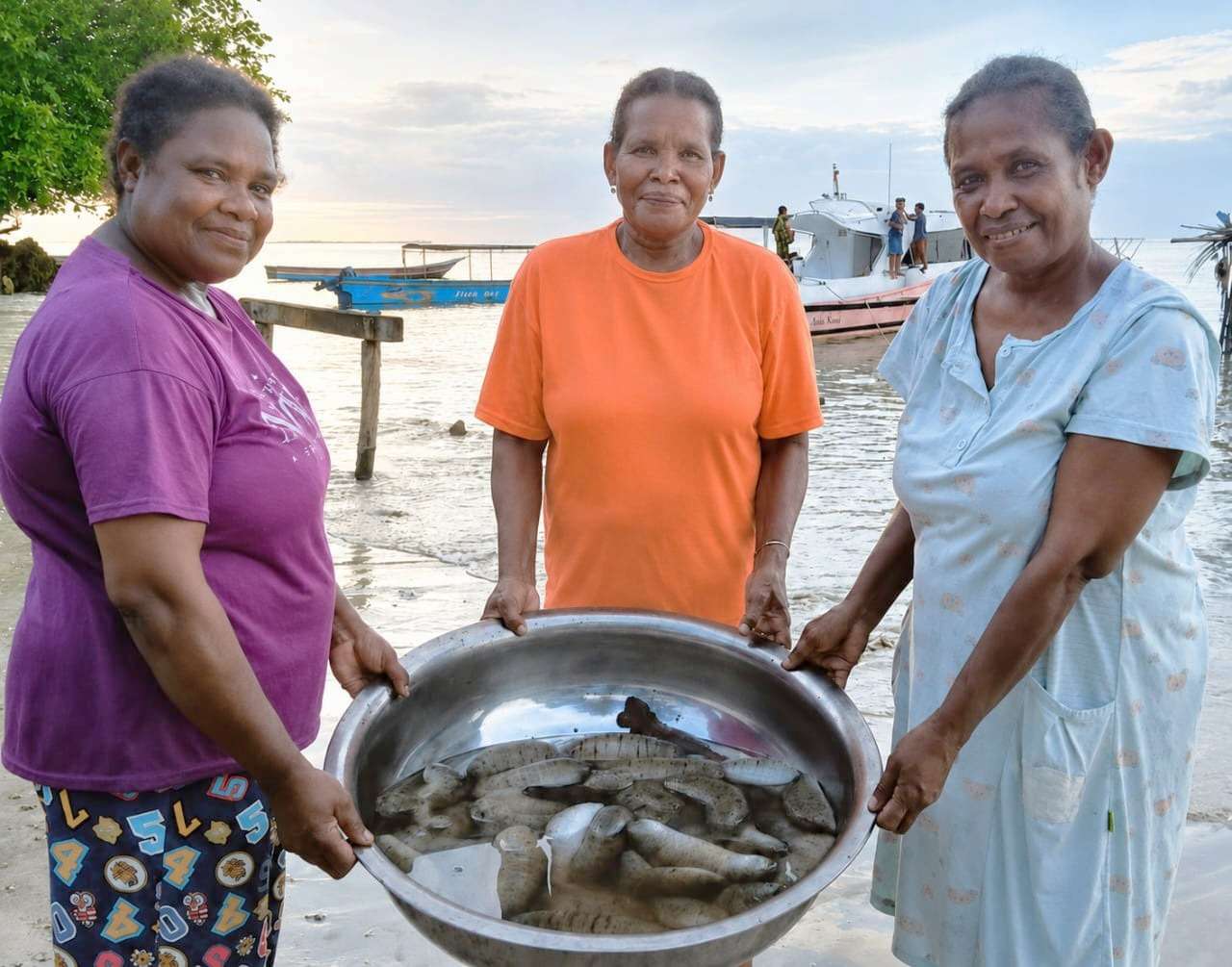
The traditional buka sasi ceremony in Salafen Village, North Misool, Raja Ampat, is not only a means of preserving local customs and community-based marine resource management, but is also being developed as an ecotourism experience that connects culture, conservation, and local livelihoods.
MARITIMEPOSTS.COM – Sorong, June 4, 2026 — The Zakan Day Women’s Group, together with the people of Salafen Village in North Misool, conducted a buka sasi event combined with a pilot community-based ecotourism package from May 20–22, 2026.
The initiative forms part of efforts to develop special-interest tourism that highlights local wisdom and community-based natural resource management practices in Raja Ampat.
The activity was supported by the Southwest Papua Provincial Government, Yayasan Konservasi Alam Nusantara (YKAN), and Global Affairs Canada on behalf of the Government of Canada.
According to Yusdi Lamatenggo, Head of the Tourism and Creative Economy Office of Southwest Papua Province, the development of tourism rooted in culture and conservation aligns with the province’s sustainable tourism agenda.
“Community-based tourism initiatives such as buka sasi in Salafen are important because they connect cultural preservation, environmental protection, and local economic empowerment. This approach represents a significant opportunity for sustainable tourism development in Southwest Papua,” he said.
Yusdi added that the people of Raja Ampat have long lived in harmony with nature and have made sasi an integral part of their lives.
He explained that the practice serves as a collective agreement to ensure the sustainability of marine resources so they can continue to support future generations.
He also highlighted the role of the Zakan Day Women’s Group, which has successfully maintained and passed on the sasi tradition as part of efforts to conserve coastal and marine ecosystems in Misool.
“The Zakan Day Women’s Group demonstrates that women are not only central to family life but also serve as guardians of ecosystems. What they are doing today is an important contribution to preserving Raja Ampat’s natural heritage,” Yusdi added.
Sasi is a traditional coastal and marine resource management system that has long been practiced by Indigenous communities throughout Papua and Maluku.
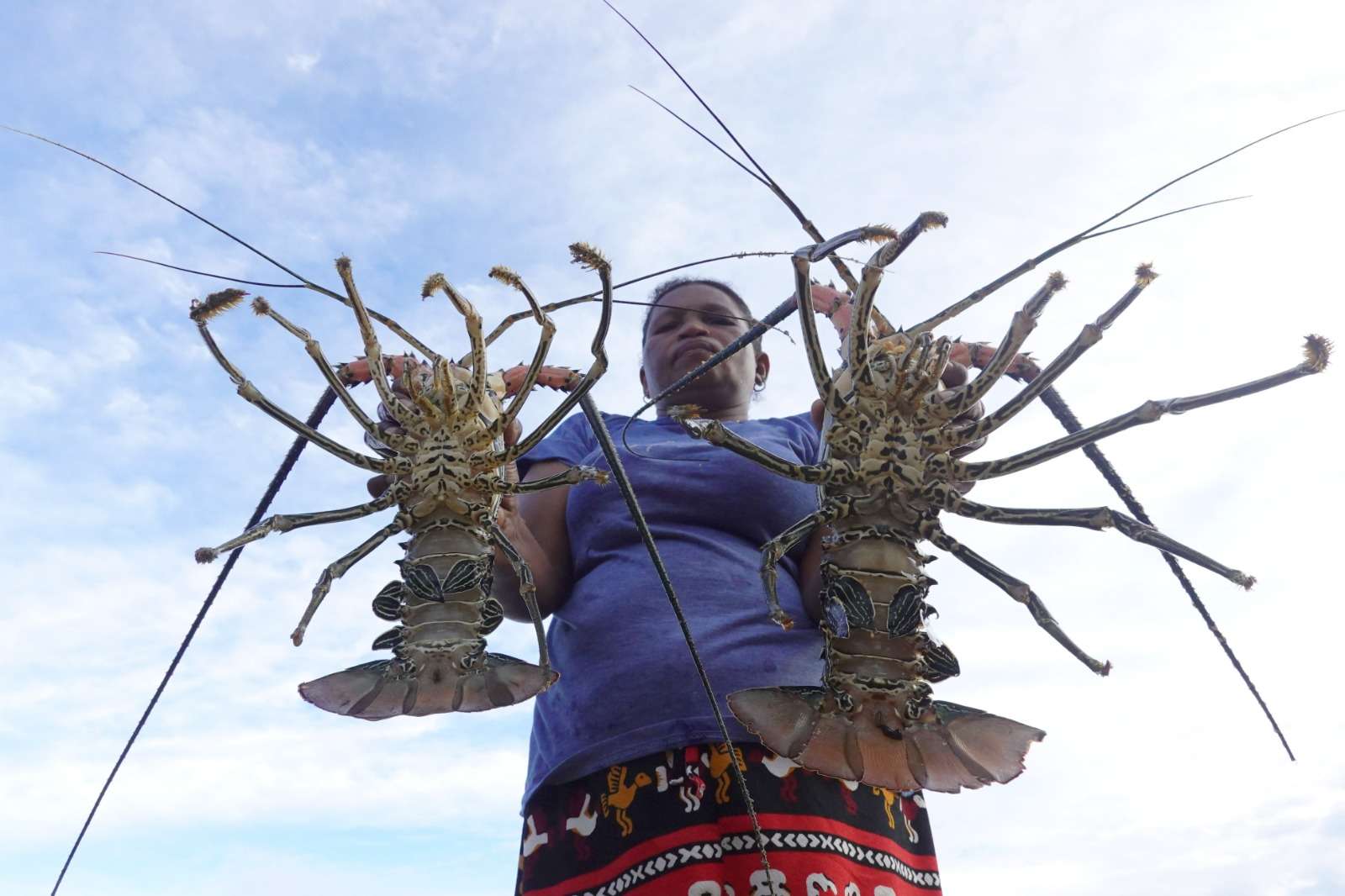
Through customary opening and closing periods for designated areas, communities regulate resource use in a sustainable manner, balancing ecosystem conservation with local livelihoods.
In Salafen Village, the sasi area managed by the Zakan Day Women’s Group covers 497.85 hectares. The primary resources regulated under the system are sea cucumbers and lobsters, two marine commodities of significant economic value to coastal communities. The buka sasi period officially began on May 21, 2026, and will remain open for three weeks before being closed again in accordance with customary regulations.
Established in 2022, the Zakan Day Women’s Group was formed to strengthen women’s roles in customary and conservation-based coastal resource management in Salafen Village.
The sasi area they manage has become both a learning space and a living example of community-based resource management that continues to thrive today.
During the event, participants engaged in a variety of cultural and educational activities, including the buka sasi ritual, harvesting marine resources, discussions on the sasi management cycle, and harvest data recording. Participants also stayed with local families, providing an opportunity to experience firsthand the daily life of a coastal community.
Yermina Rumayom, Chair of the Zakan Day Women’s Group, emphasized that buka sasi is far more than a tourism attraction.
“Buka sasi is part of the way our community collectively protects the sea and its natural resources. Through this activity, we want visitors to understand these values while also creating economic opportunities managed directly by the community,” she explained.
A similar view was expressed by Agustinus Day, a traditional leader of Salafen Village. He noted that sasi is a legacy of Indigenous knowledge that serves both cultural and ecological purposes.
“Sasi teaches people to maintain the balance of nature and to harvest resources wisely. These values are important to preserve and to share with younger generations as well as visitors to our village,” he said.
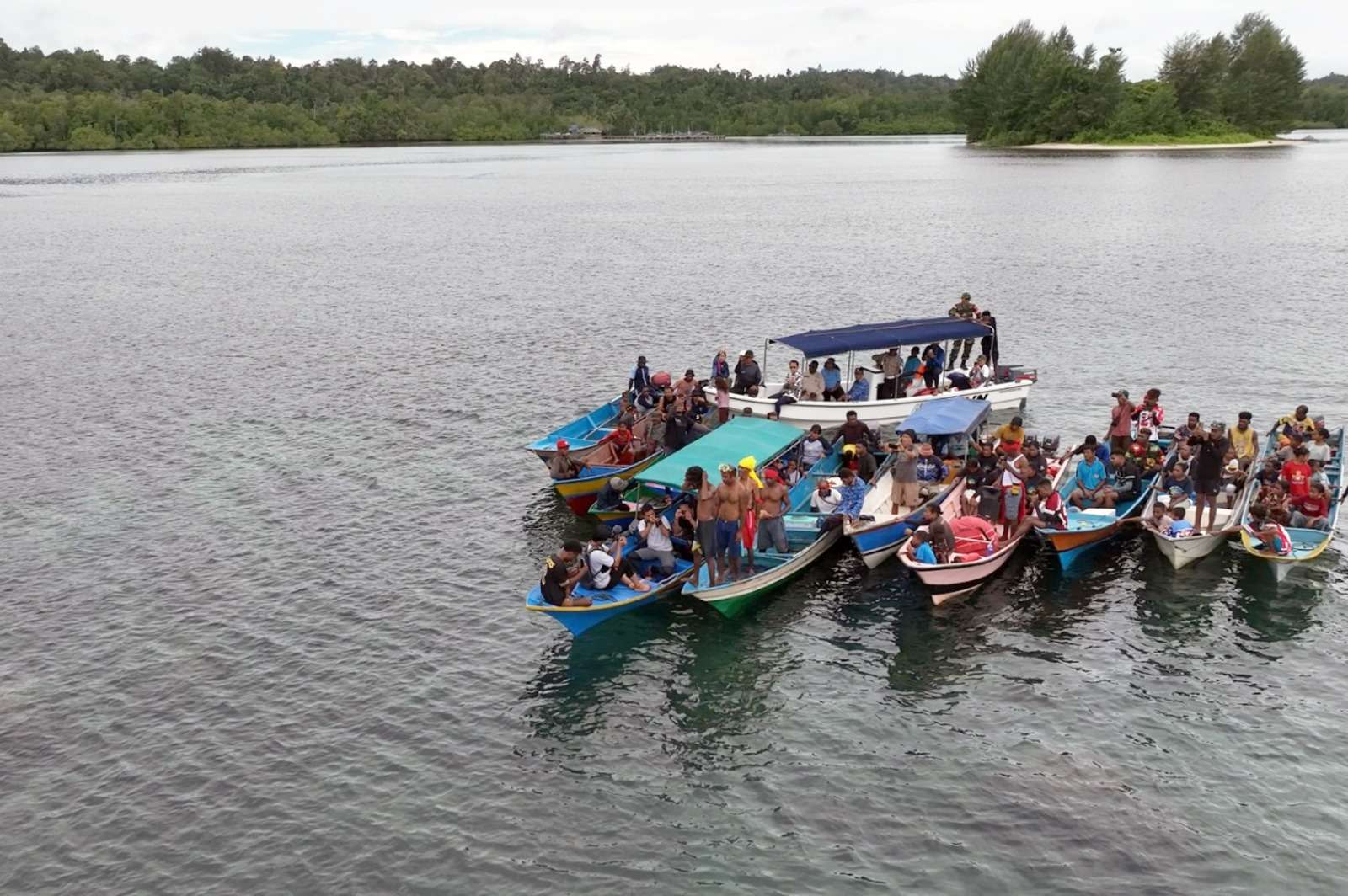
Ecotourism as a Shared Learning Experience
Through the pilot buka sasi tourism package, the people of Salafen Village not only introduced community-based tourism but also gathered feedback from participants to improve visitor services, conservation measures, travel safety, and cultural programming.
“We are still learning how to develop this community-based tourism initiative. We want visitors not only to enjoy nature, but also to understand the lives of coastal communities and witness how local people protect the sea through the practice of sasi,” said Seal Tiel Lan, Chair of the Salafen Village Ecotourism Group.
One participant in the pilot program, Alden Iswanto, said the experience provided valuable new insights. According to him, the activity offered not only natural beauty but also a unique opportunity to learn directly about traditional marine resource management practices in Salafen Village.
“This was a very different experience for me. Beyond enjoying the natural surroundings, I was able to see firsthand how the community manages marine resources sustainably through the sasi tradition,” he said.
YKAN is also committed to supporting the development of community-based ecotourism in Salafen Village as part of broader efforts to promote sustainable coastal and marine resource management.
Muhammad Ilman, YKAN’s Marine Program Director, said that local wisdom-based management systems such as sasi play an important role in effective marine conservation.
“YKAN supports the development of community-based ecotourism initiatives such as the one in Salafen Village because economic benefits can go hand in hand with the preservation of culture and natural resources,” he explained.
Through this initiative, the Zakan Day Women’s Group and the people of Salafen Village hope that buka sasi ecotourism can become a model of community-based tourism that supports conservation, cultural preservation, and the sustainable economic development of coastal communities.
About YKAN
Yayasan Konservasi Alam Nusantara (YKAN) is a science-based non-profit organization that has been operating in Indonesia since 2014. YKAN develops innovative solutions to harmonize people and nature through effective natural resource governance, non-confrontational approaches, and partnerships with stakeholders across sectors to support a sustainable Indonesia.
For more information, visit: www.ykan.or.id
Media Contact:
Nugroho Arif Prabowo
nprabowo@ykan.or.id