
Indonesia has also benefited from IPNLF’s commitment to international knowledge exchange, enabling local fishers to learn from successful small-scale fisheries in countries such as the Maldives, the United States, and Kenya.
MARITIMEPOSTS.COM – In a world where industrial fishing fleets dominate global seafood production, the International Pole & Line Foundation (IPNLF) has emerged as a leading advocate for a different vision of fisheries—one that values sustainability, equity, and the livelihoods of coastal communities.
Since its establishment in 2012, the United Kingdom-based charity has worked across continents to strengthen one-by-one tuna fisheries, promoting fishing methods that are environmentally responsible while supporting the social and economic well-being of small-scale fishers.
Fishing One Fish at a Time
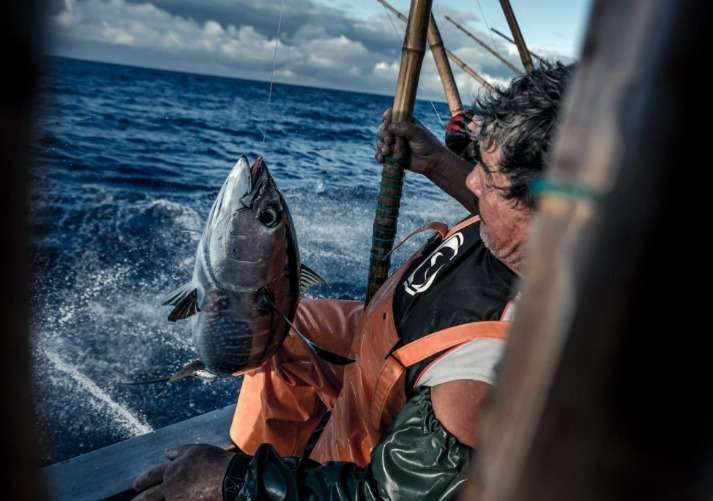
IPNLF believes that the future of healthy oceans depends on empowering fisheries that use pole-and-line, handline, and troll fishing methods. These techniques catch tuna individually—one hook, one line, one fish—significantly reducing bycatch, minimizing habitat damage, and providing greater traceability throughout the seafood supply chain.
Unlike industrial fishing operations that rely on large purse seines or longlines, one-by-one fisheries represent a more selective and environmentally friendly approach to harvesting tuna.
Beyond environmental benefits, the organization recognizes that sustainable fisheries must also sustain people. Millions of coastal residents depend on tuna fisheries for food security, employment, and cultural identity. For many communities, fishing is more than an occupation; it is a tradition passed down through generations.
From the Maldives to a Global Movement
The foundation traces its roots to the Maldives, where pole-and-line fishing has long been an integral part of local culture. Founded on 23 January 2012, IPNLF was created to give greater representation to pole-and-line fishers whose voices were often overshadowed in international fisheries governance.
Inspired by growing concerns over overfishing and destructive industrial fishing practices, the organization set out with a simple but powerful mission: one hook, one line, one fish at a time.
Over the past decade, IPNLF has expanded dramatically. What began with several fisheries in the Maldives has grown into an international network operating across five continents and eight countries, supported by more than 70 member organizations representing every stage of the tuna supply chain—from fishing communities and processors to retailers and conservation organizations.
Indonesia: A Strategic Partner
Indonesia has occupied a central place in IPNLF’s global strategy since 2013, when the foundation established its Indonesian regional branch. Since then, the country has become one of the organization’s most significant operational landscapes, reflecting Indonesia’s position as one of the world’s largest tuna-producing nations.
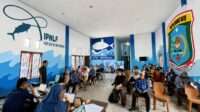
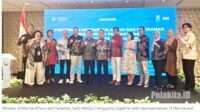
Working alongside the Ministry of Marine Affairs and Fisheries, local governments, fishing associations, universities, and civil society organizations, IPNLF has implemented numerous initiatives aimed at strengthening coastal tuna fisheries. These efforts include Fishery Improvement Projects (FIPs), skipper training, fisheries data collection, traceability systems, community capacity building, and policy advocacy to ensure that sustainability is integrated throughout the value chain.
Indonesia has also benefited from IPNLF’s commitment to international knowledge exchange, enabling local fishers to learn from successful small-scale fisheries in countries such as the Maldives, the United States, and Kenya.
Linking Sustainability with the SDGs
A defining characteristic of IPNLF is its explicit alignment with the United Nations Sustainable Development Goals (SDGs). Rather than focusing solely on conservation, the organization integrates environmental sustainability with social responsibility, economic inclusion, and equitable governance.
Its programs contribute directly to:
- SDG 1 – No Poverty
- SDG 2 – Zero Hunger
- SDG 8 – Decent Work and Economic Growth
- SDG 12 – Responsible Consumption and Production
- SDG 13 – Climate Action
- SDG 14 – Life Below Water
- SDG 17 – Partnerships for the Goals
This integrated approach reflects IPNLF’s belief that sustainable fisheries cannot succeed without empowering local communities and ensuring they participate meaningfully in fisheries governance.
Driving Policy and Innovation
Over the years, IPNLF has become increasingly influential in international fisheries management. The organization regularly participates in Regional Fisheries Management Organizations (RFMOs), contributing scientific evidence and advocating for policies that recognize the environmental and social benefits of one-by-one fisheries.
Its achievements include supporting:
- Harvest Control Rules for skipjack tuna in the Indian Ocean.
- Rebuilding plans for bigeye tuna stocks.
- Observer status at international fisheries bodies.
- Fisheries transparency initiatives.
- Sustainable seafood sourcing policies.
- Plastic-neutral fisheries.
- Responsible fishing certification and traceability systems.
The organization has also embraced digital innovation through mobile applications, fisheries information systems, sourcing transparency platforms, and traceability technologies that improve both sustainability and market access.
Empowering Coastal Communities
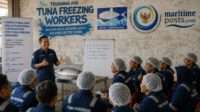
While fisheries management often focuses on fish stocks, IPNLF places equal emphasis on people. Training programs for skippers, community learning centers, gender equality initiatives, and fisher exchange programs have become integral components of its work.
The foundation has also highlighted the important role of women in seafood supply chains through initiatives such as Women at the Waterfront and partnerships addressing gender in social responsibility.
These initiatives reinforce the understanding that sustainable fisheries depend not only on healthy oceans but also on inclusive and resilient communities.
Looking Ahead
As pressure on global marine ecosystems continues to grow, IPNLF offers a compelling model for balancing conservation with economic opportunity. By connecting science, traditional knowledge, responsible business, and community participation, the organization demonstrates that sustainable tuna fisheries are not merely an environmental aspiration but a practical pathway toward resilient coastal economies.
For countries like Indonesia—home to vast marine resources and millions of small-scale fishers—the IPNLF approach illustrates how sustainable fisheries can simultaneously strengthen livelihoods, improve seafood traceability, and contribute to global ocean governance.
Ultimately, the foundation’s philosophy is remarkably simple yet profoundly relevant: protecting the ocean begins with respecting both the fish and the people who depend upon them. Through its commitment to one hook, one line, one fish, IPNLF continues to prove that responsible fisheries can deliver lasting benefits for ecosystems, communities, and future generations.
Source: Ipnlf.org