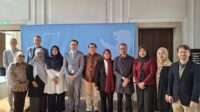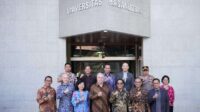

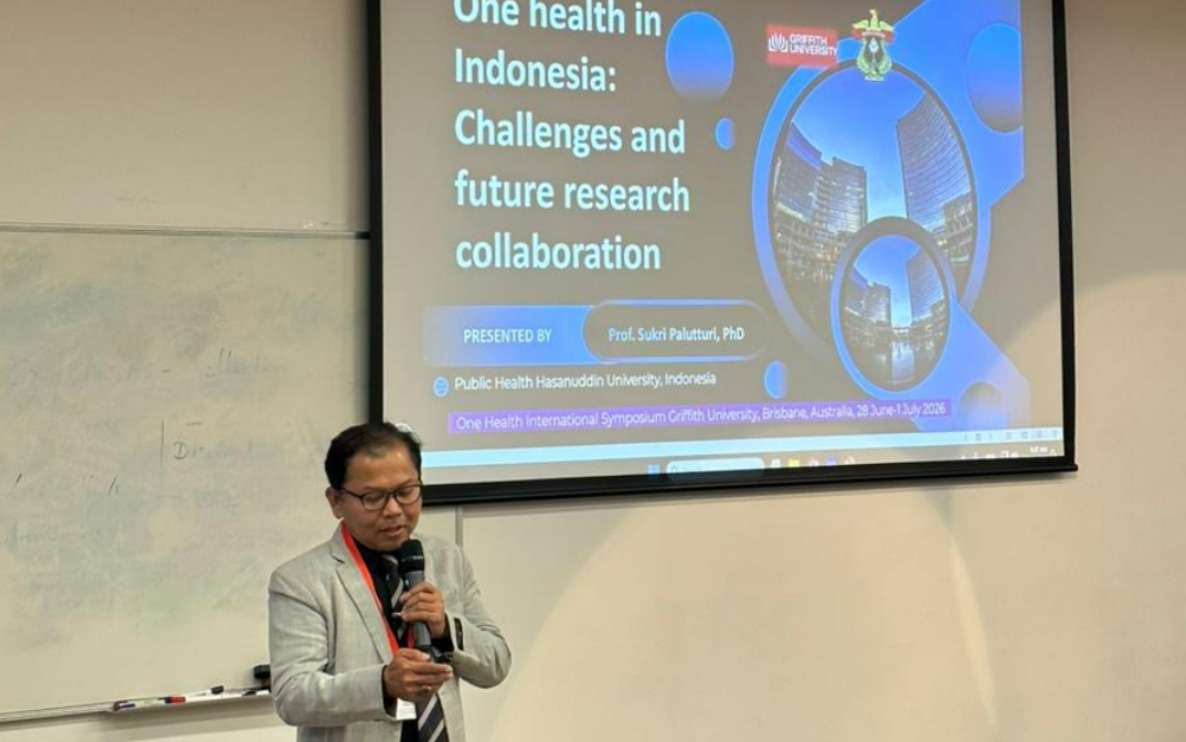
MARITIMEPOSTS.COM – Brisbane, Australia – The Dean of the Faculty of Public Health (FKM), Hasanuddin University, Prof. Sukri Palutturi, SKM, M.Kes., MSc.PH., PhD, participated in the International Symposium on One Health 2026, organized by the Centre for Environment and Population Health at Griffith University in Brisbane, Australia, from 28 June to 1 July 2026.
The international symposium, themed “Futureproofing One Health Action for Regional and Global Health Security: Challenges and Response Strategies for the Indo-Pacific in the Context of Climate Change,” brought together academics, researchers, policymakers, and public health practitioners from across the Indo-Pacific region to strengthen collaboration in addressing global health challenges.
During the symposium, Prof. Sukri Palutturi was invited as one of the featured speakers, presenting a paper entitled “One Health in Indonesia: Challenges and Future Research Collaboration.”
In his presentation, he emphasized the importance of adopting the One Health approach in Indonesia, a country recognized for its extraordinary biodiversity while simultaneously facing complex challenges, including zoonotic diseases, climate change, antimicrobial resistance, environmental degradation, and the need for stronger cross-sectoral coordination.
Prof. Sukri also outlined several strategic priorities for strengthening One Health implementation in Indonesia.
These include developing integrated surveillance systems, enhancing human resource capacity, promoting evidence-based governance, and fostering collaboration among the health, livestock, environmental, local government, academic, and community sectors.
As part of efforts to expand international partnerships, he introduced several opportunities for collaborative research between Hasanuddin University and global institutions.
The proposed areas of collaboration include Healthy Aging from a One Health perspective, the impacts of climate change on public health, food security, the development of One Health implementation assessment tools, cross-sectoral collaboration models for preventing zoonotic diseases, and capacity-building initiatives through joint training programs and scientific publications.
These proposals attracted considerable interest from symposium participants, who regarded them as highly relevant to the evolving public health challenges facing the Indo-Pacific region.
Beyond the scientific sessions, participants also visited Queensland Health, Biosecurity Queensland, Gold Coast Hospital, and the Emergency Response Centre at Griffith University to observe practical applications of the One Health approach in healthcare systems and emergency preparedness for infectious disease threats.
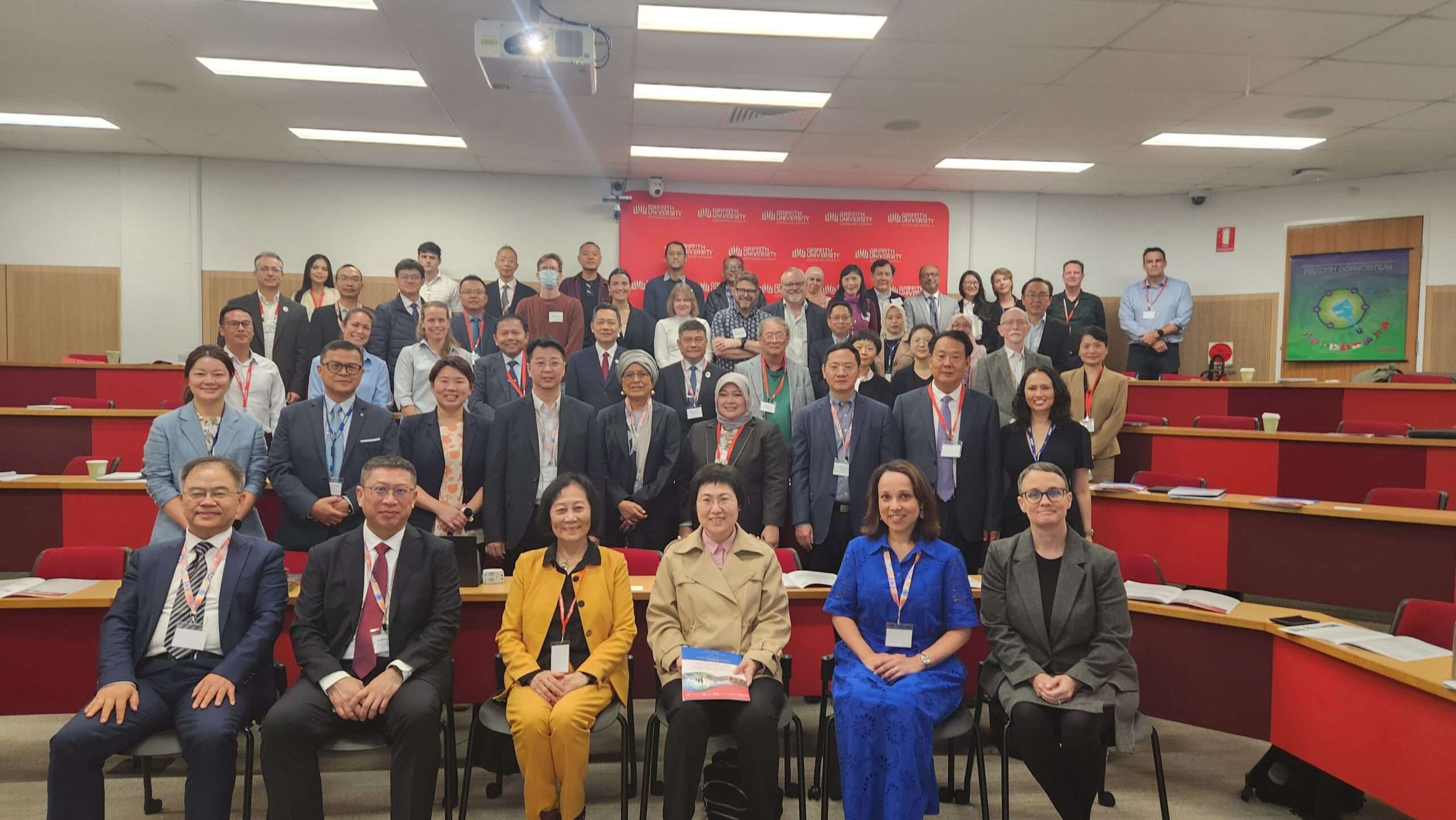
The symposium, attended by approximately 50 participants from Australia, Indonesia, China, Malaysia, Vietnam, and several research institutions, is expected to generate collaborative research proposals, strengthen the regional Community of Practice, and expand international networks supporting sustainable regional health security.
The participation of the Faculty of Public Health, Hasanuddin University, in this international forum underscores the institution’s commitment to advancing academic diplomacy and enhancing Indonesia’s contribution to the global development of the One Health agenda.
(mp)