
- History records that the El Niño events of 1996 and 1998 triggered widespread coral bleaching across Indonesia’s seas. Combined with increasing ocean acidification caused by excessive absorption of atmospheric CO₂, coral reef structures have become increasingly fragile.
- As this ecological balance deteriorates, the resilience of marine ecosystems declines sharply, making recovery from climate disturbances far more difficult.
MARITIMEPOSTS.COM – Wakatobi, often celebrated as the global epicenter of marine biodiversity, stands as a natural masterpiece at the heart of the Coral Triangle.
Its extraordinary ecosystems support millions of lives and sustain one of the richest marine environments on Earth. Yet beneath this beauty lies a troubling paradox.
As the saying goes, “Individually we are just a drop, but together we can make an ocean.” The phrase reminds us that even the smallest actions contribute to larger change.
Unfortunately, the change unfolding before us today is a climate crisis—silent in its advance, but profound in its consequences.
Scientific evidence shows that global temperatures have risen by approximately 0.76°C since the 1800s. In Indonesia, average annual temperatures have increased by around 0.3°C since 1990.
Historical records identify 1998 as one of the hottest years of the past century, with temperatures nearly 1°C above the average recorded between 1961 and 1990.
For Wakatobi, these numbers are not merely statistics; they are warning signals for the survival of its ecosystems and communities.
Indonesia Risks Losing 2,000 Islands
Rising global temperatures are causing seawater to expand and polar ice caps to melt. According to projections from the Intergovernmental Panel on Climate Change (IPCC), sea levels could rise between 0.18 and 1.9 meters by the end of this century.
For an archipelagic nation like Indonesia, such a scenario poses an existential threat.
The country has already witnessed the disappearance of several islands, with the official count declining from 17,504 to 17,480 islands.
Studies warn that if sea levels rise by 90 centimeters without significant intervention, Indonesia could lose as many as 2,000 islands.
These islands are more than land masses. They serve as strategic frontiers safeguarding national sovereignty, territorial boundaries, and Indonesia’s maritime identity. Losing them would mean losing a part of the nation’s soul.
Wakatobi’s 97 Percent Ocean: A Carbon Engine Under Stress
Wakatobi is overwhelmingly dominated by the sea. Only three percent of its territory consists of land, while the remaining 97 percent is ocean.
This vast marine expanse functions as a giant carbon engine for the planet. Phytoplankton, mangrove forests, and seagrass meadows work together to absorb significant amounts of carbon emissions and help regulate the global climate.
Today, however, this natural carbon engine is beginning to falter.
Climate-induced ecological vulnerability is weakening Wakatobi’s natural defenses. Technical assessments reveal that ecosystem degradation is causing damage to mangroves, seagrass beds, coral reefs, and associated habitats, reducing their ability to provide ecosystem services and natural resources.
Ironically, the very ecosystems that protect people from climate impacts are themselves becoming increasingly vulnerable and losing their capacity to recover.
Climate Impacts Are No Longer Predictions
For coastal communities in Wakatobi, climate change is no longer a future concern—it is a present-day reality affecting livelihoods and quality of life.
More Frequent Tidal Flooding
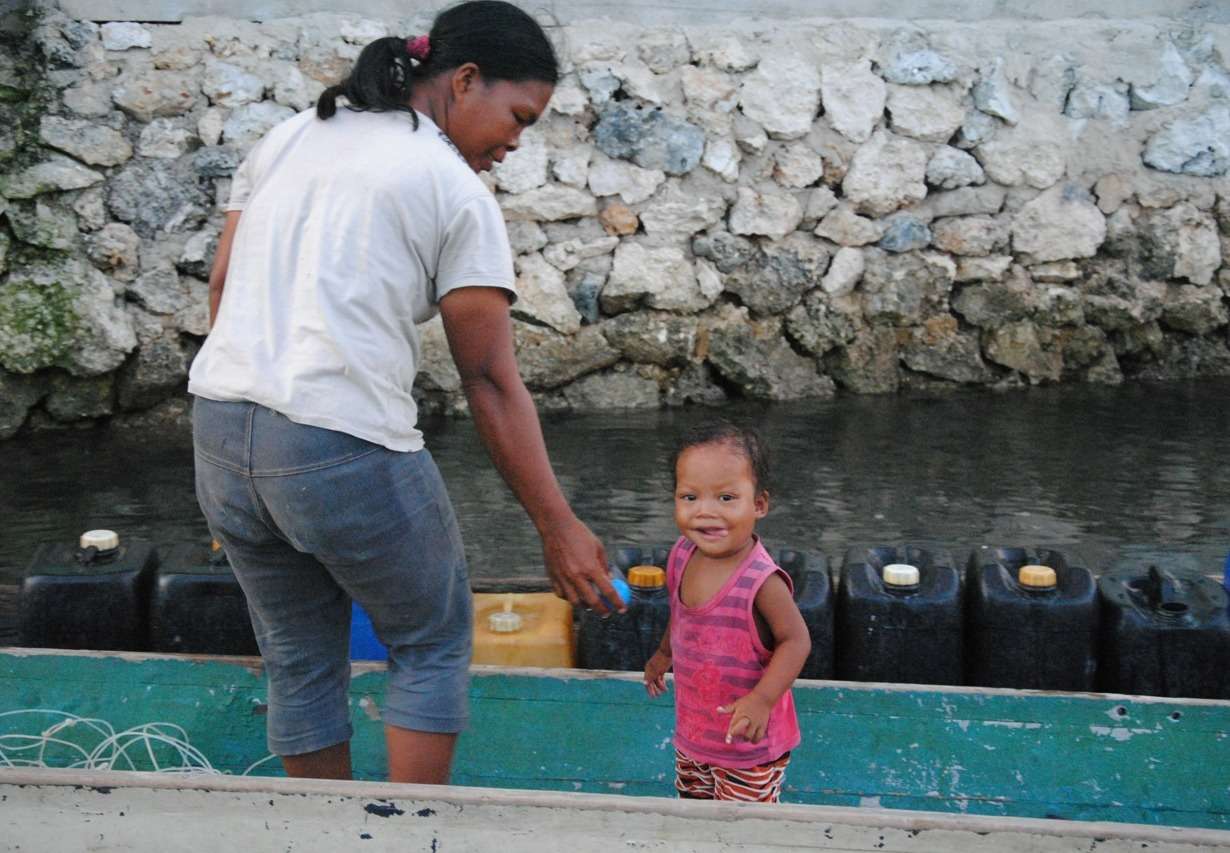
In Mola Raya Village, seawater increasingly inundates residential areas during high tides, particularly during peak flooding periods in February and April.
Saltwater Intrusion and Drought
Many household wells have become brackish as seawater seeps into freshwater sources. At the same time, prolonged dry seasons have led to crop failures, especially for local staples such as maize.
Seagrass Die-Offs
Large areas of seagrass have died as tidal cycles shift. Extended low tides occurring during daylight hours expose seagrass beds to intense solar radiation and heat stress.
The Destruction of “La Togo” Storms
Extreme weather events have become more frequent and intense. The powerful La Togo storms devastated communities in Lamanggau and Patipelong, destroying homes and leaving families to rebuild from ruins.
Changes in marine ecosystems have also affected fisheries, forcing fishers to travel farther offshore in search of increasingly scarce catches.
Only Five Percent Remain in Natural Condition
Beneath Wakatobi’s seemingly tranquil waters, a profound ecological crisis is unfolding.
According to World Bank assessments, Indonesia’s coral reefs are in alarming condition: 41 percent are severely damaged, 29 percent are damaged, and only five percent remain in their natural state.
The El Niño events of 1996 and 1998 triggered extensive coral bleaching across the archipelago. Combined with ocean acidification caused by rising atmospheric CO₂ concentrations, coral reef ecosystems have become increasingly vulnerable.
As ecological balance erodes, the resilience of these underwater ecosystems declines dramatically, reducing their ability to recover from future climate disturbances.
Adapting Through Innovation
Despite growing challenges, Wakatobi’s communities continue to adapt through a combination of traditional knowledge and modern innovation.
Adaptive Housing
Raised stilt houses and floating homes remain essential strategies for coping with tidal flooding. Today, many residents are strengthening these structures with more durable materials such as concrete.
Innovations at Sea
Fishers increasingly install traditional roofing structures on their boats to shield themselves from rising temperatures. Seaweed farmers have also adopted low-cost solutions, including the use of recycled plastic bottles as floating devices.
Farming Between the Rocks
To cope with limited fertile land and prolonged droughts, farmers have diversified their crops by cultivating cassava among rocky terrain—a practical adaptation strategy in dry island environments.
Sustainable Policies
Institutional innovations are also emerging. Low-carbon initiatives on Hoga Island and support for broader Low Carbon City programs demonstrate efforts to integrate climate action into local development planning.
A Call to Action
Climate change is not merely an environmental issue or the responsibility of environmental agencies alone. It is a cross-sector challenge affecting tourism, public health, fisheries, food security, infrastructure, and local economies.
Addressing the crisis requires climate considerations to be embedded in every aspect of development planning and budgeting.
What Can We Do?
Support Local Food Systems
Choose locally produced and organic products whenever possible to reduce carbon emissions associated with transportation and industrial agriculture.
Improve Energy Efficiency
Use energy-efficient lighting and unplug electronic devices when not in use.
Reduce Waste
Apply the principles of Reduce, Reuse, and Recycle, and significantly reduce dependence on single-use plastic bottles.
Choose Greener Transportation
Whenever possible, walk, cycle, use public transportation, or select direct flights to minimize travel-related emissions.
Wakatobi stands as one of the Earth’s most important centers of marine biodiversity. If this oceanic heartland is struggling to breathe under the pressures of climate change, the question for all of us is clear:
What action will we take today before our islands become memories tomorrow?
___
Author: Academic, Halu Oleo University
Editor: Kamaruddin Azis