
MARITIMEPOSTS.COM – For generations, Europe has been celebrated for its mild summers. Visitors flocked to Parisian boulevards, Roman piazzas, and the cafés of Madrid to enjoy warm—but rarely dangerous—weather. Summer was synonymous with festivals, tourism, and outdoor life.
In 2026, that image has been shattered.
Europe is now enduring one of the most severe and widespread heatwaves ever recorded. What began as an intense weather event in Western Europe has rapidly expanded across Central, Eastern, and Southeastern Europe, exposing more than 100 million people to dangerous temperatures while disrupting transportation, healthcare, energy systems, and everyday life.
Scientists warn that this is no ordinary summer. It represents a defining example of how climate change is fundamentally reshaping Europe’s climate.
A Continent Under Extreme Heat
Across much of Europe, thermometers have climbed beyond 40°C (104°F), pushing cities into territory once considered almost unimaginable.
Paris, Madrid, Rome, Budapest, Belgrade, and Bucharest have all experienced extreme temperatures. Parts of Germany and Poland have also endured extraordinary heat, while Germany, France, Denmark, Czechia, Slovakia, Hungary, and Poland have each recorded their hottest June temperatures since modern observations began.
What was once considered a rare meteorological anomaly is becoming increasingly common.
For millions of Europeans, daily routines have become survival strategies. Outdoor work has been restricted, schools have altered schedules, and public health agencies have repeatedly urged residents to remain indoors during the hottest hours of the day.
The Human Cost of Heat
Heat is often called the “silent killer” because its effects unfold quietly.
Unlike floods or earthquakes, extreme heat leaves behind no collapsed buildings or dramatic television images. Yet it claims lives on a remarkable scale.
Public health officials estimate that France alone has recorded approximately 1,000 excess deaths associated with the heatwave, while Spain has reported more than 600. Across Europe, the death toll has surpassed 1,300 people.
The victims are overwhelmingly the most vulnerable—older adults, individuals with chronic illnesses, outdoor laborers, and residents living in poorly insulated housing.
Hospitals throughout the continent have reported sharp increases in emergency admissions involving heat stroke, severe dehydration, cardiovascular complications, and respiratory distress.
The crisis has underscored an uncomfortable reality: extreme heat is now one of Europe’s deadliest natural hazards.
Cities Built for Cold, Not Heat
Ironically, one of Europe’s greatest vulnerabilities lies within its own architecture.
Unlike tropical countries where buildings are designed to release heat and maximize ventilation, much of Europe spent centuries preparing for cold winters rather than scorching summers.
Many homes lack air conditioning. Thick walls and insulation that efficiently retain warmth during winter now trap heat during prolonged summer extremes. Dense concrete neighborhoods create powerful urban heat islands, while high nighttime temperatures—often called “tropical nights”—prevent buildings from cooling after sunset.
In France, roughly half of all homes reportedly lack adequate protection against prolonged extreme heat.
For many residents, nights offer little relief, allowing heat stress to accumulate over consecutive days.
Infrastructure Begins to Fail
Extreme heat is not merely a public health issue—it is becoming an infrastructure crisis.
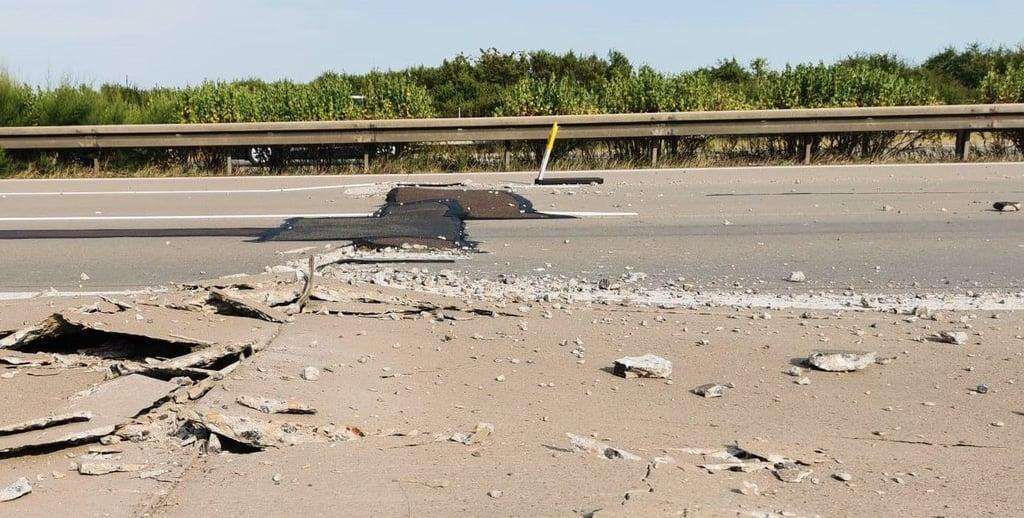
Railway tracks have expanded and buckled under sustained temperatures. Asphalt roads have softened. Electricity demand has surged as cooling systems operate continuously.
Even nuclear power plants have been forced to implement special operating procedures because river water used for cooling reactors has become unusually warm.
Power grids across the continent are facing increasing pressure, including Ukraine’s already damaged electrical network, where wartime vulnerabilities have compounded the effects of extreme weather.
These cascading impacts demonstrate how climate risks ripple across modern society, affecting transportation, energy security, commerce, and public services simultaneously.
When Heat Triggers Other Disasters
The heatwave has not arrived alone.
Across the Mediterranean region, exceptionally dry conditions have dramatically increased wildfire risk, threatening forests, ecosystems, and nearby communities.
Paradoxically, the end of an extreme heat event can also bring new dangers.
As cooler air masses eventually collide with the accumulated hot air, the atmosphere becomes highly unstable, generating violent thunderstorms, destructive winds, flash floods, and hailstorms.
Romania recently experienced this sequence firsthand, suffering deadly storms and flooding immediately after the most intense heat subsided.
The lesson is increasingly clear: climate disasters rarely occur in isolation. One extreme event often sets the stage for another.
Why Won’t the Heat Go Away?
Meteorologists attribute much of the persistence of this heatwave to an atmospheric phenomenon known as an Omega Block.
This weather pattern forms when a powerful high-pressure system becomes trapped between two low-pressure systems, creating a large, stable atmospheric configuration resembling the Greek letter Ω (Omega).
Because the system remains almost stationary for days—or even weeks—cloud formation is suppressed, rainfall becomes scarce, and intense sunshine continues to heat the land day after day.
Instead of returning to seasonal temperatures, entire regions remain trapped beneath an atmospheric dome of heat.
Climate Change Is Changing the Odds
While weather patterns such as Omega Blocks have always existed, scientists emphasize that today’s climate is fundamentally different from that of previous generations.
Research by the World Weather Attribution consortium concludes that an event of this magnitude would have been virtually impossible without human-induced global warming.
The warming atmosphere has raised baseline temperatures, allowing every heatwave to begin from a hotter starting point. Climate change is also increasing the frequency, duration, and intensity of heatwaves while keeping nighttime temperatures unusually high, leaving people and infrastructure with little opportunity to recover.
Researchers estimate that extreme European heatwaves like this are now roughly 100 times more likely than they were only a few decades ago.
This means that what was once considered exceptional is steadily becoming the new normal.
Learning to Live With a Hotter Europe
Governments across Europe have responded by activating emergency heat action plans.
Schools, libraries, and community centers have been converted into cooling shelters. Public swimming pools have extended operating hours. Authorities have issued red-level heat alerts, encouraged residents to avoid outdoor activities during peak temperatures, and organized welfare checks for elderly citizens living alone.
At the same time, cities such as Paris and Barcelona are investing in longer-term adaptation measures, including urban forests, expanded tree canopies, shaded public spaces, green roofs, and dedicated climate shelters designed to protect residents during future heatwaves.
These initiatives reflect an important shift in thinking.
Climate adaptation is no longer optional. It has become a central component of urban planning, public health, and disaster risk reduction.
A Warning for the World
Forecasts suggest that while temperatures in parts of Western Europe are beginning to moderate, the most dangerous heat is now shifting eastward across Central and Eastern Europe, the Balkans, and parts of Ukraine.
Health authorities remain on high alert because heat-related illnesses and fatalities often continue even after air temperatures begin to decline.
The events unfolding across Europe carry significance far beyond the continent itself.
For decades, Europe was viewed as relatively insulated from the most extreme consequences of climate change. That assumption no longer holds.
The 2026 heatwave serves as a powerful reminder that no nation is immune to a warming planet. Wealth, technology, and advanced infrastructure can reduce vulnerability, but they cannot eliminate the risks posed by an increasingly unstable climate.
The question facing societies today is no longer whether climate change will alter daily life. It already has.
The more urgent question is whether governments, cities, and communities can adapt quickly enough to protect lives in a world where extreme heat is becoming not the exception, but the expectation.