
The investigation further indicated that the vessel was heavily overloaded, carrying approximately 17 tons of cargo, four cattle, and a number of passengers believed to exceed those listed on the official manifest. Police are also investigating allegations that the passenger manifest had been manipulated, raising concerns that commercial interests may have been prioritized over passenger safety.
MARITIMEPOSTS.COM – SELAYAR ISLANDS, INDONESIA — Against the vast and unforgiving waters of the Flores Sea, five survivors of the sunken KLM Nurul Salsa have emerged as symbols of resilience, hope, and the extraordinary human instinct to survive.
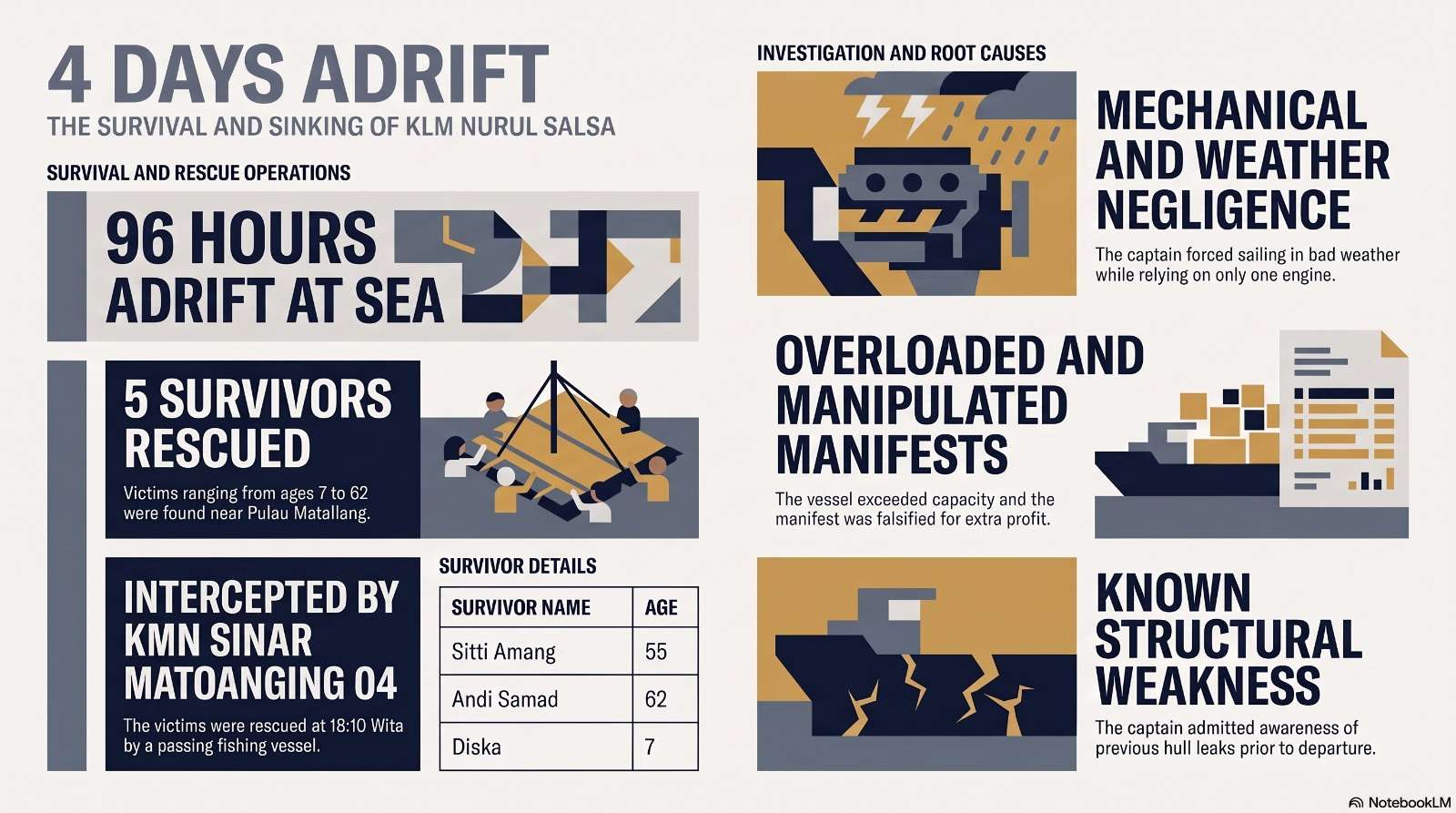
After spending four days drifting at sea, clinging to nothing more than a traditional fishing buoy known locally as a rompong, the group was finally rescued on Saturday, July 18, 2026. Their remarkable survival has become the most inspiring story to emerge from one of South Sulawesi’s worst maritime tragedies in recent years.
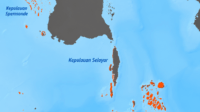
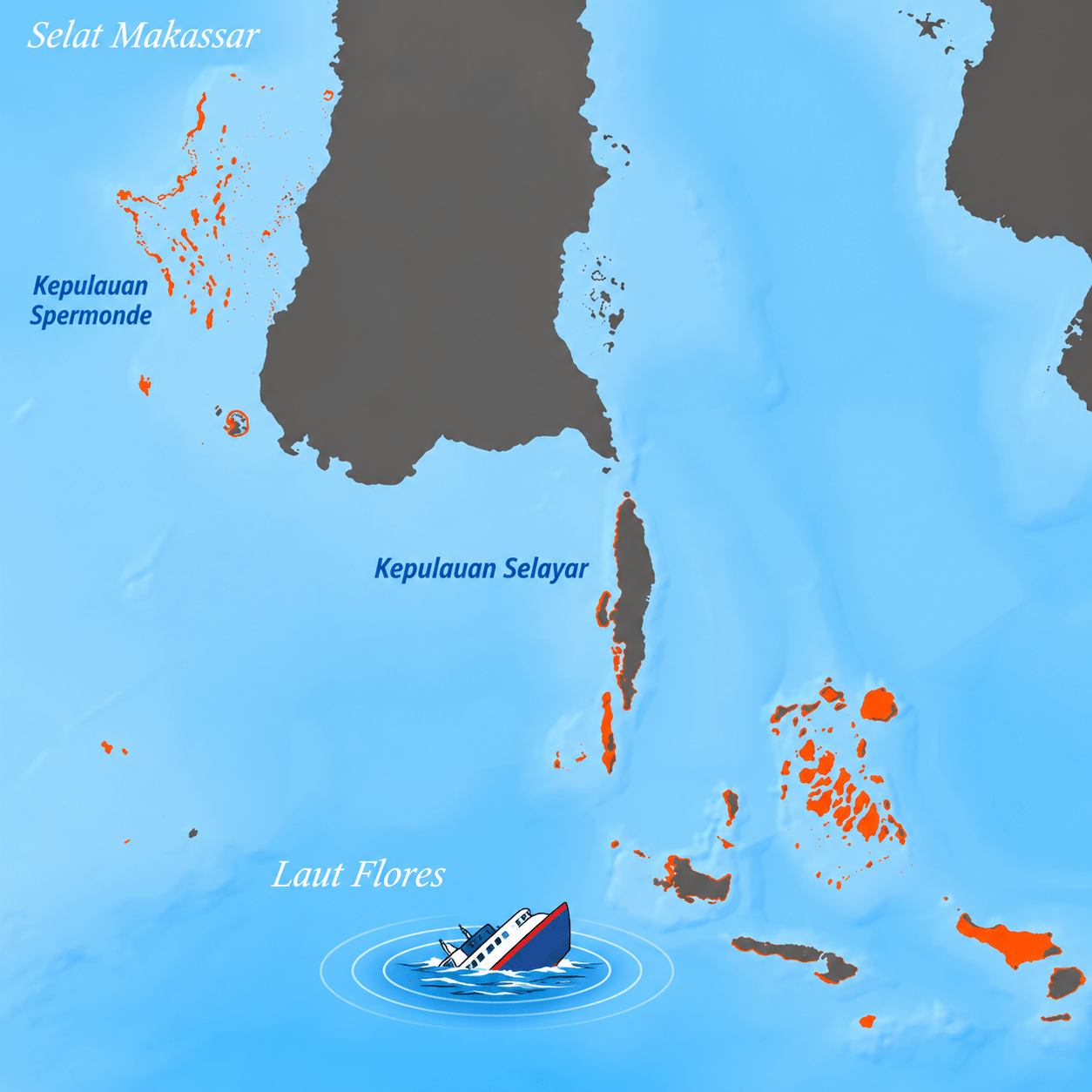
The victims—Sitti Amang (55), Andi Samad (62), Asseng (23), Ardita (17), and seven-year-old Diska—were among dozens of passengers aboard KLM Nurul Salsa when the wooden vessel sank west of Polassi Island in the Selayar Islands Regency.
While rescue teams continue searching for those still missing, the survival of these five passengers offers both hope and important lessons about maritime safety.
Four Days Between Life and Death
The vessel departed from Jampea Island for Benteng Port, Selayar, on the morning of July 15, 2026.
Shortly into the voyage, disaster struck.
Engine failure, combined with rough seas driven by the annual east monsoon, left the vessel powerless against strong waves and currents. Eventually, the boat capsized, throwing passengers into the open sea.
Separated from the wreckage, the five survivors managed to reach a floating rompong, a fish aggregating device commonly used by local fishermen.
That simple wooden structure became their only refuge.
For four days they drifted across the sea, exposed to intense sunlight during the day and cold winds at night. With little protection and limited access to food or fresh water, survival depended on endurance, mutual support, and hope that someone would eventually find them.
Their ordeal finally ended when the crew of KMN Sinar Matoanging 04 spotted the survivors near Matallang Island in Pangkep Regency.
Indonesia’s National Search and Rescue Agency (Basarnas) immediately dispatched KN SAR Kamajaya to intercept the fishing vessel and transfer the survivors for medical treatment.
A Preventable Tragedy
As rescue efforts continued, investigators from the Selayar Islands Police began examining what caused the disaster.
Their findings suggest that the tragedy was not simply the result of bad weather.
According to investigators, several preventable factors contributed to the sinking.
Authorities revealed that the captain admitted he knowingly sailed despite dangerous sea conditions associated with the east monsoon season, when high waves and strong winds are common.
Investigators also found that the vessel was operating with only one functioning engine. Once severe weather developed, the remaining engine lacked sufficient power to keep the boat under control.
The investigation further indicated that the vessel was heavily overloaded, carrying approximately 17 tons of cargo, four cattle, and a number of passengers believed to exceed those listed on the official manifest.
Police are also investigating allegations that the passenger manifest had been manipulated, raising concerns that commercial interests may have been prioritized over passenger safety.
Lessons for Indonesia’s Maritime Sector
The sinking of KLM Nurul Salsa has once again highlighted longstanding challenges facing inter-island transportation in Indonesia.
Maritime experts say several reforms are essential to reduce the risk of similar accidents. First, authorities need stricter enforcement of passenger and cargo manifests through physical inspections before departure.
Second, vessels with known mechanical deficiencies should not be allowed to sail until repairs are completed.
Third, port authorities should be empowered to suspend departures during periods of extreme weather, particularly during seasonal monsoons when sea conditions can deteriorate rapidly.
Fourth, every passenger vessel—especially small wooden boats operating between islands—should carry sufficient life-saving equipment, including standardized life jackets and emergency flotation devices.
Finally, continued investment in advanced search-and-rescue technology, including ocean current modeling, satellite data, drones, and weather forecasting, will improve the effectiveness of future rescue operations.
Hope Amid Tragedy
Although the fate of many passengers remains unknown, the survival of these five individuals serves as a powerful reminder that hope can endure even in the harshest conditions.
Their story is not only one of extraordinary courage but also a call for greater accountability in Indonesia’s maritime transport system.
Sometimes, survival is a miracle.
Preventing the next tragedy, however, depends not on miracles—but on stronger safety standards, responsible decision-making, and a commitment to ensuring that every journey at sea begins and ends safely.
___
The editorial team