
The departure of every passenger vessel—particularly wooden vessels serving remote islands—should involve routine verification of passenger manifests, cargo weight, vessel stability, engine readiness, availability of life-saving equipment; and current weather and sea-state conditions.
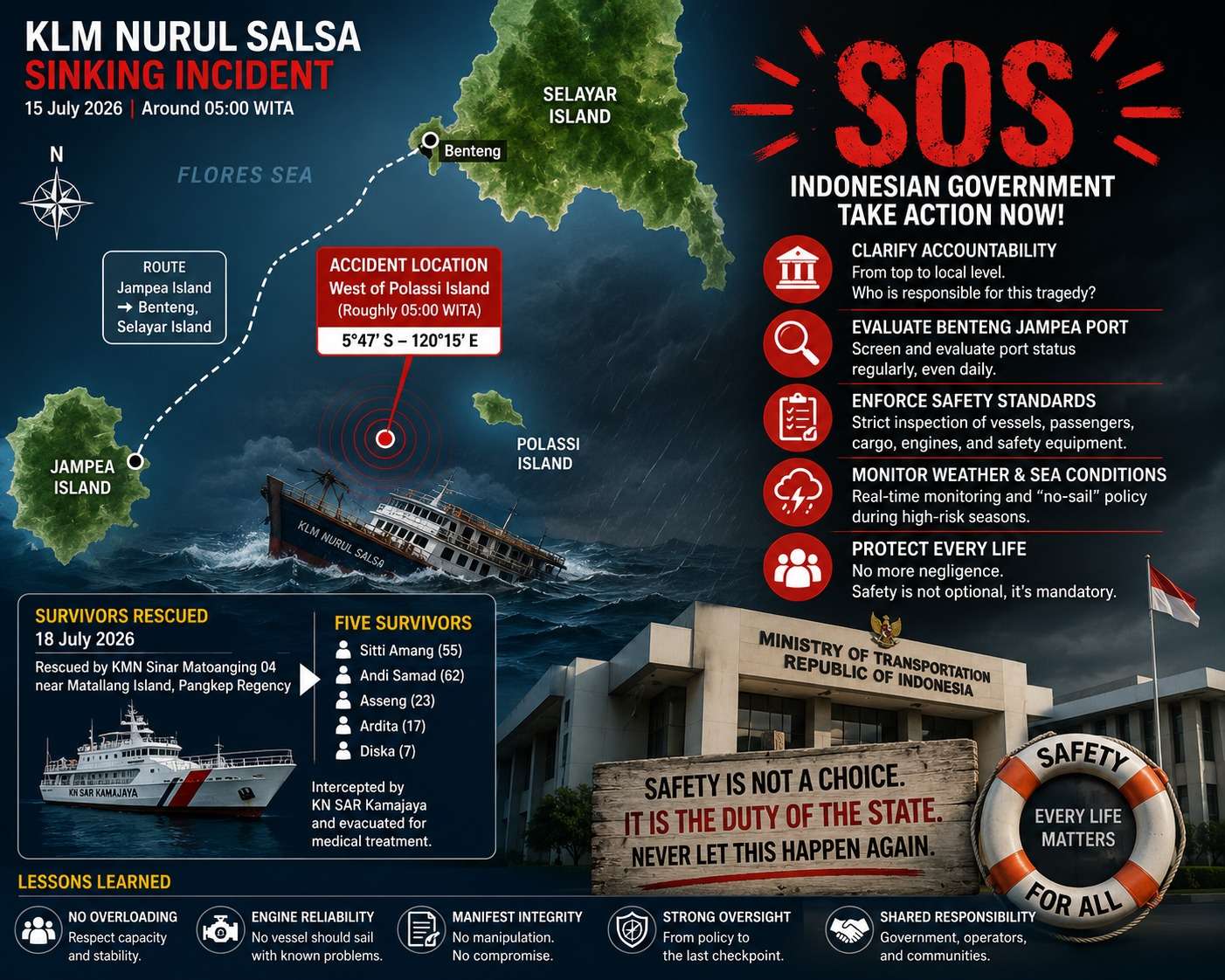
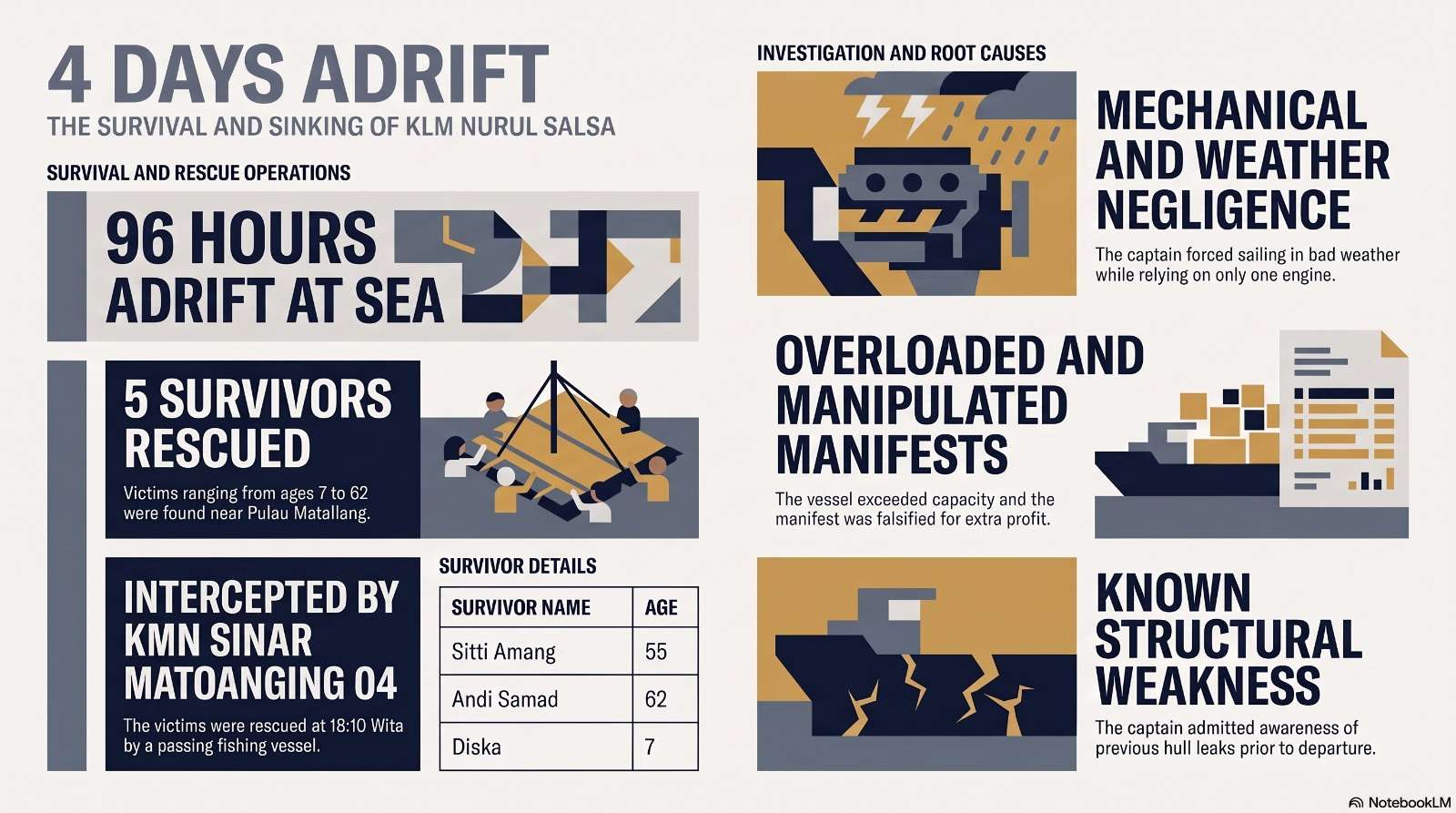
MARITIMEPOSTS.COM – The remarkable survival of five passengers who drifted for four days at sea after the sinking of KLM Nurul Salsa has inspired the nation. Their rescue is a testament to courage, resilience, and the professionalism of Indonesia’s search-and-rescue teams.
But miracles should never become a substitute for accountability.
As rescue operations continue and investigators examine the circumstances surrounding the disaster, attention must now shift from what happened at sea to what happened before the vessel ever left port.
If preliminary findings are confirmed—including reports of engine problems, alleged overloading, possible discrepancies in the passenger manifest, and departure during hazardous weather—then this tragedy was not solely the result of nature. It may also reflect failures in the maritime safety system.
Accountability Cannot Stop with the Captain
The ongoing police investigation into the captain and crew is an important first step. However, maritime safety is built on multiple layers of oversight.
The Ministry of Transportation, through its Directorate General of Sea Transportation and its regional offices, should provide a transparent explanation of the chain of responsibility surrounding this voyage.
Among the questions that deserve public answers are: Was the vessel certified as seaworthy before departure? Who conducted and documented the final inspection? Was the reported engine condition known before sailing?
Were passenger numbers and cargo physically verified against the manifest? Who authorized the vessel’s departure despite deteriorating weather conditions? Which officials were responsible for supervision at Benteng Jampea and Benteng Selayar ports?
These questions concern institutional accountability, not only individual responsibility. Small inter-island ports are lifelines for communities across Indonesia. Yet they must not become blind spots in maritime governance.
The departure of every passenger vessel—particularly wooden vessels serving remote islands—should involve routine verification of passenger manifests, cargo weight, vessel stability, engine readiness, availability of life-saving equipment; and current weather and sea-state conditions.
If any of these requirements are not met, departure should simply not be permitted. Safety decisions must never be influenced by commercial pressure or operational convenience.
Benteng Jampea Port Must Be Evaluated
The KLM Nurul Salsa tragedy should prompt an immediate operational review of Benteng Jampea Port, the vessel’s point of departure.
The Ministry of Transportation should conduct a comprehensive audit covering: port management procedures, inspection protocols, manifest verification systems, communication between Syahbandar officials and vessel operators, weather-risk management; and emergency preparedness.
The review should determine whether current procedures are adequate and consistently implemented, and whether improvements are needed to strengthen safety oversight.
Safety Oversight Must Be Continuous
Ports serving island communities operate in environments where weather conditions can change rapidly.
For that reason, supervision should not rely solely on periodic administrative reviews. Operational monitoring should be continuous, with routine checks before every sailing and heightened vigilance during high-risk seasons such as the east monsoon.
Digital passenger manifests, cargo verification, weather alerts, and vessel inspection records should be integrated into a system that enables supervisors to identify potential risks before departure.
A National Lesson
Indonesia is the world’s largest archipelagic nation, with more than 17,000 islands connected by thousands of passenger vessels every day. This geography makes maritime transport indispensable—but it also makes maritime safety non-negotiable.
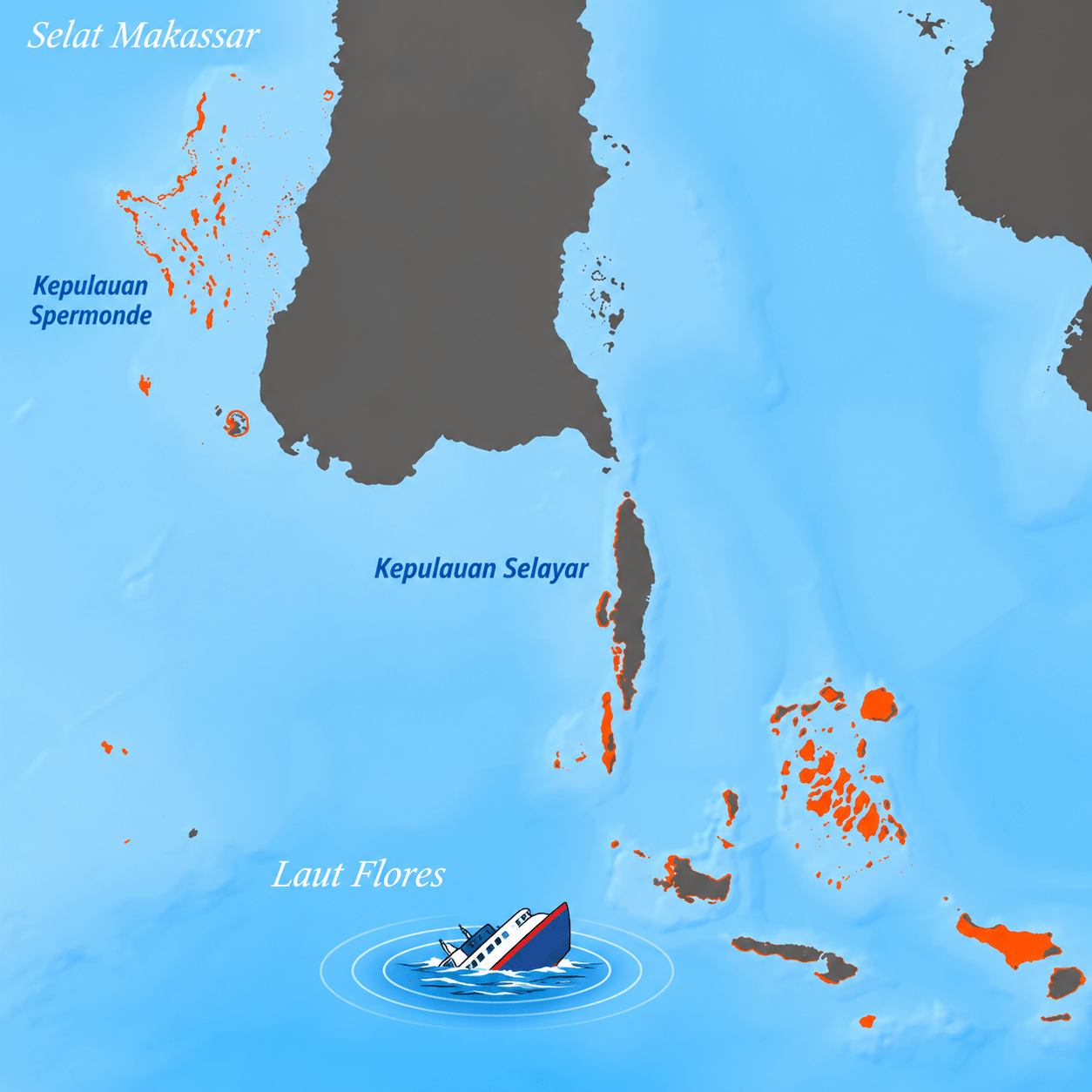
According to authorities, the KLM Nurul Salsa departed from Jampea Island before experiencing engine failure approximately 43 nautical miles from its destination. Search efforts have involved Basarnas, the Indonesian Navy, local fishermen, and other agencies operating in difficult sea conditions.
The rescue operation has demonstrated the dedication of Indonesia’s emergency responders. The next challenge belongs to policymakers.
The Ministry of Transportation now has an opportunity—and a responsibility—to reassure the public that every level of maritime oversight, from headquarters to regional offices and local port authorities, is functioning as intended.
If weaknesses are identified, they should be addressed transparently and without delay. Because every maritime tragedy should strengthen Indonesia’s safety system, because no family boarding a ferry or wooden passenger vessel should have to depend on a miracle to reach home safely.
(MP)