
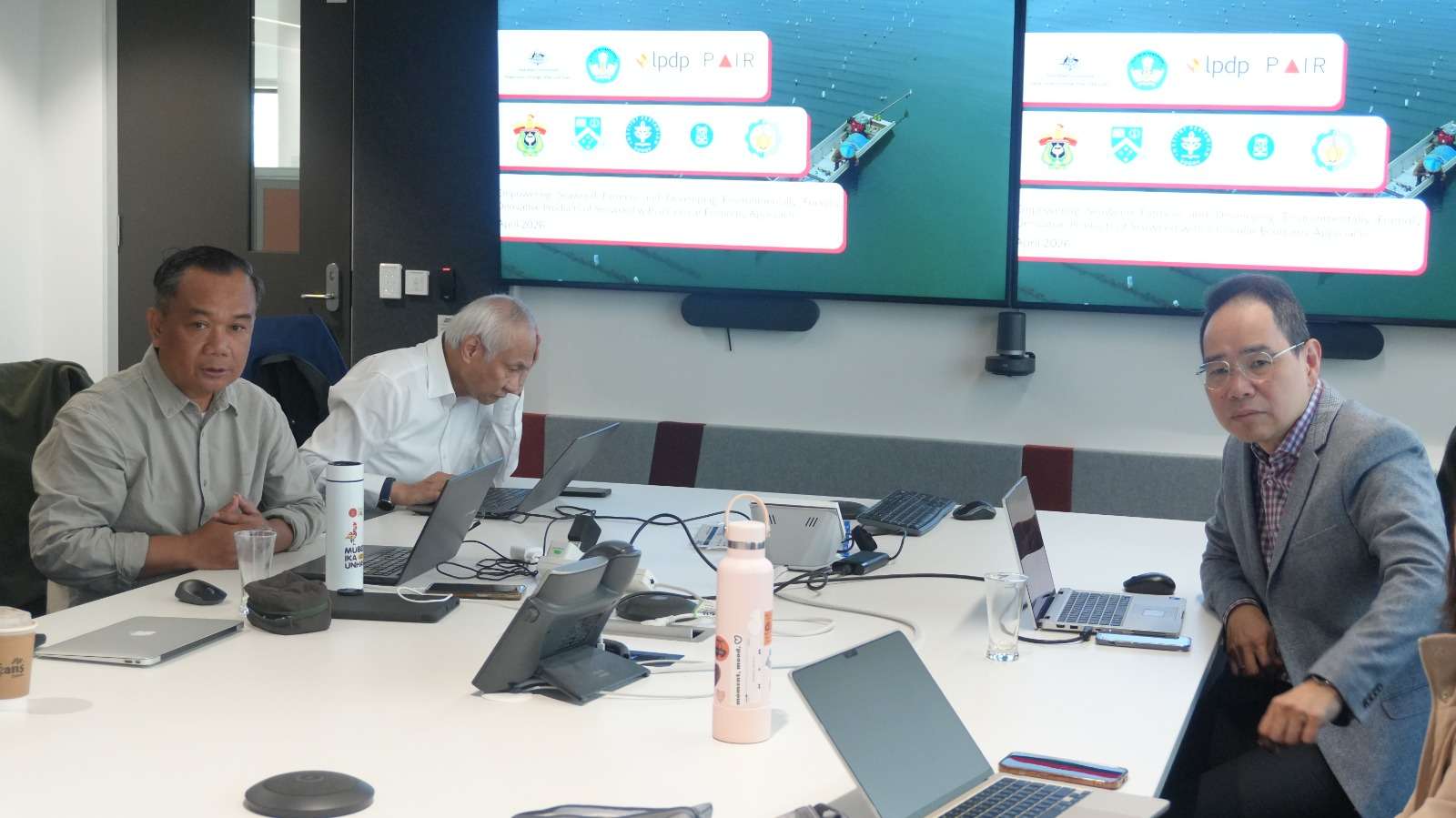
Panel discussions throughout the meeting will explore: sustainable seaweed industry development, clean energy transition, climate change and health, circular economy innovation, research impact, science-informed policymaking, Australia-Indonesia research collaboration.
MARITIMEPOSTS.COM – MAKASSAR — For four days in July, Makassar will become the meeting point of some of the brightest researchers, policymakers, government leaders, development practitioners, and industry representatives from Indonesia and Australia.
Hosted by Hasanuddin University (UNHAS), the Partnership for Australia-Indonesia Research (PAIR) Annual Meeting 2026 is more than an academic conference—it is a collaborative platform designed to transform research into practical solutions for some of the most pressing challenges facing Indonesia’s coastal communities.
Taking place from 20–23 July 2026 at UNHAS Hotel & Convention and the Hasanuddin University campus, the annual meeting highlights how scientific evidence can shape public policy while strengthening long-term partnerships between universities, governments, industries, and local communities across eastern Indonesia.
From Scientific Discovery to Public Policy
Unlike conventional research conferences that primarily showcase completed studies, PAIR Annual Meeting emphasizes the entire pathway from science to policy.
Researchers are expected not only to present findings but also to engage directly with policymakers, government agencies, industry associations, and development partners to ensure research recommendations are practical, evidence-based, and capable of influencing decision-making.
The meeting represents one of the flagship collaborations supported by the Australia-Indonesia Centre (AIC) together with Indonesian and Australian universities, focusing on generating solutions that respond to regional priorities.
Throughout the summit, participants will discuss how research can strengthen environmental governance, improve healthcare systems, accelerate clean energy transitions, and support resilient coastal livelihoods.
Four Days of Collaboration
The meeting begins on 20 July with the arrival of delegates and a closed Australia-Indonesia Centre Partner University Leaders Forum, bringing together university leaders to strengthen institutional cooperation between Indonesian and Australian higher education institutions.
The official opening on 21 July will feature welcoming remarks from Universitas Hasanuddin Rector Professor Jamaluddin Jompa and Australia-Indonesia Centre Executive Director Boyd Whalan, followed by addresses from senior representatives of Australia’s Department of Foreign Affairs and Trade (DFAT), Indonesia’s Ministry of Higher Education, LPDP, provincial governments, and the Australian Consulate-General in Makassar.
The opening day will also include keynote addresses and high-level discussions highlighting how collaborative research supports Indonesia’s development agenda and Australia’s commitment to regional partnerships.
Three Strategic Themes for Coastal Indonesia
The intellectual heart of PAIR Annual Meeting revolves around three interconnected research themes that directly affect millions of people living in coastal regions.
Building a Sustainable Seaweed Economy
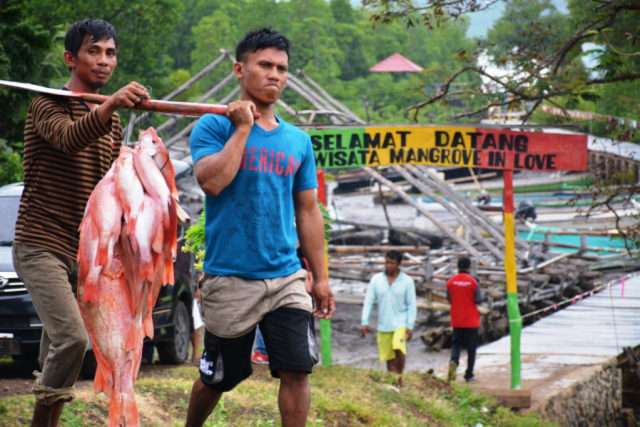
One of Indonesia’s largest marine commodities, seaweed represents enormous economic opportunities but also faces challenges related to productivity, governance, processing technology, and environmental sustainability.
Experts from universities, the Ministry of Marine Affairs and Fisheries, provincial governments, and seaweed industry associations will discuss how research can improve seedstock quality, promote circular bioeconomy approaches, reduce plastic pollution in seaweed farming, strengthen governance systems, and integrate geospatial information for evidence-based aquaculture management.
Rather than focusing solely on increasing production, discussions will examine how Indonesia can create a circular seaweed economy where environmental sustainability and economic growth reinforce each other.
Accelerating the Net-Zero Energy Transition in Healthcare
Another major focus explores how healthcare facilities can reduce carbon emissions while becoming more resilient to climate change.
Researchers will present studies on climate-resilient coastal health centres, policy integration for green healthcare systems, financing mechanisms for low-carbon healthcare, non-medical waste management, and community participation in supporting net-zero healthcare facilities.
These discussions reflect Indonesia’s growing commitment to climate action while ensuring health services remain accessible, efficient, and environmentally sustainable.
Climate Change and Public Health
Climate change increasingly influences disease outbreaks, food security, water quality, and vulnerable populations. Recognising these challenges, the third policy forum examines the intersection between climate and health.
Researchers will present evidence on strengthening climate-resilient health systems, adaptive social protection, dengue and diarrhoea prevention, institutional climate adaptation policies, and capacity building for sexual and reproductive health in vulnerable coastal communities.
The forum aims to identify policy recommendations that enable local governments to integrate climate adaptation into everyday public health planning.
High-Level Dialogue Across Sectors
Beyond research presentations, PAIR Annual Meeting serves as a unique platform where ministers, governors, mayors, international development agencies, researchers, industry leaders, and civil society organisations engage in direct dialogue.
Panel discussions throughout the meeting will explore: sustainable seaweed industry development, clean energy transition, climate change and health, circular economy innovation, research impact, science-informed policymaking, Australia-Indonesia research collaboration.
The diversity of speakers—from university researchers to governors, mayors, ministry officials, and international organisations—reflects the summit’s multidisciplinary character.
Research Designed for Impact
A distinguishing feature of PAIR Annual Meeting is its emphasis on Policy Briefs rather than academic publications alone.
During the second day of policy forums, researchers will present draft policy briefs to government agencies and implementation partners, seeking detailed feedback before finalisation.
These sessions are designed to ensure that scientific findings translate into realistic recommendations that can be adopted by provincial governments, ministries, and development partners.
Participants will also determine research priorities for the second year of the PAIR program, ensuring future studies remain responsive to stakeholder needs.
Strengthening Australia–Indonesia Partnerships
The annual meeting also demonstrates the growing maturity of Australia-Indonesia cooperation in higher education and research.
Supported by the Australia-Indonesia Centre, the initiative brings together universities from both countries with government institutions, industry, and local communities to co-produce knowledge that addresses shared regional challenges.
Rather than transferring knowledge in one direction, the partnership encourages mutual learning, joint research, and collaborative innovation grounded in local realities.
Beyond the Conference Room
Networking remains a central component of PAIR Annual Meeting.
Dedicated cross-disciplinary networking sessions will connect researchers with government agencies, industry representatives, and impact partners to encourage new collaborations.
A closed Research Advisory Panel meeting will review research progress and future directions, while the final day includes project team meetings, a closing ceremony featuring reflections on Australia-Indonesia climate cooperation, and a cultural excursion to Fort Rotterdam, La Galigo Museum, and Losari Beach, providing international delegates with opportunities to experience South Sulawesi’s rich cultural heritage.
Positioning Makassar as a Regional Knowledge Hub
Hosting PAIR Annual Meeting 2026 reinforces Makassar’s role as a strategic centre for research and innovation in eastern Indonesia.
With Hasanuddin University serving as the host institution, the city becomes a venue where international partnerships generate locally relevant solutions—from seaweed farming and healthcare transformation to climate resilience and clean energy.
Ultimately, PAIR Annual Meeting 2026 is not simply about presenting research findings.
It is about ensuring that scientific knowledge reaches decision-makers, informs public policy, empowers communities, and contributes to building a more resilient, sustainable, and inclusive future for Coastal Sulawesi and beyond.
___
Edited by Kamaruddin Azis, participant of Climate Reporting Workshop in Melbourne, 1-4 May 2026, organized by Monasch Clicomm and Australian-Indonesia Center.