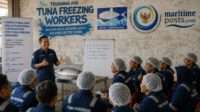

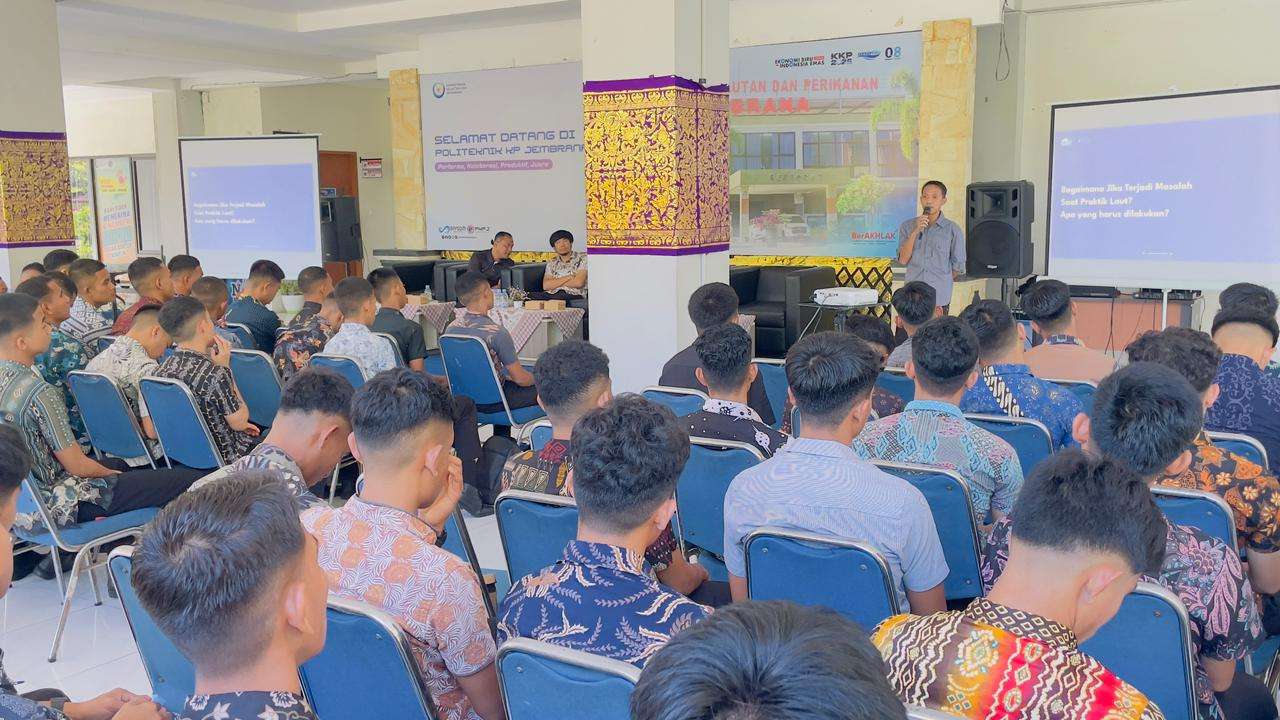
The activity aimed to increase cadets’ knowledge and awareness of occupational risks aboard fishing vessels, the importance of occupational safety and health (OSH), and the protection of fisheries workers.
MARITIMEPOSTS.COM – DFW Indonesia once again conducted a Socialization Program on Occupational Risk Awareness and Fisheries Worker Protection for cadets of the Jembrana Marine and Fisheries Polytechnic (Poltek KP Jembrana), Bali.
The activity is part of the NFC Goes to School program, an educational initiative targeting students of Marine and Fisheries Vocational High Schools and cadets of marine and fisheries vocational higher education institutions as future workers in the fisheries sector.
Previously, NFC Goes to School had been implemented in various marine and fisheries vocational schools in Central Java and Bitung, North Sulawesi, including SMK IRMA Perikanan, SMK Negeri 3 Tegal, SMK Baruna Petarukan, SMK SUPM Al Ma’arif, SMK SUPM Yamipura, SUPM Negeri Tegal, SMK Negeri 1 Gebang, SMK Wira Bahari, SMK Negeri 1 Mundu, and the Marine and Fisheries Polytechnic of Bitung.
Following positive responses from students and educators, the program was brought to Poltek KP Jembrana to further enhance young people’s understanding of employment conditions in the fisheries sector.
The activity aimed to increase cadets’ knowledge and awareness of occupational risks aboard fishing vessels, the importance of occupational safety and health (OSH), and the protection of fisheries workers.
It also sought to strengthen the cadets’ capacity and preparedness before undertaking their Sea Work Practice (PKL), enabling them to understand working conditions, identify potential risks, and recognize their rights and responsibilities as fisheries workers.
With this knowledge, the cadets are expected to undertake their sea-based internships with greater preparedness, confidence, and safety while being able to protect themselves and uphold their rights in the fisheries industry.
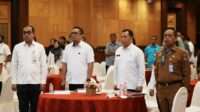
The event was officially opened by Dr. Mohsan Abrori, S.Pi., M.Si., Vice Director II of Poltek KP Jembrana, representing the Director of the institution.
In his remarks, he expressed appreciation for the program, noting its relevance as preparation for cadets before entering the workforce or participating in sea work practice programs.
“Cadets need to understand not only the technical aspects of working in the fisheries sector but also their rights as workers. This knowledge is essential to ensure they can work safely, professionally, and with adequate protection. This is particularly important for cadets who will soon undertake Sea Work Practice, where understanding occupational risks, workplace safety and health, and fisheries worker protection is crucial,” he said.
He also expressed hope that similar educational initiatives would continue in the future.
“We hope that cooperation and activities like this can continue so that more male and female cadets gain a comprehensive understanding of the fisheries workplace,” he added.
A welcoming speech was also delivered by Laode Hardiani, Senior Program Officer of DFW-Indonesia, who emphasized that early education is a critical step in developing fisheries workers who understand both their rights and responsibilities.
“Through the NFC Goes to School program, DFW-Indonesia aims to ensure that young people understand occupational risks, safety measures, and protection mechanisms for fisheries workers. This knowledge will help them avoid harmful practices and potential human rights violations,” she explained.
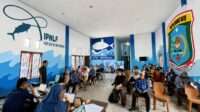
The program continued with presentations on occupational risks in the fisheries sector, workers’ rights, occupational safety and health, and measures to prevent human trafficking and forced labor aboard fishing vessels. The session was highly interactive, featuring discussions and question-and-answer exchanges.
Cadets were also introduced to the National Fisher Center (NFC) by Arif, Coordinator of NFC Indonesia.
He explained the role of NFC as a service center for fisheries workers, providing information, assistance, complaint mechanisms, and access to protection services for Indonesian fishing vessel crews.
Representing the Harbormaster Office of PPN Pengambengan, Ali Wardana highlighted the importance of mental resilience for those pursuing careers at sea.
“Cadets, as future ship officers, must possess strong character and mental resilience. Understanding regulations and occupational safety is essential preparation for working aboard vessels,” he stated.
He also emphasized the importance of coordination between educational institutions and harbor authorities in placing cadets for Sea Work Practice to ensure compliance with established procedures.
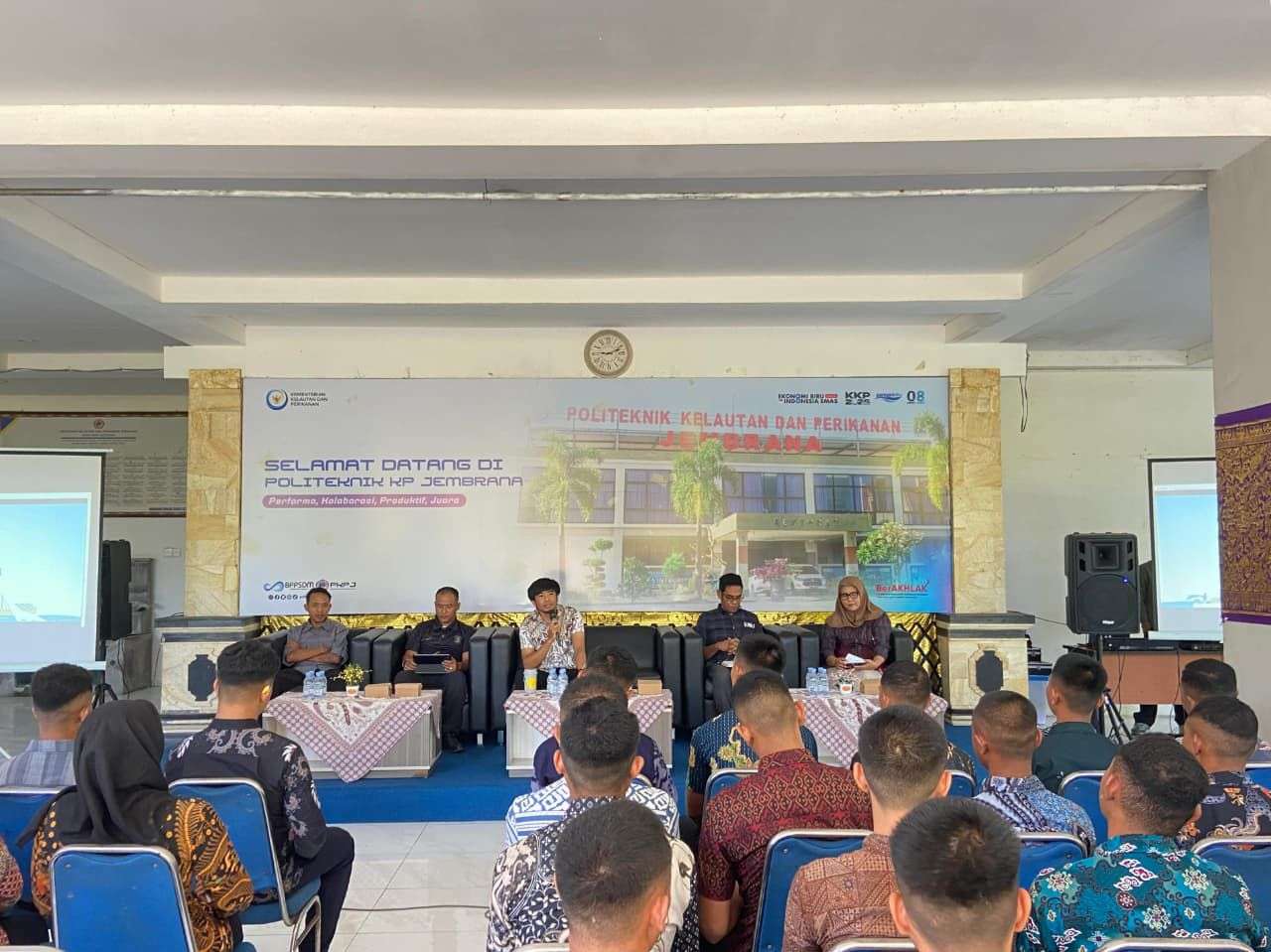
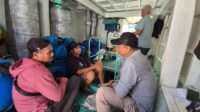
The session was followed by a sharing session from Guntur Prabowo, a fisheries crew member who had previously experienced violations of fisheries workers’ rights. He is currently active in advocating for workers’ rights through the Forum Solidaritas Pekerja Perikanan Nusantara (FSP2B) in Benoa.
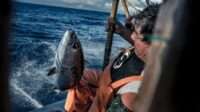
In his testimony, Guntur described the working conditions he had experienced, including various labor rights violations aboard fishing vessels.
He also explained the role of DFW-Indonesia and NFC in providing assistance and support throughout the resolution of his case.
His experience provided cadets with a real-life perspective on the challenges faced by fisheries workers and underscored the importance of understanding labor rights and self-protection measures at sea.
Through this activity, DFW-Indonesia hopes that Poltek KP Jembrana cadets will become a new generation of fisheries workers who are professional, ethical, aware of their rights, and capable of contributing to a sustainable, safe, and exploitation-free fisheries sector.
The event was attended by approximately 100 cadets from the Capture Fisheries Department across first, second, and third-year levels, along with lecturers and officers from the Harbormaster Office of PPN Pengambengan.