
PELAKITA.ID – The future of global prosperity may not lie in the skies above us or beneath the earth’s crust, but in the vast blue expanse that covers more than 70 percent of our planet.
As the world’s population moves toward unprecedented levels and demand for food, energy, and natural resources continues to rise, the ocean has become the next great frontier of economic development. Yet it is also one of humanity’s most vulnerable life-support systems.
For decades, nations treated the sea as an inexhaustible reservoir of wealth—a place where fish stocks could be harvested indefinitely, shipping routes expanded endlessly, and marine resources extracted with little regard for ecological consequences. That assumption is now colliding with reality.
Illegal fishing, habitat destruction, marine pollution, and climate change are placing extraordinary pressure on ocean ecosystems worldwide. The challenge facing policymakers today is no longer whether economic growth can be achieved from the ocean, but whether that growth can occur without undermining the very ecosystems that make it possible.
This dilemma is driving a profound shift in maritime governance. Increasingly, countries are embracing a new principle: economic development must be guided by science rather than short-term political calculations.
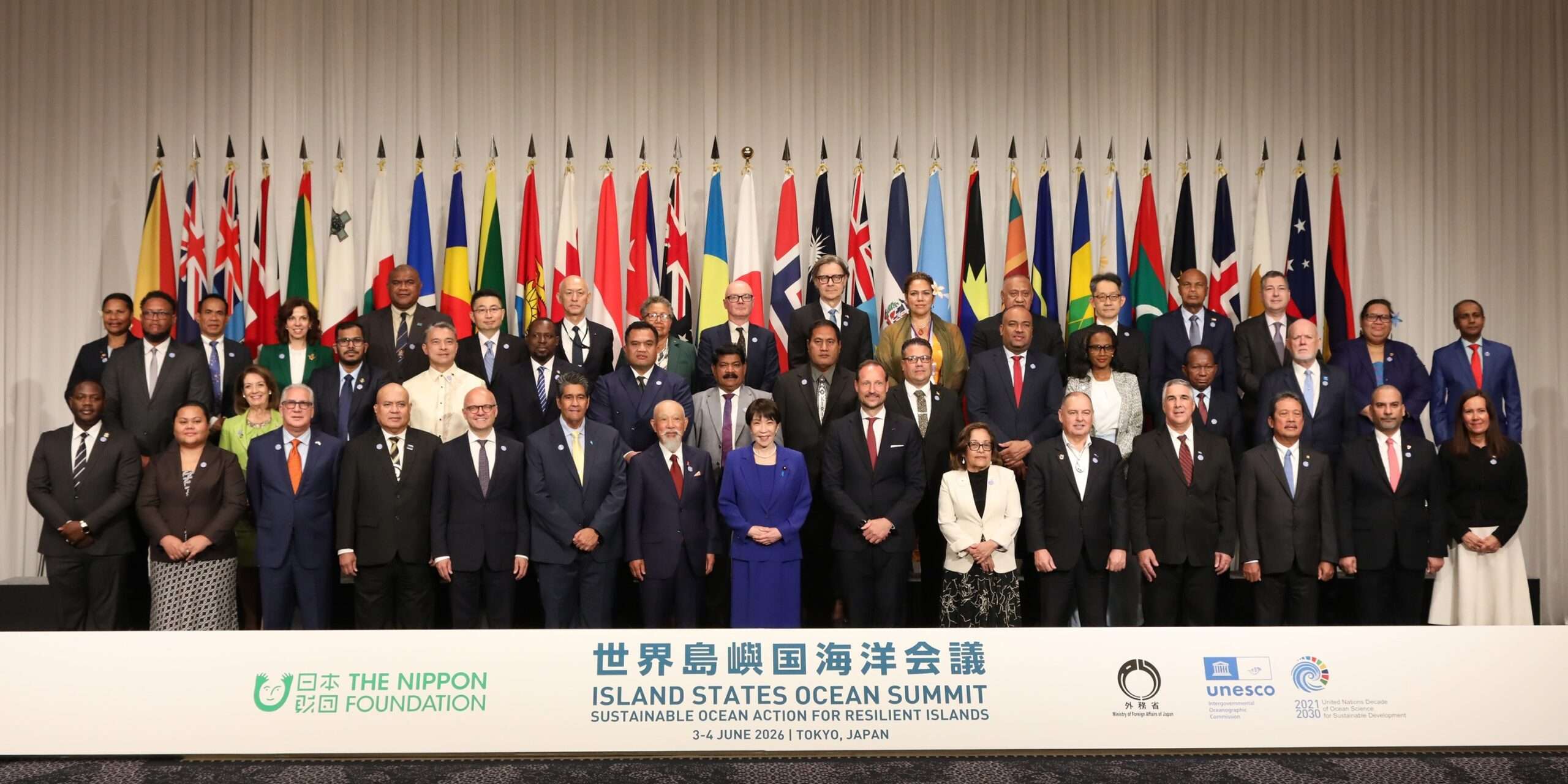
At the Island States Ocean Summit (ISOS) 2026 in Tokyo, Indonesia emerged as one of the strongest advocates for this transformation, promoting Sustainable Ocean Planning and Management (SOPM) as a new global framework for ocean governance.
At its core, SOPM represents a departure from reactive policymaking toward a system grounded in scientific evidence, ecosystem monitoring, and long-term planning. The approach recognizes that sustainable development cannot be achieved through guesswork. Instead, governments must understand the ecological limits of marine systems and align economic activities with those boundaries.
This shift has implications far beyond environmental protection. In today’s investment landscape, transparency and predictability are essential. Investors increasingly seek measurable indicators of sustainability before committing capital. Science-based maritime governance provides precisely that.
Reliable ecological data, transparent management systems, and measurable sustainability targets reduce uncertainty and help transform the Blue Economy from a high-risk frontier into a stable and investable sector.
Indonesia’s vision for this transition is embodied in what it calls the Five Blue Economy Pillars, a comprehensive strategy designed to balance economic growth with ecological resilience.
The first pillar focuses on expanding marine conservation areas to protect biodiversity and safeguard critical ecosystems. These protected regions function as biological reservoirs that support fisheries, preserve habitats, and strengthen ecosystem resilience.
The second pillar introduces quota-based measured fishing, replacing unsustainable extraction practices with science-driven management systems that align harvesting levels with the regenerative capacity of fish stocks.
The third pillar emphasizes sustainable aquaculture development. As global demand for seafood continues to increase, responsible aquaculture offers a viable solution for expanding food production while reducing pressure on wild fish populations.
The fourth pillar centers on integrated coastal management, recognizing that coastlines are among the most productive and vulnerable ecosystems on Earth. Healthy mangroves, estuaries, and coastal habitats serve as nurseries for marine species, natural buffers against storms, and significant carbon sinks.
The fifth pillar addresses marine debris and waste management, aiming to reduce pollution through prevention, innovation, and improved waste handling systems.
Together, these pillars form a unified strategy rather than a collection of isolated initiatives. Sustainable aquaculture, for example, cannot succeed without healthy coastal ecosystems. Effective fishing quotas depend on robust conservation measures. Pollution control strengthens both fisheries and tourism. The framework acknowledges that every component of the marine economy is interconnected.
The significance of this approach extends beyond Indonesia’s national interests. Ocean governance is increasingly recognized as a global responsibility.
Marine ecosystems transcend political borders, and environmental degradation in one region often has consequences far beyond its point of origin.
As a member of the High Level Panel for a Sustainable Ocean Economy, Indonesia has consistently argued that the protection of marine ecosystems should be viewed as a shared international obligation. The health of the ocean underpins food security, climate regulation, biodiversity preservation, and economic stability for billions of people worldwide.
The urgency of this message is reflected in growing concerns over illegal, unreported, and unregulated fishing, as well as destructive practices that threaten marine ecosystems across multiple regions.
These challenges cannot be addressed by individual nations acting alone. They require coordinated policies, shared financing mechanisms, and collective political commitment.
Yet sound policy alone is not enough. One of the greatest obstacles to sustainable ocean governance remains the gap between ambition and investment. Many island and coastal nations possess innovative ideas and strong conservation commitments but lack the financial resources necessary to implement them at scale.
Recognizing this challenge, Indonesia is positioning the Ocean Impact Summit (OIS) 2026 in Bali as a platform to connect policy frameworks with investment capital. The summit aims to mobilize practical solutions and create pathways for fair and equitable financing that can help nations implement science-based ocean management strategies.
This focus on financing may prove to be one of the most important developments in the evolution of the Blue Economy. Without investment, sustainability remains a concept. With investment, it becomes infrastructure, technology, jobs, innovation, and measurable environmental outcomes.
Ultimately, the debate over ocean governance reflects a broader question about humanity’s relationship with nature. The traditional model viewed the ocean as a resource to be consumed.
The emerging model sees it as a regenerative asset capable of producing long-term economic and environmental returns when managed responsibly.
The choice before the world is becoming increasingly clear. We can continue pursuing short-term gains that erode the natural systems upon which prosperity depends, or we can invest in a science-based framework that allows both ecosystems and economies to thrive.
As nations prepare for the Ocean Impact Summit in Bali, the most important question is no longer whether the world can afford to protect the ocean. The real question is whether it can afford the consequences of failing to do so.
In the twenty-first century, science-based ocean governance is not merely an environmental strategy. It is becoming the new gold standard for economic resilience, investor confidence, and sustainable prosperity in an increasingly uncertain world.
This version is written in the style of an international policy magazine such as The Diplomat, Foreign Policy, Project Syndicate, or The Economist‘s analytical features.