
Through a series of village-level dissemination meetings, the data were discussed with village governments, customary leaders, women’s groups, fisher groups, district authorities, the BLUD management agency, and local government representatives.
MARITIMEPOSTS.COM – WAISAI, Southwest Papua, June 17, 2026 – One year of fisheries monitoring through the Crew Operated Data Recording System (CODRS) in the Raja Ampat Marine Protected Area (MPA), Area V Kofiau-Boo, has now become a key foundation for fisheries management and the development of community-based partnerships in the region.
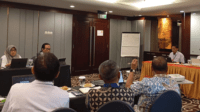
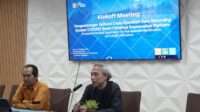
This conclusion emerged during the dissemination of CODRS findings and the evaluation of the Cooperation Agreement between Yayasan Konservasi Alam Nusantara (YKAN) and the Regional Public Service Agency (BLUD) Technical Management Unit for Raja Ampat Marine Protected Areas (UPTD KKP Raja Ampat), held in Waisai, Raja Ampat, Southwest Papua, on June 9–10, 2026.
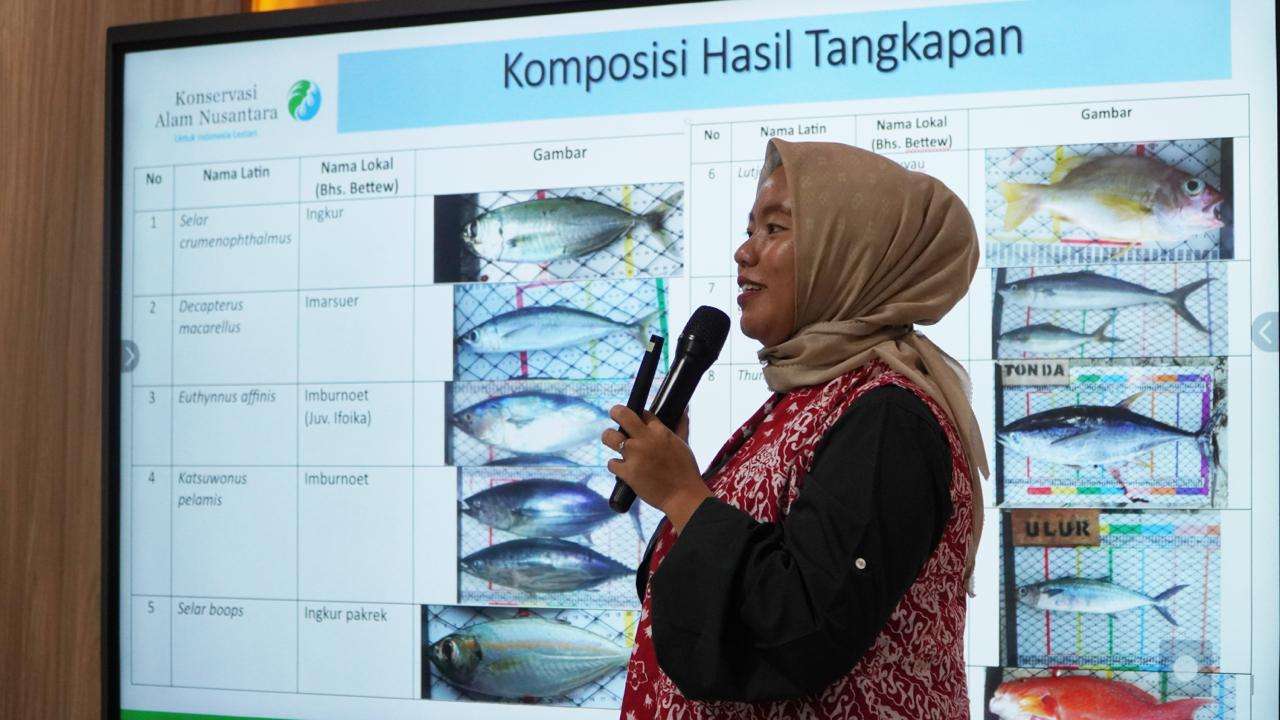
Over the past year, the CODRS approach has directly engaged fishers in recording catch data, fish sizes, fishing locations, and other fishing activities. The information collected was then analyzed to provide a comprehensive picture of fisheries conditions in Kofiau-Boo.
The findings have served as the basis for developing adaptive, evidence-based fisheries management recommendations while incorporating local knowledge and traditional practices.
Through a series of village-level dissemination meetings, the data were discussed with village governments, customary leaders, women’s groups, fisher groups, district authorities, the BLUD management agency, and local government representatives.
This multi-stakeholder collaboration resulted in a set of jointly agreed fisheries management recommendations aimed at safeguarding the long-term sustainability of marine resources within the protected area.
The Head of the Southwest Papua Provincial Marine Affairs and Fisheries Office, Absalom Solossa, emphasized that data-driven approaches combined with active community participation are essential for sustainable fisheries management.
“Effective fisheries management must be built on actual conditions in the field. CODRS provides the accurate information needed for decision-making, while community involvement ensures that those decisions can be implemented and monitored collectively and responsibly,” Solossa said.
During the meeting, stakeholders also agreed to accelerate the establishment and strengthening of fisher groups as the primary platform for community-based fisheries management in Kofiau-Boo.
These groups will serve as strategic partners in fisheries data collection, implementation of village-level management agreements, and resource monitoring alongside Community Surveillance Groups (Pokmaswas).
The Head of BLUD UPTD KKP Raja Ampat, Hasan Makasar, reaffirmed the agency’s commitment to strengthening community participation through more formal and sustainable partnership mechanisms.
“Going forward, we want to ensure that communities are not merely beneficiaries but also key actors and co-managers of marine protected areas. Therefore, BLUD fully supports the strengthening of fisher groups and sasi groups as integral components of community-based management systems,” Hasan said.
This commitment forms one of the key priorities in the extension of cooperation between BLUD and YKAN for the 2026–2028 period.
As part of the partnership evaluation, both organizations agreed to continue CODRS implementation in Kofiau-Boo for another year while transitioning to a new approach that places fisher groups directly at the center as both beneficiaries and program implementers.
The initiative is expected to strengthen local institutions and ensure long-term program sustainability. In addition, CODRS implementation is planned to expand to Area I of the Ayau-Asia Islands Marine Protected Area.
YKAN Promotes Data-Driven Fisheries Management and Partnerships
Since establishing its partnership with BLUD in 2024, YKAN has consistently supported the Raja Ampat MPA management agency in implementing CODRS as a participatory fisheries data collection tool.
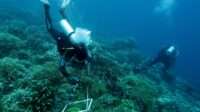
The method has proven effective in helping protected area managers obtain detailed information on catch trends and fisheries utilization patterns while strengthening community ownership of marine conservation efforts.
Glaudy Perdanahardja, Senior Manager for Sustainable Fisheries Management at YKAN, noted that the value of CODRS extends beyond data collection to creating a constructive dialogue platform between communities and resource managers.
“Data independently collected by fishers have successfully become a bridge for dialogue and consensus-building in Kofiau-Boo. The next critical step is translating these agreements into strong formal partnerships that can ensure the sustainable utilization of fisheries resources,” Perdanahardja said.
Looking ahead, the expanded cooperation between BLUD and YKAN will cover a broader range of initiatives, including strengthening fisher and sasi institutions, enhancing protected area monitoring capacity, supporting conservation-based local economic development, and nurturing local champions to raise public awareness about conservation and climate change issues.
All program activities will be monitored and evaluated regularly through fisheries data indicators, institutional development benchmarks, and assessments of commitment implementation, with the goal of continuously improving the community-based fisheries management model in Raja Ampat.
About CODRS
The Crew Operated Data Recording System (CODRS) is a participatory fisheries monitoring method that directly involves fishers in documenting their catches, fish sizes, fishing locations, and fishing activities while at sea.
The data collected are analyzed to generate information on fisheries resources and utilization patterns.
This approach supports more adaptive, transparent, and evidence-based fisheries management while strengthening community participation in decision-making processes related to the sustainable management of marine resources.