
MARITIMEPOSTS.COM – Indonesia’s Ministry of Marine Affairs and Fisheries (KKP) is taking a strategic step to strengthen the implementation of its Quota-Based Measured Fishing (Penangkapan Ikan Terukur/PIT) policy by partnering with universities and the academic community.
The initiative is being carried out through a series of Capacity Building Programs for Fisheries Data Collectors and Data Processing to support fish stock assessments in Indonesia’s Fisheries Management Areas (WPPNRI) 715, 716, and 717, with Manado serving as the host city.
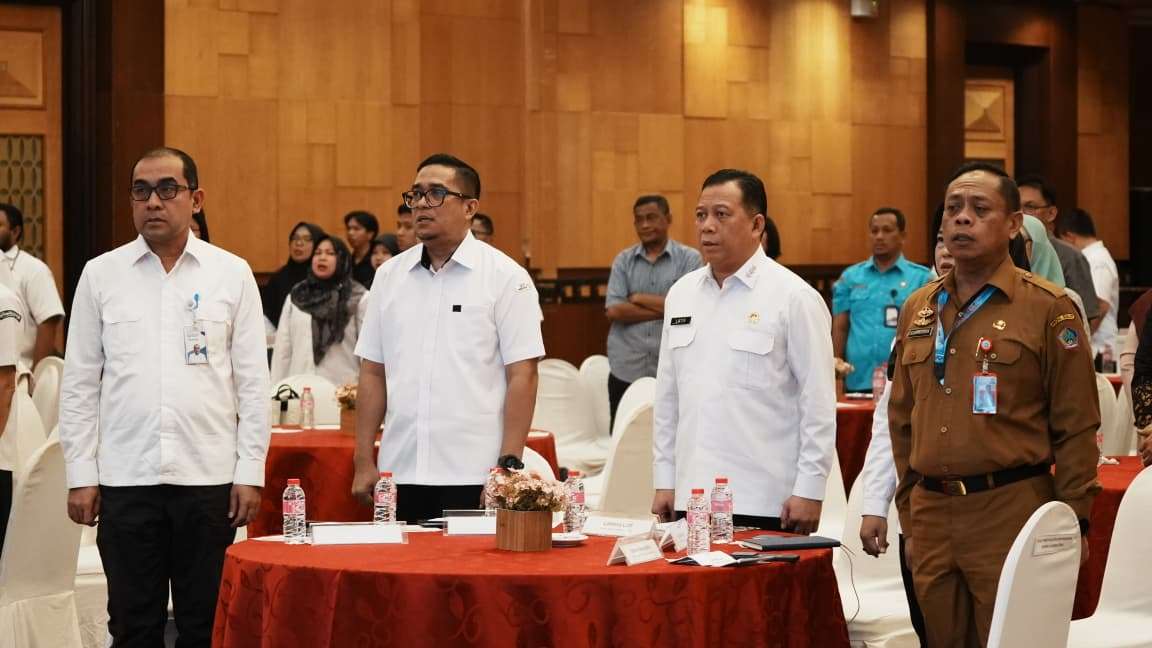
Opening the program, Director General of Capture Fisheries Lotharia Latif emphasized that reliable and accurate fisheries data are fundamental to ensuring the successful implementation of the quota-based PIT policy.
According to Latif, the policy is designed not only to improve economic performance but also to safeguard the long-term sustainability of Indonesia’s fishery resources while enhancing the welfare of fishing communities.
The capacity-building program consists of three main components; Stock Assessment Workshop – designed to prepare prospective Scientific Service Providers (SSPs) with the scientific knowledge and analytical skills required to conduct credible and accountable fish stock assessments.
Technical Training on Capture Fisheries Data Collection – focusing on improving the quality of field data, particularly biological information on fish species and Scientific Panel for Fisheries Management Units (UPP) in WPPNRI 715, 716, and 717 – serving as a strategic platform for developing science-based policy recommendations.
“This program is an essential part of supporting the implementation of quota-based Measured Fishing (PIT), which aims to ensure sustainable fishery resources while improving the livelihoods of fishers,” said Lotharia Latif, Director General of Capture Fisheries.
Cross-Sector Collaboration and Integration with the Red-and-White Fishing Village Program
The government’s efforts to improve national capture fisheries governance are being integrated with several other flagship initiatives of the Ministry.
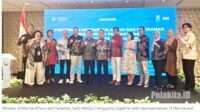
Mohamad Abdi Suhufan, Special Advisor to the Minister of Marine Affairs and Fisheries on Fisher and Fishing Crew Protection, highlighted the close relationship between fish stock assessments and the Red-and-White Fishing Village (Kampung Nelayan Merah Putih/KNMP) development program.
According to Abdi, infrastructure development within KNMP will be directly integrated with improved fisheries data collection systems.
In the future, all fish landings from KNMP locations are expected to be systematically recorded, significantly improving the accuracy of Indonesia’s national fisheries production statistics.
Latif further explained that determining fish stock status and establishing the Total Allowable Catch (TAC) are among the most critical elements of the PIT framework.
TAC figures derived from transparent scientific research will be translated into fishing quotas, creating a fair and accountable allocation system while ensuring that harvesting remains within ecological limits.
Scientific Panel to Guide Adaptive Fisheries Policy
Meanwhile, Syahril Abd Raup, Director of Fish Resource Management, stressed that the Scientific Panel plays a vital role in ensuring fisheries policies remain adaptive and responsive to empirical data collected in the field.
“Fisheries Management Areas 714, 715, and 716 make significant contributions to Indonesia’s fisheries production. Through this scientific forum, we ensure that every policy recommendation is firmly grounded in science to sustain fishery resources while supporting the welfare of fisheries stakeholders,” Syahril said.
The panel’s recommendations will serve as key references for Fisheries Management Units (UPP) in WPPNRI 714, 715, and 716 when determining sustainable harvest limits and developing future management strategies.
These recommendations will subsequently be reviewed during the annual UPP-WPP coordination meetings involving provincial governments and other relevant stakeholders.
Supported by funding from the Agence Française de Développement (AFD), KKP believes that stronger collaboration between government institutions and the academic community will produce evidence-based public policies that both conserve Indonesia’s marine ecosystems and provide greater economic security for the country’s fishing communities.
Editor K. Azis