
Marking a New Era of Sustainable Marine Conservation Management
PELAKITA.ID – Ambon, July 29, 2026 – The Maluku Provincial Government has entered a new era in the management of marine conservation areas with the enactment of Governor Regulation of Maluku No. 6 of 2026, which amends Governor Regulation No. 9 of 2025 concerning the position, organizational structure, duties, functions, and operational procedures of the Regional Technical Implementation Units (UPTD) under the Provincial Marine and Fisheries Agency.
The regulation provides the legal foundation for establishing the Marine Conservation Area Management Unit (UPTD Pengelola Kawasan Konservasi), marking a significant milestone in strengthening institutional capacity to ensure that marine conservation areas are managed more effectively, professionally, and sustainably.
The establishment of the Conservation Area Management Unit also supports the vision and mission of the Governor of Maluku, particularly the fifth mission, which focuses on the sustainable management of coastal areas, small islands, and natural resources, while enhancing climate change adaptation, mitigation, and disaster resilience.
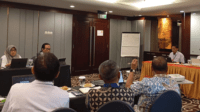
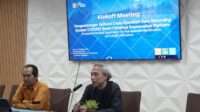
Before the regulation was enacted, the Maluku Provincial Government worked closely with development partners, including the Nusantara Nature Conservation Foundation (Yayasan Konservasi Alam Nusantara/YKAN), to conduct extensive discussions on the substance of the regulation.
The provincial government also consulted with Indonesia’s Ministry of Home Affairs to ensure that the establishment of the UPTD complied with the country’s regional governance framework.
The process was further strengthened through public consultations on potential revenue sources and financing models for marine conservation areas.
These discussions laid the groundwork for implementing a financial management system under the Regional Public Service Agency (BLUD) scheme, which is expected to provide greater flexibility and sustainability in conservation financing.
The presence of a dedicated management unit supported by sound governance and a sustainable financing mechanism is expected to improve the effectiveness of provincial marine governance while ensuring the long-term sustainability of conservation efforts.
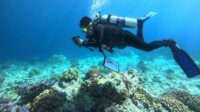
According to the 2026 Academic Study on the Establishment of the Marine Conservation Area Management Unit, Maluku’s marine conservation network covers 4,352,611.66 hectares across 10 regencies and municipalities.
Of this total, the Ministry of Marine Affairs and Fisheries has formally designated 15 marine conservation areas covering 2,677,405.61 hectares.
The remaining 12 conservation areas, encompassing 1,675,206.05 hectares, have been reserved under Maluku Provincial Regulation No. 2 of 2025 on the 2025–2044 Provincial Spatial Plan.
Overall, the newly established Conservation Area Management Unit will oversee the management of 27 marine conservation areas throughout the province.
Head of the Maluku Provincial Marine and Fisheries Agency Erawan Asikin said the establishment of the UPTD would significantly strengthen the provincial government’s capacity to manage conservation areas spread across the archipelagic province.
“With conservation areas covering vast marine waters across 10 regencies and municipalities, we need a strong, adaptive management institution supported by a sustainable financing system. We greatly appreciate the support of YKAN and all partners who have accompanied us throughout the establishment of this UPTD,” he said.
Meanwhile, Muhammad Ilman, Marine Program Director at YKAN, described the establishment of the UPTD as a crucial foundation for achieving effective, long-term management of Maluku’s marine protected areas.
“YKAN fully supports the Maluku Provincial Government’s initiative to strengthen marine conservation through the establishment of the Conservation Area Management Unit. This institution will reinforce marine governance across the province. Through cross-sector collaboration, stronger institutional capacity, and sustainable financing, this initiative will help safeguard marine biodiversity for the benefit of present and future generations,” Ilman concluded.