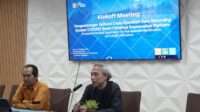

DFW Indonesia has provided technical facilitation and project coordination, while INPEX Masela Ltd. has supported the initiative through its Social Investment Program. The Bomaki Village Government has played a role in local mobilisation.
MARITIMEPOSTS.COM – In Indonesia’s remote Tanimbar Islands, a coastal community is confronting decades of mangrove degradation. Its experience reveals that restoring nature requires more than planting trees—it demands patience, local ownership and a fundamental shift in how communities value their natural defences.
In Bomaki, a small coastal village in Indonesia’s Tanimbar Islands Regency, the mangrove forest stands between the community and the open sea.
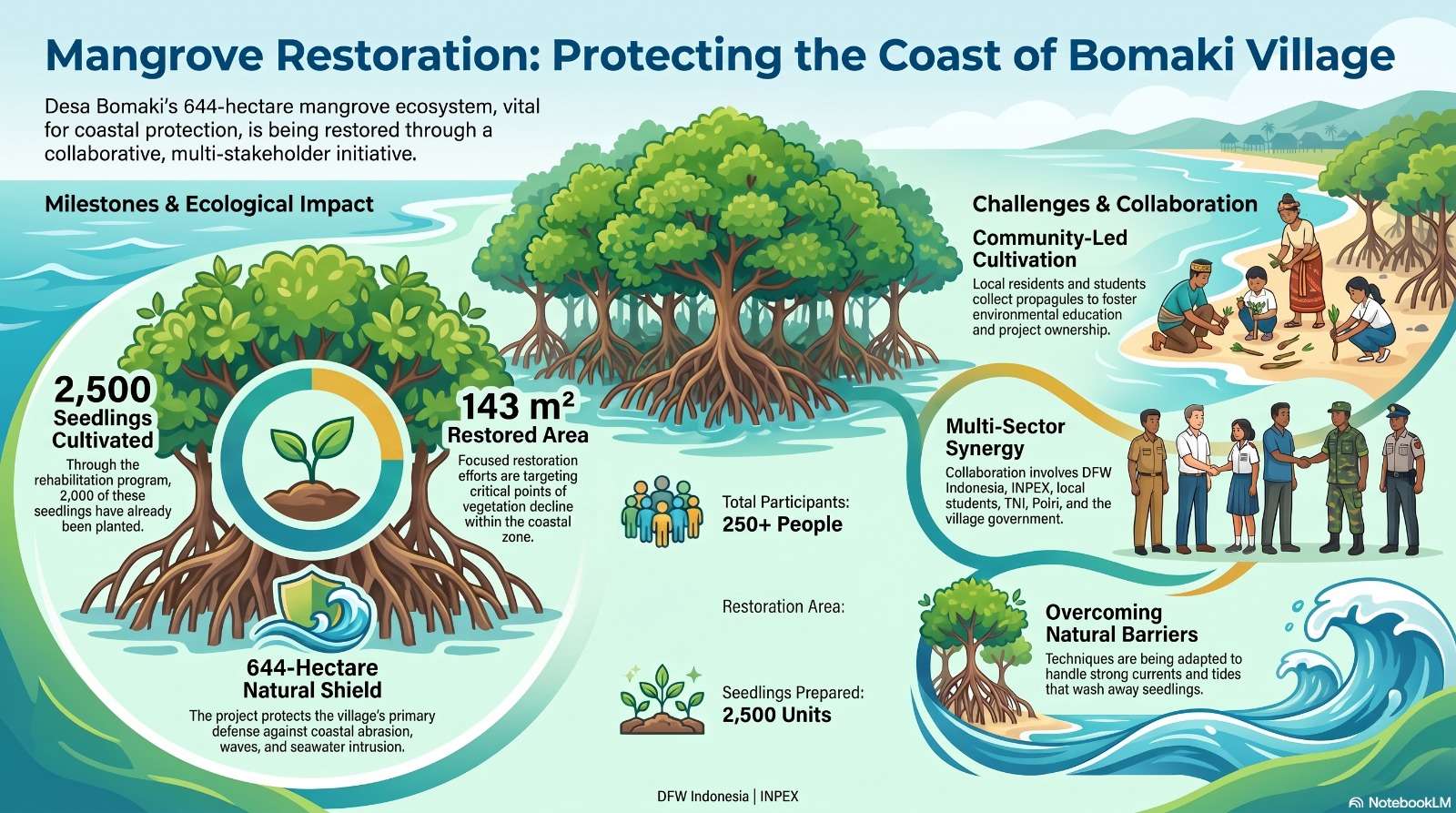
Covering an estimated 644.39 hectares, this vast green belt is more than a landscape of salt-tolerant trees. It is a natural defence system, absorbing wave energy, reducing coastal erosion and limiting the intrusion of seawater into the land.
For Bomaki’s 1,146 residents, the forest is an essential part of the infrastructure that makes island life possible.
Yet, for decades, this natural barrier has been gradually weakened.
Mangrove trees have been harvested for firewood, construction materials and other household needs. Such use reflects the daily realities of coastal communities where natural resources often provide the most immediate and accessible means of survival. But over time, continuous exploitation has reduced vegetation cover and increased the vulnerability of the coastline.
Bomaki now faces a difficult question familiar to many island communities: how can people meet their needs today without destroying the ecosystems they will depend on tomorrow?
A mangrove rehabilitation initiative led by DFW Indonesia with support from INPEX Masela Ltd. is attempting to address that challenge. Combining ecological restoration with community education, the programme offers important lessons about what it really takes to rebuild a damaged coastal ecosystem.
More Than a Forest
Mangroves are sometimes discussed simply as trees growing along tropical coastlines. In Bomaki, their role is considerably more complex.
Physically, the forest acts as a buffer against waves, erosion and seawater intrusion. Biologically, its tangled root systems create nurseries for fish, crabs, shrimp and other marine organisms.
This ecological function also carries direct economic and nutritional consequences.
Most Bomaki residents rely primarily on agriculture, cultivating coconuts, vegetables and tubers. The coastal ecosystem, however, provides an important supplementary source of food and protein. The health of local fisheries is closely connected to the condition of mangrove habitats.
“This area has an important role in maintaining the balance of the coastal ecosystem, especially as a natural protector of the coastline from abrasion, sea waves and seawater intrusion,” said Waode Husmayani, Project Coordinator at DFW Indonesia.
“The mangrove ecosystem is also a habitat for various marine biota such as fish, crabs, shrimp and other coastal organisms that have ecological and economic value for the local community.”
Seen from this perspective, mangrove degradation is not merely an environmental problem. It can gradually undermine food security, local livelihoods and the resilience of an entire village.
Turning the Coastline Into a Classroom
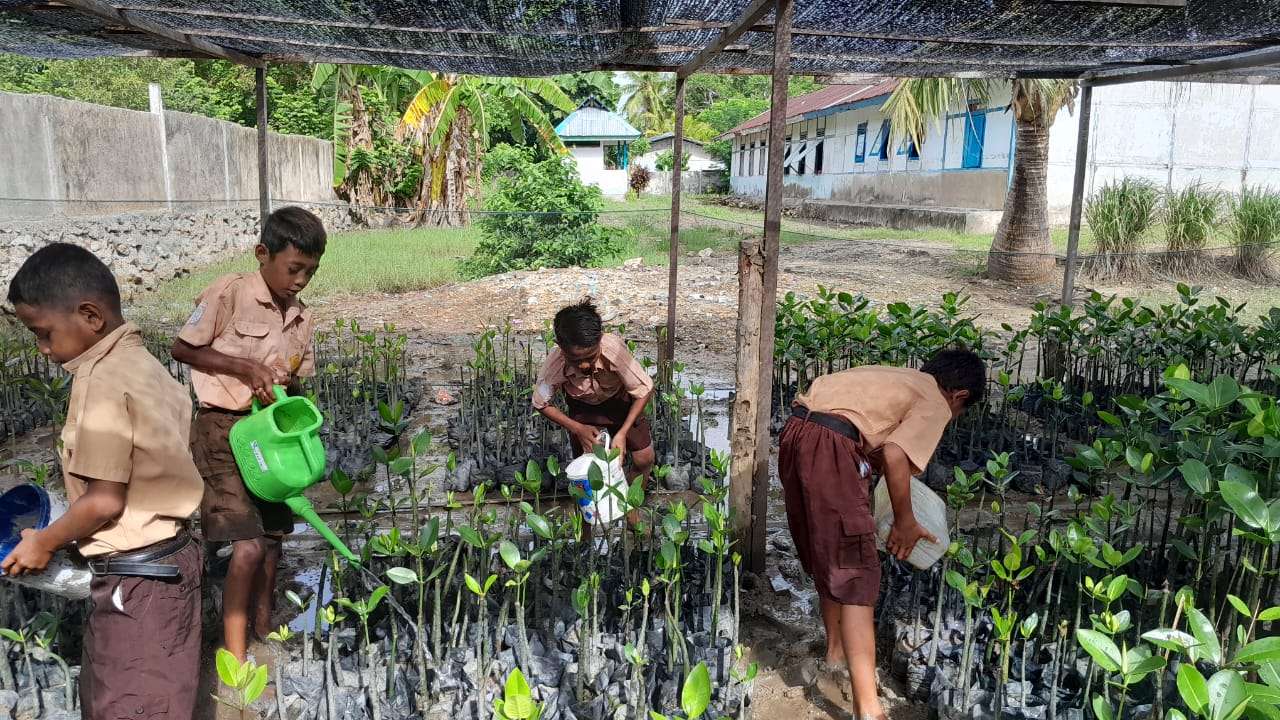
One of the most significant aspects of the Bomaki initiative is the involvement of children and teachers from SD Naskat Santo Fransiskus Xaverius.
Rather than treating mangrove restoration solely as a technical activity undertaken by environmental organisations, the programme has brought younger residents directly into the process.
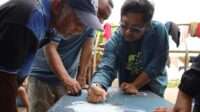
Students participate in activities linked to collecting mangrove propagules and learning about the coastal ecosystem around their village. The shoreline effectively becomes a living classroom.
This approach reflects a longer-term strategy.
Changing environmental behaviour is difficult when communities have relied on natural resources in the same way for generations. Education can help create a different relationship between young people and their surroundings before extractive practices become deeply embedded habits.
The involvement of schoolchildren also creates an important connection between generations. Adults contribute local knowledge and labour, while children begin to understand the ecological value of resources they may one day be responsible for managing.
The mangrove forest is therefore reframed. It is no longer simply a source of wood. It becomes an inheritance.
When Nature Sets the Rules
Planting mangroves may sound straightforward. The experience in Bomaki demonstrates otherwise.
Coastal restoration takes place in an environment shaped by tides, currents and waves. Ironically, the forces that mangroves will eventually help control are often the same forces that prevent young trees from surviving.
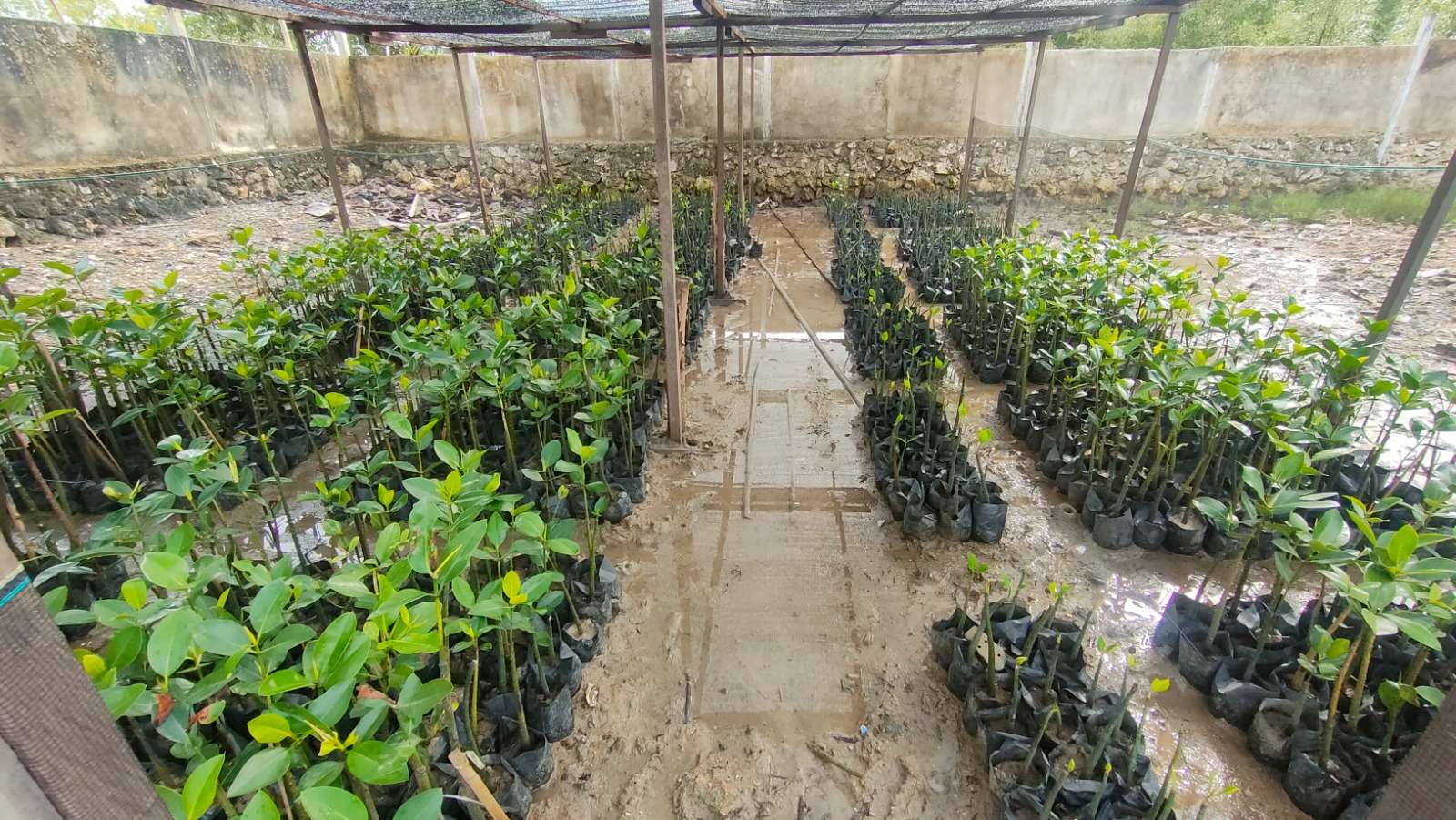
Before planting, seedlings in Bomaki were maintained in nurseries for approximately three months. The nursing period allowed them to develop sufficient strength before being transferred to the open coastal environment.
Even then, survival was far from guaranteed.
Strong currents and repeated tidal movements uprooted some of the young plants. Seedlings were swept away before their roots could establish themselves in the sediment.
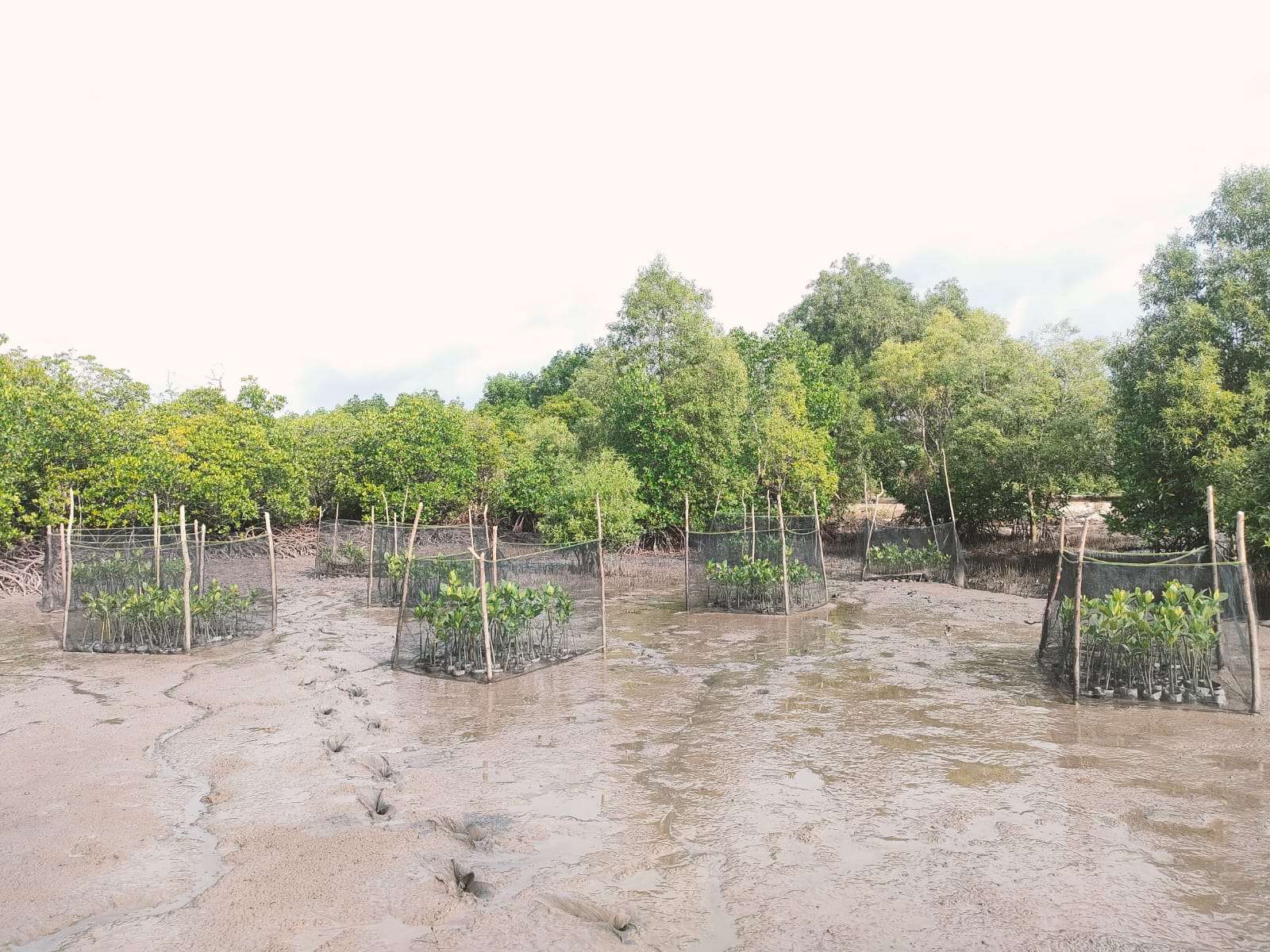
The project team responded by applying a rumpun berjarak, or spaced-clump, planting method.
Instead of placing seedlings in isolated rows, young mangroves are planted in groups. The clusters help reduce the energy of incoming water and provide greater collective stability.
The method illustrates one of the central principles of ecological restoration: successful interventions must adapt to local environmental conditions rather than force a standard model onto the landscape.
Nature, ultimately, sets the rules.
The Harder Challenge Is Human Participation
The physical environment is not the only obstacle.
The Bomaki initiative has also encountered inconsistent participation among some sections of the community, including members of the village youth organisation, or Karang Taruna.
This participation gap presents a serious sustainability challenge.
Mangrove rehabilitation requires years of monitoring, replacement planting and protection. Seedlings can die. Tides can alter planting areas. Human activities can return to previously rehabilitated sites.
Without consistent local involvement, a project may succeed during its funded implementation period but gradually decline once external facilitators leave.
Community leader Siter Layan described the initiative as an important opportunity to change local attitudes.
“This activity will have a positive impact on residents because so far they have not cared too much about this issue,” Layan said.
His observation points to a deeper challenge in environmental programmes. Communities must begin to see ecosystems as assets.
A mangrove forest may not resemble a road, bridge or school building. Yet for a coastal village, it performs an infrastructure function just as critical. It protects land, supports food systems and reduces exposure to environmental hazards.
The long-term future of Bomaki’s mangroves may therefore depend on whether residents begin to regard young trees as shared community assets rather than resources available for immediate extraction.
Two Thousand Seedlings and 250 People
Despite these challenges, the scale of collaboration in Bomaki is significant.
Around 2,500 mangrove seedlings have been prepared in nurseries. Of these, approximately 2,000 have already been planted across a 143-square-metre rehabilitation area.
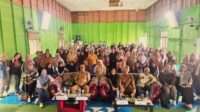
Behind those figures are around 250 people representing different institutions and sections of the community.
DFW Indonesia has provided technical facilitation and project coordination, while INPEX Masela Ltd. has supported the initiative through its Social Investment Program. The Bomaki Village Government has played a role in local mobilisation.
Students and teachers from SD Naskat Santo Fransiskus Xaverius have participated in environmental activities, while personnel from the Indonesian National Armed Forces and National Police have contributed manpower during planting.
The district government has also been involved through the Environmental Office, represented by its head, Yosi A. Fordatkosu.
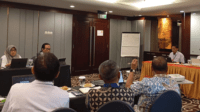
The collaboration demonstrates that coastal restoration cannot easily be delivered by a single institution.
Companies may provide funding. Environmental organisations may contribute technical knowledge. Governments can create institutional support. Schools can shape environmental awareness.
But the ecosystem will ultimately survive only if the people living beside it remain involved.
The Real Work Begins After Planting
For Bomaki, planting thousands of mangrove seedlings is an important achievement. It is not, however, the final measure of success.
Abraham Masombe, the village’s Head of Service and Welfare, has emphasised the importance of continued monitoring and sustainability after the initial rehabilitation activities.
This next phase may prove more difficult than the planting itself.
Ceremonial planting events are visible and easily documented. Long-term ecosystem management is quieter. It requires people to return to planting sites, inspect seedlings, replace dead trees and protect recovering areas from renewed exploitation.
It also requires institutional ownership.
As external organisations and project supporters gradually reduce their involvement, the Bomaki Village Government and local residents will need to assume greater responsibility for the forest.
This transition—from project ownership to community ownership—is often the decisive moment in environmental rehabilitation.
Bomaki’s experience offers a broader lesson for small island communities across Indonesia and beyond.
Coastal resilience is not built simply by putting seedlings into the mud. It is created through a combination of ecological knowledge, community participation, education and long-term stewardship.
The central dilemma remains unresolved. Families still have immediate economic needs. Wood remains useful. Agricultural households still require energy and construction materials.
But the cost of losing the mangrove forest may be far greater than the short-term value of cutting it down.
In Bomaki, the response to that dilemma is slowly taking root along the coastline.
Cluster by cluster and seedling by seedling, a small island village is attempting to rebuild the natural guardians that have protected its shores for generations.